Commercial Building Maintenance Checklist
A dependable preventive maintenance checklist for commercial buildings helps prevent expensive repairs, keeps you up to code, and safeguards your property all year long. Breaking tasks down by season and system lets us work smarter, stretch the life of assets, and reduce the risk of unexpected breakdowns.
Key Takeaways
- Follow a seasonal plan—get plumbing and HVAC systems ready before the cold arrives, and prepare your roof and equipment before summer’s heat and storms.
- Set a recurring schedule to examine key systems like roofing, HVAC, plumbing, and electrical. Regular checks catch early signs of wear before they become bigger issues.
- Keep records of compliance-related items such as ADA access, OSHA safety inspections, and fire protection testing to help avoid fines and legal trouble.
- Separate tasks that in-house staff can complete from those that need a licensed technician, especially inspections or any work involving specialized repairs.
- Create a maintenance calendar with monthly, quarterly, and annual tasks. A set commercial building maintenance schedule keeps things on track and fits more easily into budget planning.
Use a Seasonal Building Maintenance Framework
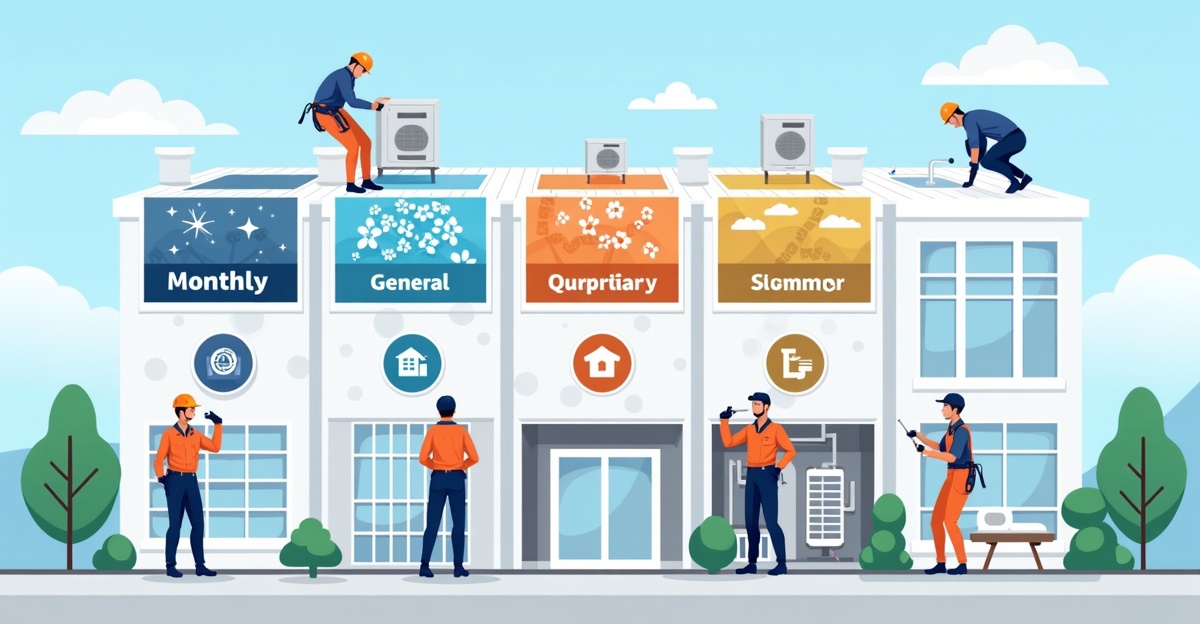
Sticking to a seasonal rhythm helps keep commercial building systems in reliable shape year-round. It’s also the most practical way to stay ahead of costly surprises.
Here’s how to set up seasonal building maintenance:
Winter Prep
- Inspect and clear all roof drainage — clogged gutters can lead to damaging ice dams.
- Verify heating function and schedule any HVAC repairs before cold sets in.
- Wrap exposed piping to prevent freezing.
- Walk parking lots and sidewalks for ice hazards.
- Confirm snow removal equipment and contracts are ready to go.
Spring Check
- Book a thorough roof inspection following snow and wind season—catch damage early.
- Confirm no underground or interior pipe leaks from winter freeze-thaw.
- Service HVAC before summer demand spikes.
- Power wash and inspect building exterior.
Summer Maintenance
- Clean and replace HVAC filters monthly to avoid overheating.
- Check attic and roof spaces for signs of heat damage.
- Look for paint or caulk breakdown on exterior walls and windows.
- Walk the grounds for overgrowth or pests.
Fall Readiness
- Clean gutters and downspouts—leaves left in can flood interiors during winter rain or melt-offs.
- Inspect dampers, fans, and vents—ensure heating is efficient.
- Seal pavement cracks before freeze expands them.
- Verify winterization checklists are ready for plumbing and HVAC.
Want a monthly breakdown? Our seasonal commercial roof checklist walks through key tasks step by step.
How to Break Down Your Building Systems for Smarter Upkeep
Managing your commercial building maintenance list effectively starts by tackling it by system. Here’s how we break it down to stay on top of the right repairs at the right time.
Roofing
- Inspect roofing systems annually—more often if you’re in a storm-prone area.
- Review flashing and sealants after shifts in temperature or weather events.
- Test and clear all drains and scuppers quarterly for water flow.
HVAC
- Change filters every 1–3 months.
- Clean condenser and evaporator coils quarterly.
- Book seasonal tune-ups—in spring for cooling, in fall for heating.
Electrical
- Inspect electrical panels every 6 months.
- Test GFCI outlets, breakers, and emergency lighting monthly.
- Watch for signs of overload or breaker trips.
Plumbing
- Check fixtures and visible lines monthly for leaks.
- Flush water heaters quarterly.
- Annual backflow device checks ensure safe potable water and are often a local code requirement.
Exteriors
- Examine sealants, flashing, and joints every year.
- Clean windows based on region—quarterly or more in high-dust areas.
- Survey siding, brick, or stucco for water intrusion cracks.
Interiors
- Spot-check ceiling tiles monthly for moisture damage.
- Inspect flooring, stairwells, and walls for wear in high-traffic zones.
Grounds & Parking
- Post-winter, check for salt or snowplow damage.
- Schedule asphalt sealcoating every 2–3 years.
- Trim foliage away from HVAC units and structural walls quarterly.
Need help knowing what to handle in-house and what needs a certified contractor? Our full property manager roof maintenance guide breaks it down.
Stay Ahead of Code Compliance and Safety Risks
Missing compliance tasks can lead to steep fines—or worse, endanger your staff and tenants. Here’s how to stay protected and legal.
High-priority compliance checks include:
- ADA requirements: Review door handles, ramps, and signs yearly in accordance with the ADA Standards for Accessible Design published by the U.S. Department of Justice.
- OSHA safety checks: Verify guardrails and mechanical room access quarterly in alignment with OSHA workplace safety standards.
- Fire protection systems:
- Check extinguisher status monthly.
- Test alarm systems and sprinkler flow yearly.
- Occupancy visibility: Confirm load signage and exit lights meet International Building Code (IBC) standards established by the International Code Council annually.
Neglecting required inspections can void insurance or result in steep fines. Working with a trusted vendor ensures code and safety tasks are never left to guesswork.
How Often Should You Do What? Timing That Works
A scheduled approach keeps your budget lean and your building dependable. Don’t wait until it fails—prevent it ahead of time.
Use this commercial building preventive maintenance schedule to plan:
Monthly
- HVAC air filter check
- Plumbing leak walk-through
- Interior flooring and exit sign inspection
Quarterly
- Drainage clearing (especially roofs and lots)
- Fire door function test
- Clean HVAC coils
Annually
- Full commercial roof inspection
- Electrical system audit
- ADA compliance review
- HVAC service and tune-up
Post-event (storms or freeze-ups)
- Check roof for standing water or blown-off materials
- Inspect all exterior elements for wind or hail damage
We’ve outlined more seasonal triggers to consider in our annual roof maintenance plan for businesses—a good reference as you build out your master facility calendar.
DIY or Vendor? Where to Call in Pros
Some tasks your in-house team can knock out quickly. Others need licensed eyes and certified reports. Here’s how to tell the difference.
Team-Doable Tasks (Internal)
- Monthly filter changes
- Visual leak checks
- Ceiling tile inspections
- Flushing simple plumbing lines
Contractor Recommended Tasks
- Full commercial roof inspection (especially post-storm)
- Electrical panel maintenance or breaker replacement
- Fire damper testing and sprinkler performance checks
- Expansion joint evaluation in concrete or steel structures
Skipping licensed tasks doesn’t just risk fines—it can increase liability and shorten asset life. We support multi-location owners across Texas and nearby states with trusted commercial construction services and ongoing vendor support.
Check out our guide to spotting a failing commercial roof for more signs it’s time to bring in pros.
Download Your Checklist and Start Planning
Need a structured way to keep all this straight? Download our commercial building maintenance schedule template and printable checklist. Keep it in a binder, post it in your equipment room, or use it to plan budgets with ownership.
A strong commercial maintenance checklist only works if it’s used consistently. Stick to your recurring schedule, and align it with your financing plan for smoother approvals.
If you’re starting from scratch—or just overdue for a review—reach out. We’re happy to help build a smart, realistic commercial building maintenance guide that fits your property. Let us know how we can support your team.
Frequently Asked Questions
Commercial building maintenance includes routine inspection, servicing, and repair of core systems like HVAC, roofing, plumbing, electrical, interiors, and exterior areas. The goal is to prevent failures, extend equipment lifespan, and keep the property safe and compliant. Tasks are typically organized by system and scheduled monthly, quarterly, seasonally, or annually.
Commercial building maintenance should follow a recurring schedule with monthly, quarterly, and annual tasks. High-use systems like HVAC filters and plumbing fixtures need monthly checks, while roofs, electrical systems, and compliance inspections are usually annual. Seasonal inspections are also important to prepare for temperature changes, storms, and heavy system demand.
The most common mistakes include skipping preventive maintenance, failing to document inspections, and delaying licensed inspections. Many property owners also rely too heavily on reactive repairs instead of scheduled upkeep. Ignoring small issues like minor leaks or clogged drains often leads to larger, more expensive repairs and potential code violations.
In-house staff can manage basic tasks such as filter changes, visual inspections, minor cleaning, and simple plumbing checks. However, licensed professionals are typically required for roof inspections, electrical panel work, fire system testing, and specialized repairs. Knowing when to outsource helps reduce liability and ensures compliance with safety and building codes.
Preventive maintenance reduces unexpected breakdowns, lowers long-term repair costs, and helps maintain building safety and compliance. Regular inspections catch early signs of wear before systems fail. A proactive approach also supports budget planning, minimizes downtime for tenants, and extends the service life of critical building components.