How Solar Roofing Boosts Home Value

Solar roofing home value increases rely on solid market data. We see studies showing that homes with owned solar systems often sell at a clear premium because they offer lower operating costs and improved energy performance. The actual return depends on system ownership, local utility rates, available incentives, roof condition, and organized documentation that strengthens appraisals and buyer confidence.
Key Takeaways
- Homes with owned solar systems often sell for a premium, especially in markets with high electricity costs and strong buyer awareness.
- Appraisers assess solar value using income, cost, and comparable sales methods, with ownership status and supporting documentation playing a major role in the final valuation.
- Leased or PPA systems can complicate resale and may lower perceived value compared to fully owned systems.
- Federal tax credits, depreciation advantages, and local incentives improve solar roof ROI, yet payback timelines vary by property, location, and energy use.
- Roof condition and lifespan alignment remain critical, since installing solar on an aging roof can weaken long-term value and create added expenses later.
Solar Roofing and Real Property Value: What the Data Shows
Solar roofing home value gains aren’t hype. Real estate data backs them up. Zillow reports that homes with solar energy systems sell for about a 4.1% premium on average compared to similar homes without solar, though that figure varies by market.
Research from the U.S. Department of Energy (DOE) and the National Renewable Energy Laboratory (NREL) shows buyers often pay more for properties with lower operating costs and energy-efficient upgrades. Lower utility bills translate into both perceived and measurable value. That directly affects solar panels resale value.
Still, does solar roofing increase home value in every market? No. Local energy rates, available incentives, climate, and buyer education all influence pricing. In areas with high electricity costs and strong solar adoption, demand is stronger. In markets where energy is cheap or buyers aren’t familiar with solar benefits, appraised value may climb more slowly.
Appraisers typically assess solar roof appraisal value using three approaches:
- Income approach: Projected energy savings over time
- Cost approach: Replacement value of the system
- Comparable sales: Similar homes with and without solar
The final number depends on system ownership, age, production capacity, roof condition, and documentation. We always caution homeowners against overpromising ROI. Solar adds value, but that value is local and tied to condition, performance, and proof.
When solar is installed properly on a structurally sound roof, it also complements the broader benefits of energy-efficient roofing that today’s buyers actively look for.
Owned vs. Leased Systems: Why Ownership Structure Changes Everything
Owned vs leased solar system home value is one of the most important factors in any resale conversation.
An owned system—whether paid in cash or financed and paid off—usually adds the most to solar panels resale value. Buyers gain immediate energy savings. There’s no contract to assume. No approval process. That simplicity matters during closing.
Leased or power purchase agreement (PPA) systems can complicate the transaction. The buyer must qualify to take over the agreement. Some hesitate. Others negotiate price adjustments. This can shrink perceived value.
Appraisers and underwriters look carefully at:
- Proof of ownership
- Warranty terms (most panels carry 20–25 year panel warranties)
- Production history reports
- Permit and inspection records
Complete documentation strengthens solar roof appraisal value. Missing paperwork weakens it.
The impact of solar panels on property taxes varies by state. Many states offer exemptions that prevent assessed value from increasing due to renewable energy upgrades. Some do not. Owners should confirm local rules before assuming a tax implication.
Ownership clarity, warranty coverage, and production data protect value during appraisal and sale.
Solar Roof ROI: Energy Savings, Incentives, and Real Payback Timelines
Solar roof ROI comes down to three factors: installation cost, solar roofing energy savings, and available incentives.
The federal 30% Investment Tax Credit (ITC) currently allows a 30% tax credit for eligible solar installations, per IRS guidelines and program timelines. That credit can significantly reduce upfront cost. State and local programs may add additional solar roofing tax incentives depending on location.
Residential systems often reach a 6–12 year payback period. That range depends on electricity rates, system size, available sunlight, and household usage patterns. Homes in areas with high utility rates tend to see faster solar roofing return on investment.
Overestimating ROI is a common mistake. Production varies year to year. Shading, panel orientation, and changing usage habits all affect long-term performance. We always recommend a property-specific performance model instead of relying on averages.
For commercial properties, the math becomes even more strategic. Along with the 30% ITC, many projects qualify for MACRS depreciation, which accelerates tax benefits and improves after-tax returns.
Before installing panels, roof condition must be evaluated. Adding solar to a roof that needs replacement in a few years can hurt solar roof ROI. If the current system is nearing the end of its service life, we often recommend pairing the project with a new roof installation to align long-term performance.
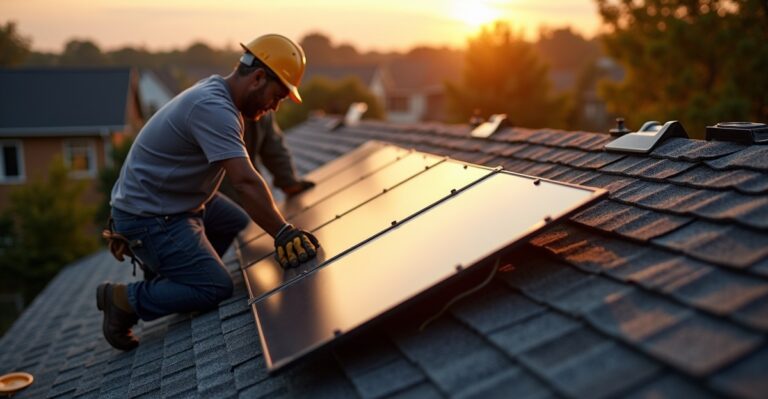
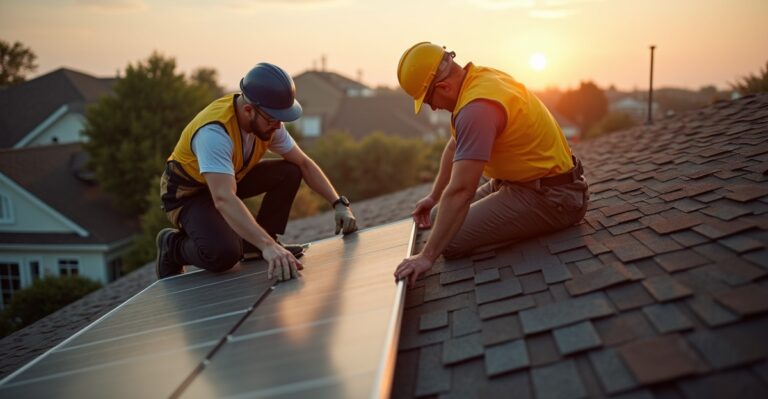
Our team handles both structural evaluation and solar panel installation, so performance and protection work together.
Commercial Solar Roofing: Cap Rates, ESG Goals, and Asset Performance
Commercial solar property value is closely tied to net operating income. When owners reduce utility expenses, NOI increases. Higher NOI can increase overall asset value based on prevailing cap rate calculations.
Solar roofing for commercial buildings ROI typically includes:
- Reduced operating expenses
- The 30% ITC
- MACRS depreciation benefits
Lower operating costs improve solar roofing asset performance over time. For multi-tenant buildings, reduced common area energy costs can support competitive lease terms. Tenants appreciate predictable expenses. Owners benefit from stronger retention.
Investors also prioritize ESG benchmarks. Sustainable upgrades can strengthen reporting metrics and improve institutional appeal. Energy-producing roofs contribute measurable performance data, which matters in today’s commercial market.
Multi-site operators gain additional stability by standardizing solar across portfolios. Spreading exposure to fluctuating utility rates improves planning accuracy.
Compliance and engineering matter. Interconnection approvals, structural load verification, and system design all impact long-term reliability. A poorly engineered system may reduce expected returns and create maintenance concerns. We approach commercial work with asset performance in mind from day one.
Roof Condition, Integration, and Long-Term Asset Protection
Roof condition directly affects value. Installing solar on an aging system can reduce overall appeal if replacement becomes necessary soon after.
Solar panel systems commonly carry a 25+ year production warranty. The roofing system underneath must last just as long to protect solar roofing asset performance. Roof lifespan alignment is critical.
Buyers and appraisers evaluate:
- Roof age and remaining service life
- Solar system age and output
- Maintenance and inspection records
Improper mounting can lead to leaks, voided warranties, and reduced solar roof appraisal value. Structural load capacity must be verified before installation. Flashings must be watertight. Mounting systems should meet manufacturer requirements to preserve coverage.
We always conduct a full roof assessment first. If a roof has fewer than 10–15 years of expected life left, replacement may make financial sense before adding panels. Coordinating roof replacement with solar protects both systems and preserves long-term property value.
Those who want a deeper look at lifecycle considerations can review how system compatibility impacts durability through our analysis of how solar panels impact roof lifespan.
When roofing and solar are aligned, the result is stronger protection, better resale appeal, and fewer warranty risks.
Common Questions Property Owners Ask Before Investing
Does solar always increase property value? No. Solar roofing home value gains depend on local demand, energy prices, and ownership structure. Owned vs leased solar system home value can differ significantly.
Will solar raise property taxes? In many states, exemptions limit the impact of solar upgrades on assessments. Owners should verify local regulations to confirm the impact of solar panels on property taxes.
How long does it take to break even? Residential systems often reach 6–12 year payback periods. Commercial solar roof ROI varies based on scale, incentives, and operational savings.
What documentation helps resale? Buyers and appraisers want warranty records, ownership proof, energy production data, and permit documentation. Clear records improve confidence and strengthen solar roof appraisal value.
Should the roof be replaced before installing solar? If the roof has less than 10–15 years of remaining life, replacement usually makes sense. Coordinating the projects protects investment and improves buyer perception.
We encourage property owners to treat solar like any major capital improvement. Review energy costs. Evaluate roof condition. Assess incentives. Run realistic projections.
A professional evaluation makes the numbers clearer. Property owners can request a property-specific ROI analysis or schedule a consultation through our contact page. A clear plan built on solid roofing and a properly designed solar system delivers measurable returns and long-term stability.