How Storm Damage Affects Commercial Roofs
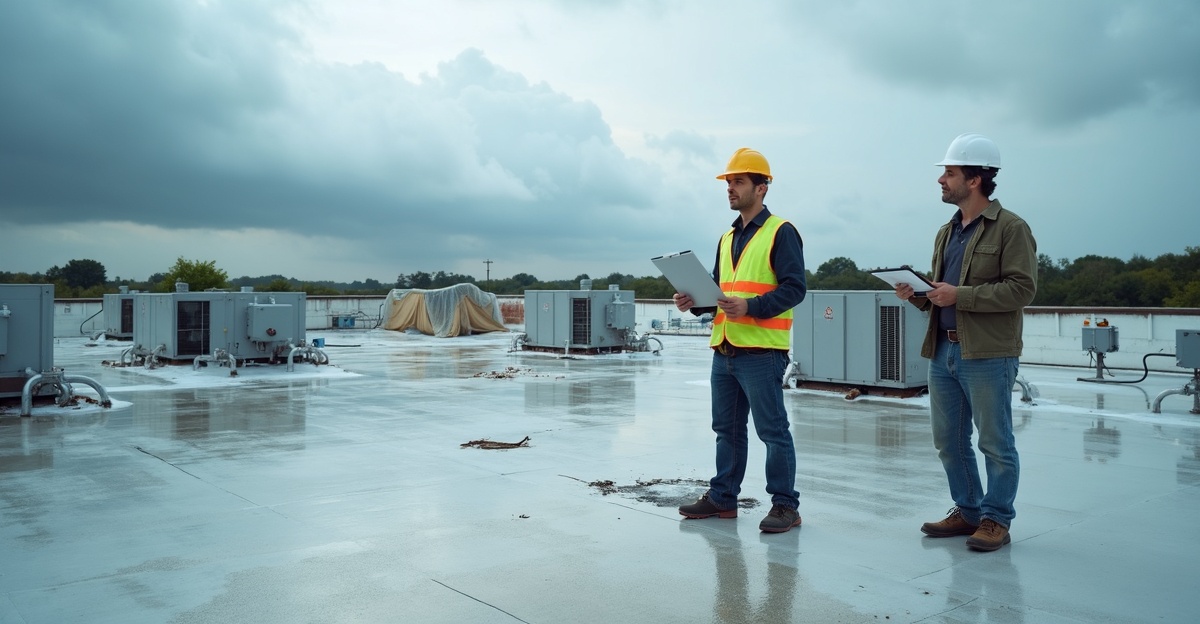
Commercial roof storm damage goes beyond torn membranes or dented panels—it can disrupt operations, impact equipment, and upset tenants. Flat roofing systems with wide surfaces and intricate infrastructure are especially exposed to wind, hail, and water damage after serious weather.
Key Takeaways
- Flat commercial roofs face higher risk due to poor drainage and greater exposure to weather.
- Wind, hail, and heavy rain create different types of roofing issues—like loose seams, punctures, or standing water.
- Waiting too long for inspections can shorten your roof’s lifespan and trigger expensive code violations or denied insurance claims.
- Watch for sagging, exposed insulation, or ceiling stains—these signal moisture buildup or structural issues.
- Hiring a skilled, licensed contractor helps ensure code-compliant repairs and lasting roof performance after storms.
Why Storm Damage Hits Commercial Roofs Harder Than You Think
Storm damage to commercial roofs is a different ballgame than what you’d see on a house. These systems cover larger areas, rely on specialized materials like TPO, EPDM, BUR, or metal, and protect much more than just drywall. You’ve got HVAC setups, telecom wiring, production gear, and sensitive inventory all depending on that roof staying watertight.
When something goes wrong, it’s not just a roofing issue—it’s an operational one. You’re looking at potential tenant disruption, water-damaged ceilings and walls, fire-control system risks, or even violations if the damage hits a school, hospital, or logistics hub.
How Storms Impact Commercial Roofs
- Wind damage flat commercial roof issues often involve lifted seams or blown-away ballast, making early inspections critical.
- Hail can puncture membranes or dent metal panels, weakening insulation.
- Heavy rain overwhelms drainage systems, leading to water ponding and interior leaks.
Flat roof storm damage is especially common since poor drainage can cause standing water that stresses the membrane and lets moisture in over time, as noted in FEMA’s guidance on wind and flood damage mitigation. FEMA even points out that one of the top causes of long-term storm damage is improper or delayed repair. That delay can slash roof lifespan by up to 50%, according to guidance from the National Roofing Contractors Association (NRCA).
For national property managers or owners with multiple buildings, ignoring storm damage in one facility can affect your entire operation—insurance costs, code compliance, and tenant satisfaction included.
What to Look for Right After a Storm: Key Damage Indicators
Right after a storm hits, a fast but safe check can save time and money. Document what you see, even from ground level. You’re watching for:
- Pooling or ponding water on flat sections
- Punctures, seam separation, or shrink spots on membranes
- Loose, damaged, or missing flashing around equipment
- Sagging roof areas or new ceiling stains inside
- Clogged roof drains or gutters filled with limbs or debris
If you see insulation or underlayment peeking through, that’s a red flag. Moisture from wind or hail impacts gets trapped and can grow mold or eat into the structure.
Snapping date-stamped photos and logging what you find will make filing an insurance claim for commercial roof storm damage much smoother.
Even if your roof looks fine from the top, water may still be working its way under the membrane or into your panels. Don’t guess—get it checked.
How Different Roof Types Respond to Storms
All commercial roofing systems respond differently under pressure—and storms put serious pressure on them. Here’s how the most common types hold up:
- TPO/EPDM membranes: Prone to seam failure, shrinkage, and impact tears after hail or strong wind.
- Built-Up Roofing (BUR): Loose gravel can scatter, exposing felts to UV and moisture.
- Metal roofs: Hail causes cosmetic dents and potential fastener stress. Wind may lift panels or break seals.
Roof vulnerability also shifts by region. The South and Gulf states deal more with hurricanes and wind-blown rain. Out in the Midwest and central plains, hail damage to commercial roofs ranks far higher.
If you manage properties nationwide, adapt your inspection routines by climate. That’s also where a solid commercial roofing contractor with regional experience really earns their keep.
Act Fast: Timeline for Inspection and Repair After a Storm
Don’t wait to get eyes on your roof. Schedule a full commercial roof inspection after a storm within 24 to 72 hours.
Delays can cause bigger damage—and may even void your warranties. Most insurance carriers want storm-related claims reported within 7 to 14 days, as outlined in standard commercial property insurance claim guidelines.
Checklist For Post-Storm Action
- Block rooftop access until it’s been screened for hazards.
- Document visible damage—even minor stuff—and take pictures.
- Call your insurance provider and keep their response timeline in mind.
- Contact a qualified contractor for a deeper inspection and repair plan.
Professional assessments go beyond surface issues—they can include core cuts, infrared scans, and moisture mapping so nothing gets missed.
We’ve already helped dozens of clients move quickly after major storms. It’s the difference between a quick patch and a full-blown replacement.
How to Choose the Right Contractor After a Storm
Not every roofer can handle large-scale repairs, especially across multiple buildings. Pick the wrong one, and you’re risking low-quality work or skipping code requirements.
What to Look for in a Commercial Storm Repair Contractor
- Familiar with all major systems—metal, membrane, BUR
- Licensed properly and tied to major manufacturers
- References from similar commercial properties
- Clear, photo-supported assessments and line-item estimates
- Strong safety history and insurance documentation
Skip the temporary patch crews. We’ve seen too many businesses burned by rushed jobs after big storms. Local, long-term partnerships lead to better repair quality and longer roof life.
Need a reliable team? Check out our storm damage repair services for commercial properties.
Preserve the Long-Term Health of Your Roof with Preventative Maintenance
Routine commercial roof maintenance makes a major difference. The National Roofing Contractors Association reports up to 50% savings on storm repairs with regular upkeep.
How to Get Ahead of Storm Damage
- Schedule annual or semi-annual inspections
- Clean drains, especially ahead of storm seasons
- Train facilities teams to spot signs of roof storm damage
- Document all ongoing maintenance for warranty and claims support
Read our tips on avoiding flat roof drainage problems that worsen storm damage.
Need help planning your inspection cycle? Download our free checklist or schedule a consultation with one of our certified inspectors. We’ll walk your team through what matters and why, in plain language that gets results.
Frequently Asked Questions
The most common commercial roof storm damage includes membrane punctures, lifted seams, and drainage issues caused by wind and heavy rain. Flat roofs are especially vulnerable because standing water adds stress to the roofing system. Hail damage and wind-driven debris can also weaken insulation and flashing, leading to leaks that may not appear until days or weeks later.
A commercial roof should be inspected within 24 to 72 hours after a storm. Early inspections help identify hidden moisture, seam failures, or structural stress before the damage spreads. Prompt documentation is also critical for insurance claims, as many policies require storm damage to be reported within a short timeframe to remain eligible for coverage.
Yes, delayed reporting or repairs can negatively affect commercial roof storm damage insurance claims. Insurers may deny coverage if damage worsens due to inaction or poor maintenance. Clear photos, inspection reports, and repair timelines help prove the damage was storm-related and not a pre-existing issue, improving the likelihood of claim approval.
Hidden storm damage often shows up as ceiling stains, sagging roof sections, increased energy costs, or musty odors inside the building. On the roof, look for loose flashing, clogged drains, or soft spots underfoot. These signs suggest trapped moisture beneath the membrane, which can compromise insulation and structural components if left untreated.
Whether to repair or replace depends on the extent of the commercial roof storm damage. Minor punctures or seam failures can usually be repaired, while widespread moisture saturation or structural damage may require replacement. A professional inspection helps determine the most cost-effective option while ensuring the roof meets code requirements and maintains warranty coverage.