How to Budget for Roof Replacement
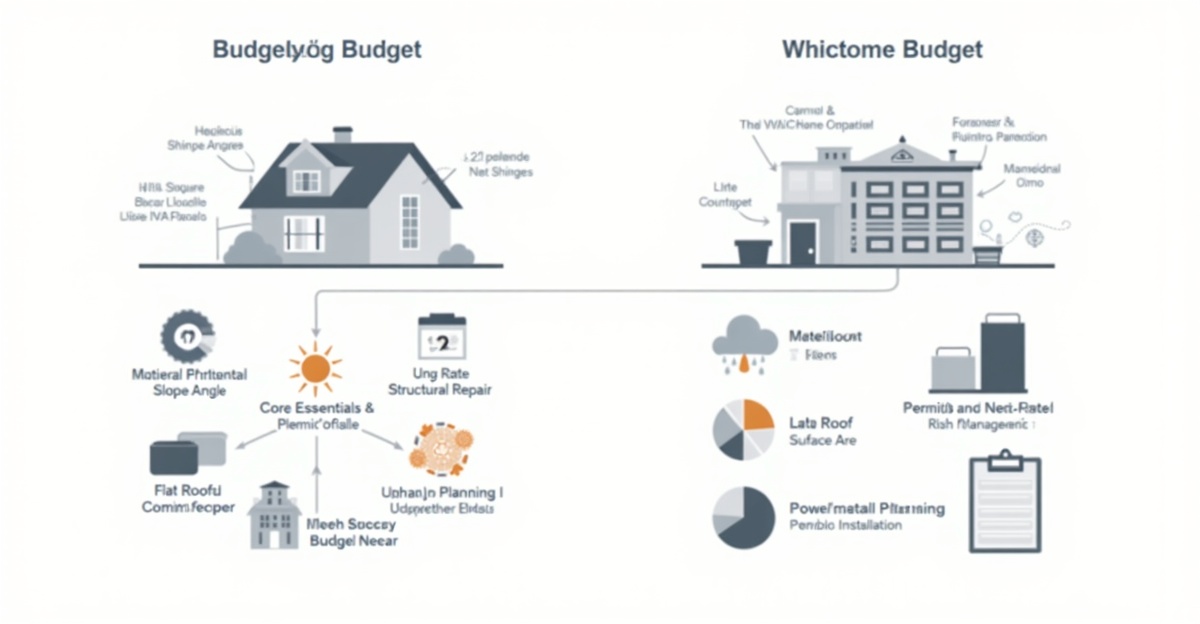
Budgeting for a roof replacement starts with knowing what shapes the final cost—materials, labor, roof size, and less obvious items like structural fixes or permits. Whether we’re upgrading a house or managing a major commercial installation, a clear breakdown of expenses keeps us on track and shields us from surprise overages.
Key Takeaways
- Material choice, overall roof size and slope, and local labor costs drive most of the budget.
- Surprise costs such as repairing the decking, getting permits, or dealing with weather setbacks can push totals higher.
- Residential roofing budgets often fall between $8,000 and $25,000. Commercial projects can top $150,000, depending on the complexity.
- Segmenting the budget into four areas—core essentials, risk management, upfront planning, and post-install needs—sharpens accuracy.
- Smart scheduling, such as planning work outside peak seasons or spreading out installation phases, can cut costs and reduce interruptions.
What Impacts the Cost of a New Roof?
The total cost of roof replacement depends on several core variables. Understanding these factors helps clarify how to create budget for roofing project—no guesswork, just clear expectations.
Main Cost Drivers to Watch
Several elements can shift the estimate:
- Material type – Asphalt shingles are generally lower-cost, while tile and metal are pricier upfront but longer-lasting.
- Roof size and slope – Larger or steeper roofs demand more materials and labor.
- Labor rates – Local labor markets and contractor experience heavily influence overall cost.
- Permits – Every city or county has its own permit requirements and related fees.
- Tear-off and disposal – Removing and hauling away the old roof adds to your total.
- Decking and structural repair – We often find hidden issues like rot or mold when old layers come off.
- Site access – Limited equipment access or multi-story setups increase labor time and costs.
For reference, the average cost of roof replacement for a typical single-family home with a 2,000 sq ft asphalt shingle roof runs between $8,000–$14,000 depending on location, complexity, and local climate.
For commercial spaces, replacing a flat roof with TPO usually runs $4–$10 per sq ft before figuring in extras like insulation or drainage redesign.
Regional Price Shifts and Hidden Costs
Where you live affects material availability and labor rates. Urban centers tend to run higher due to demand and logistics. Inflation also plays a role—according to U.S. Bureau of Labor Statistics Producer Price Index data, construction material costs have risen sharply in many areas since 2020.
Don’t overlook these commonly forgotten items:
- Municipal permit fees
- Structural fixes below the surface (rot, mold, weakened decking)
- Weather delays that prolong the timeline
- Fuel surcharges for material delivery
Make sure your quote includes these, or build extra space into your budget so surprises don’t derail your plan. For a more detailed breakdown, bookmark this guide on the cost breakdown of roof replacement.
Residential vs. Commercial Roof Budgeting: What’s Different?
Roofing needs differ. Homeowners prioritize comfort and appearance. Business owners care about operational continuity and long-term ROI. Let’s look at both.
Residential Planning Tips
We know homeowners ask, “how much to budget for a new roof?” The most common answer is somewhere between $8,000 and $25,000, depending on your home’s size and the materials you pick.
Shingles are often the go-to for budget-friendliness, while tile and metal offer better durability and longer warranties.
The big drivers for homeowners include:
- Protecting your home investment
- Ensuring family comfort
- Choosing a roof that fits your neighborhood style
Hidden costs also come up more often here—moving family out if the project’s extensive or patching unexpected deck damage. For more specifics, check out our complete guide on residential roof replacement cost.
Commercial Roof Budget Planning
For property managers and business owners, including those wondering how to budget for commercial roofing in Utah, the calculus shifts. A 12,000 sq ft low-slope commercial roof might cost $60,000–$150,000. That range depends on factors like insulation thickness, drainage upgrades, brand warranties, and energy code compliance.
Phased project scheduling and off-season installation can reduce disruption and cost. Many firms break large roofing projects into annual segments for better capital planning.
Other things matter more here too:
- Warranty length (as outlined by the National Roofing Contractors Association (NRCA), many TPO systems offer 20–30 year warranties)
- Energy performance (which impacts HVAC costs)
- Tax treatment of maintenance vs. full upgrade
If you’re working across sites or seasons, schedule design and estimating sessions in advance. We can help structure a plan that fits your financial year and operating hours.
Roofing Cost Checklist: Build a Reliable Budget
A solid roofing cost checklist makes planning easier and stops small things from becoming big regrets.
Grouped Budget Categories for Smarter Planning
Here’s how to think through your estimate:
Essential Costs:
- Roofing materials (shingles, metal, tile, etc.)
- Labor and crew time
- Tear-off of old materials
- Underlayment and moisture barrier
Risk-Based Costs:
- Decking repair (rot, mold, or pest damage)
- Upgrading ventilation or flashing
- Permits and site inspection fees
- Dumpster rental or haul-away charges
Planning Costs:
- Alternate housing (for large-scale residential jobs)
- Off-hour commercial installation staging
- Temporary weather protection if delays occur
Post-Project Costs:
- Clean-up and fine debris removal
- Final permit closure
- Filing warranty documents
- Possible change orders or adjustments
Common FAQs
What affects roofing costs the most?
Material choice, labor availability, and the roof’s size/slope are top drivers.
Do all roofs need tear-off?
Not always. If local building codes outlined by the International Code Council (ICC) allow and deck conditions are solid, a re-roof is an option—but best to check with a pro.
What’s a reasonable contingency buffer?
Plan for 10%–15% above your quote to cover the unexpected, especially with older roofs.
Smart Timing, Bigger Savings: When and How to Schedule Your Roof
Timing your job right can save thousands. Roofers are busiest in midsummer when demand peaks and storms hit hardest. The best budget-saving windows often fall in late fall or early winter. Just understand these slots can come with weather challenges and smaller crews.
For those asking how much to budget for a new roof, the timeline connects directly to cost—and risk.
Homeowners should consider planning 6–12 months out. Early planning gives room to compare quotes, secure financing, and prepare for temporary disruptions if needed.
Commercial property managers should look at:
- Weekend or holiday scheduling
- Phased work over quarters
- Staging flat roof installs away from high-traffic hours
Long-term, high-quality roofing gives peace of mind. A good installation lasts 20–50 years depending on your material. Comparing material investments? Here’s a deep dive into roofing material cost options worth considering.
Financing Your Roof Replacement: What Are Your Options?
Few people pay out of pocket for roofing. That doesn’t make it out of reach though. Choosing smart financing options for roof replacement can ease the pressure and keep your home or business protected.
Residential Roofing Financing
For homeowners, common pathways include:
- Home equity loans (fixed rate, tax-deductible potential)
- HELOCs (flexible draw period, rate risk)
- Credit union personal loans (lower interest vs. credit cards)
- Contractor financing programs (in-house or through lending partners)
Let’s say your roof costs $15,000. At a 7% APR over 5 years, you’d pay around $297/month. Some contractors offer custom payment setups—though rates, terms, and credit requirements vary.
Look for contractor options without prepayment penalties, and ask about warranty extensions when financing through the installer.
Commercial Roof Financing
Business operators usually work within a capital plan. Roofing costs can often be spread across years via:
- Budgeted CAPEX cycles
- Leasehold improvement programs for tenants
- Accelerated depreciation incentives
- Maintenance vs improvement tax strategy (consult your CPA)
Some states or energy programs also offer grants or reimbursements tied to cool roof systems or upgraded insulation layers—helpful when budgeting for commercial roof repair. Let us know your goals—we’ll point you in the right direction.
Choosing the Right Contractor Without Blowing the Budget
Finding the right roofer isn’t just about price. It’s about planning, transparency, and mutual trust. So if you want to know how to choose a roofing contractor, use these starter questions the next time you collect a quote:
- Is every part of the job itemized?
- Are material brands/warranties listed?
- Do they include tear-off and disposal?
- Are permits and inspections handled?
- Is there in-house or referred financing available?
- Will they help with insurance paperwork if damage is present?
Things That Could Blow the Budget
Watch out for:
- Vague scopes or unclear inclusions
- Mid-job “surprise” labor upcharges
- Poor communication that leads to assumption-based errors
We believe contracts should be clear, job sites clean, and scopes aligned before anyone starts swinging a hammer.
Explore reviews and services on our RayPro Roofing homepage. You can also browse project experiences on our Testimonials page. Ready to talk? Talk to our team about your roofing goals—no pressure, just solid insight to help you plan.
Frequently Asked Questions
Most homeowners should budget between $8,000 and $25,000 for a new roof. The final cost depends on roof size, material choice, slope, and local labor rates. Asphalt shingles sit on the lower end, while metal or tile roofs increase upfront costs but last longer. Older homes should plan extra for potential decking or structural repairs.
Hidden roofing costs often include deck repairs, permit fees, disposal of old materials, and ventilation or flashing upgrades. Weather delays and material price changes can also increase costs. Adding a 10%–15% contingency to your roofing budget helps cover unexpected issues uncovered after tear-off begins.
Yes, roofing costs are often lower during off-peak seasons like late fall or early winter. Contractors may offer better pricing when demand slows. However, weather risks can increase, so scheduling flexibility is important. Planning several months ahead allows you to compare quotes and secure better timing without rushing decisions.
In some cases, a roof overlay is allowed, which can reduce labor and disposal costs. However, local building codes and roof condition determine eligibility. While overlays may save money upfront, they can hide structural problems and shorten roof lifespan, making full tear-off the better long-term budgeting decision.
A reasonable contingency buffer is 10%–15% of the total roof replacement budget. This covers unexpected repairs such as rotted decking, mold, or code-required upgrades. Older roofs or homes in harsh climates should lean toward the higher end to avoid financial strain mid-project.