How to Choose an HVAC System for Your Home
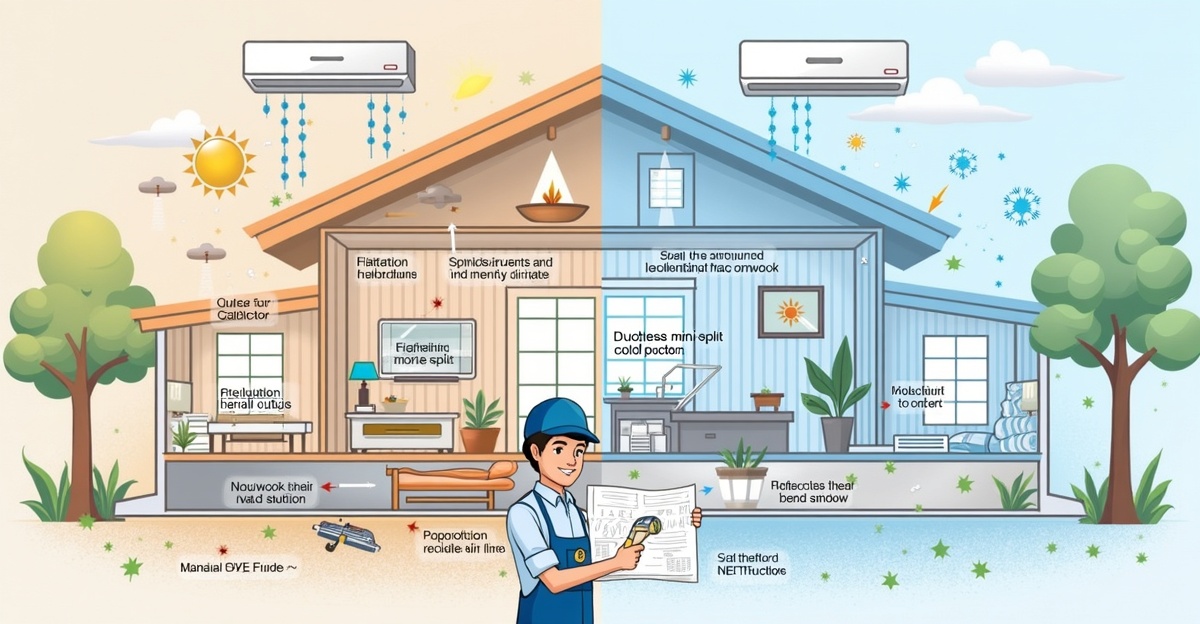
Choosing the right HVAC system for home comfort starts with aligning the equipment to your layout, regional climate, and energy goals. Whether you’re considering central air, mini-splits, or hybrid options, insulation quality, ductwork condition, and your priorities for upfront cost versus long-term efficiency all play a role.
Key Takeaways
- Central air suits larger homes with ductwork in place, while ductless mini-splits work well for independent zones or properties without ducts.
- Heat pumps provide efficient year-round comfort, though in colder regions they may require additional heating support. Hybrid systems offer adaptability, though they include more components and controls.
- Always base system sizing on a professional Manual J calculation. Guessing based solely on square footage can lead to inefficiency and uneven comfort.
- Look for systems with higher SEER, HSPF, and AFUE ratings. These ratings often come with a higher initial investment but deliver noticeable savings over time.
- Installation quality matters as much as the unit itself. Don’t overlook how local weather patterns and building conditions shape performance and comfort.
How to Match the Right HVAC System to Your Home
Start by getting clear on your priorities. Are you focused on comfort, energy efficiency, initial cost, or long-term savings? Knowing what matters most will help you avoid paying for features you don’t need—or skipping ones that will save you in the long run.
Each type of system serves a different purpose:
- Central air is a good choice for larger homes that already have ductwork.
- Ductless mini-split systems work well in homes without ducts, or for rooms and additions that need extra help.
- Heat pumps are energy-efficient and provide both heating and cooling. In milder climates, they might replace both your furnace and A/C. In colder areas, a furnace still has advantages.
- Hybrid systems combine a heat pump and a furnace, adjusting based on outside temperature. They offer flexibility but can get complicated to install and maintain.
Simple Checklist to Narrow Down Your Options
Use this quick list to filter out systems that won’t make sense for your home:
- Do we already have ductwork—and is it in good shape?
- Do we live somewhere with harsh winters, hot summers, or both?
- How big is our home? See sizing guidelines below.
- Are we interested in ongoing energy savings or lowest upfront cost?
Quick Pros and Cons of Common HVAC Systems
Here’s a helpful comparison of the most common types of HVAC systems for homes:
- Central Air: Covers entire home, needs ductwork. Great for large houses. Moderate energy efficiency.
- Ductless Mini-Split: No ducts needed, good for zone control. Higher upfront cost per room.
- Heat Pump: Efficient heating and cooling. Not ideal for extreme cold without backup heat.
- Furnace + A/C Split: Traditional for many homes. Reliable in cold climates. Less efficient than heat pumps.
For more insight into system efficiency and how insulation impacts your whole setup, check out why roof insulation matters more than you think.
Understanding Efficiency Ratings Without the Jargon
Efficiency ratings help predict future energy costs—but only if you know what the numbers mean.
Think of SEER (Seasonal Energy Efficiency Ratio) like a car’s MPG. The higher it is, the less energy your system needs to cool your home. Energy efficient HVAC systems now offer SEER ratings from 14 to 26, according to U.S. Department of Energy efficiency standards for air conditioners. Most homes do well with a 16 SEER or better system. It gives a good balance of lower bills and reasonable cost.
For heating, look at HSPF for heat pumps and AFUE for furnaces. AFUE tells you how much fuel is converted into heat—90% and above is considered high efficiency under ENERGY STAR furnace performance guidelines. HSPF works the same way as SEER, just for heating.
Installation price is only part of the story. A system that costs more upfront but has a higher SEER or AFUE might pay for itself in 5 to 7 years through energy savings.
If you’re interested in going further down the energy-saving path, learn about the added benefits of energy-efficient roofing—it works hand-in-hand with your HVAC.
What Size HVAC System Do I Really Need?
Many homeowners wonder, “What size HVAC system do I need?” The answer depends on much more than just square footage. Window types, insulation, layout, sun exposure, and how your family uses energy all play a role.
Here’s a simplified range to get a rough idea:
- A 1,000–1,200 sq. ft. home: Around a 2-ton system
- A 2,000–2,500 sq. ft. home: Usually 3.5–4 tons, depending on layout and climate
But don’t rely on guesswork. The right way to determine HVAC size is a Manual J load calculation as outlined by the Air Conditioning Contractors of America (ACCA). We perform these during the planning phase to make sure you’re not paying for too much—or too little—capacity.
We once worked with a homeowner who went with a smaller unit thinking it would save energy. It ran nonstop, didn’t cool the home properly, and ended up raising their utility bills. The fix? A correctly sized unit—and a lesson that “smaller” doesn’t always mean “better.”
Your Home, Your Climate, Your System
Where you live makes a big difference in what kind of system works best.
In colder climates, furnaces—either gas or high-efficiency electric—are proven performers. Cold-weather heat pumps are improving but may still need a backup heat source.
In hot climates, high-SEER heat pumps or central air systems make more sense. But don’t overlook proper insulation and airflow. That’s where smart design and good roof ventilation come into play. Take a look at why ventilation matters for HVAC efficiency.
We don’t throw out one-size-fits-all advice. During every install, we assess:
- Local building codes and efficiency programs
- Climate patterns
- The age and construction of your home
- Your priorities around comfort and budget
- And how various systems would actually perform over time
That’s how we approach every HVAC installation—with your home’s future in mind.
Comparing Costs: What to Expect and Plan For
Understanding HVAC cost comparison means looking at the full picture, not just the install price.
Here’s what typical residential installs might run:
- Central air: $5,000–$12,000 (depends on ductwork needs)
- Ductless mini-split (1-zone): $3,000–$6,000
- Heat pump system: $6,000–$13,000 based on size and brand
Don’t forget the long-term math. Efficient systems with longer warranties may have higher upfront costs but lower energy and repair bills. Most well-maintained HVAC units last 12–20 years.
You can reduce cost by:
- Asking us about local rebates and energy credits
- Choosing the right system size (not overbuilt!)
- Staying ahead of drainage and moisture issues that could damage your system
- Following seasonal HVAC maintenance like filter changes and tune-ups
We’ll walk you through our recommendations and pricing so you’re never caught off guard a few years down the road.
Questions to Ask Before You Hire a Contractor
A high-quality HVAC system won’t do much if the install is rushed or sloppy. Ask these questions to find out who’s qualified and who’s guessing:
- What size HVAC system do you recommend and how did you calculate that?
- Do you use Manual J load calculations before suggesting a unit?
- How are parts and labor warranties handled?
- Will you take care of permits and inspections?
- Do you offer follow-up service or maintenance plans?
Hire someone who is licensed, insured, and knows how to work on properties like yours. At RayPro, we’ve replaced too many poorly installed systems that could’ve lasted decades with proper care.
If you’re considering replacing or upgrading, schedule a free consultation with our HVAC team. We’ll help you understand how to choose HVAC contractors who take the long view.
Ready to pick the best HVAC system for your home? Let’s make sure it fits your house, your climate, and your budget—today and for years to come.
Frequently Asked Questions
The best HVAC system for a home depends on climate, home size, and existing ductwork. Central air systems work well for larger homes with ducts, while heat pumps are ideal for energy-efficient heating and cooling in mild climates. Ductless mini-splits suit homes without ducts or those needing room-by-room temperature control.
Choosing the right HVAC system size requires more than square footage. Factors like insulation, ceiling height, window quality, and local climate affect capacity needs. A professional Manual J load calculation is the best way to ensure proper sizing, which helps avoid high energy bills, uneven temperatures, and unnecessary system wear.
Heat pumps are more energy-efficient than furnaces in moderate climates because they transfer heat instead of generating it. In very cold regions, furnaces often perform better or are paired with heat pumps in hybrid systems. The better option depends on winter temperatures, energy costs, and whether year-round efficiency is a priority.
Heat pumps and high-SEER central air systems are among the most energy-efficient HVAC options for homes. Systems with higher SEER, HSPF, or AFUE ratings use less energy to deliver the same comfort. Proper installation and good insulation are essential, as even efficient units can waste energy if installed incorrectly.
The cost to install the best HVAC system for a home typically ranges from $5,000 to $13,000, depending on system type, size, and installation complexity. Ductless systems and heat pumps often cost more upfront but can lower long-term energy bills. Rebates and energy credits may help reduce total costs.