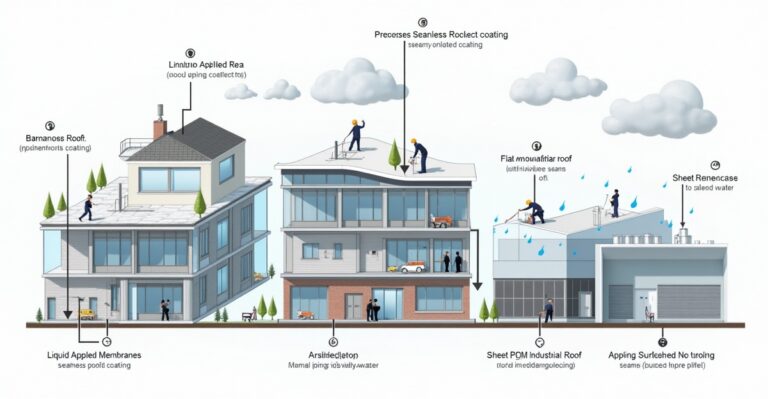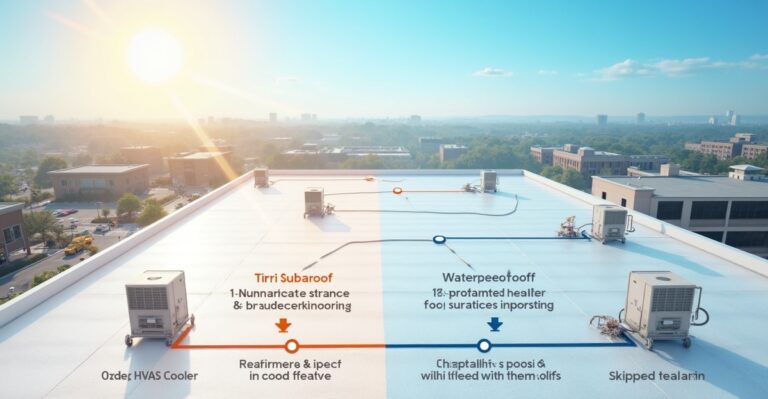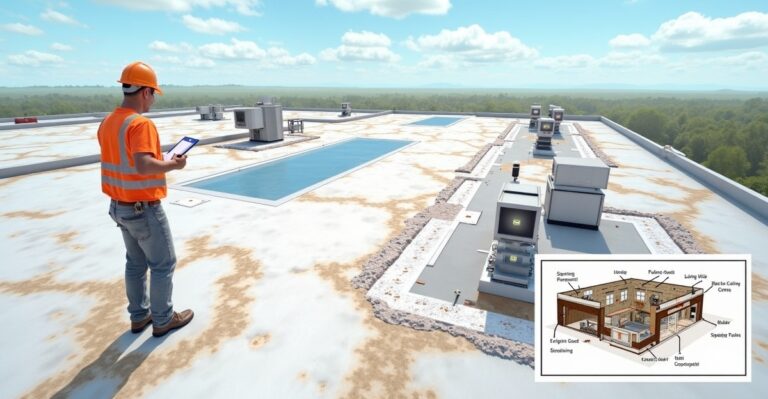
How to Maintain a Commercial Flat Roof
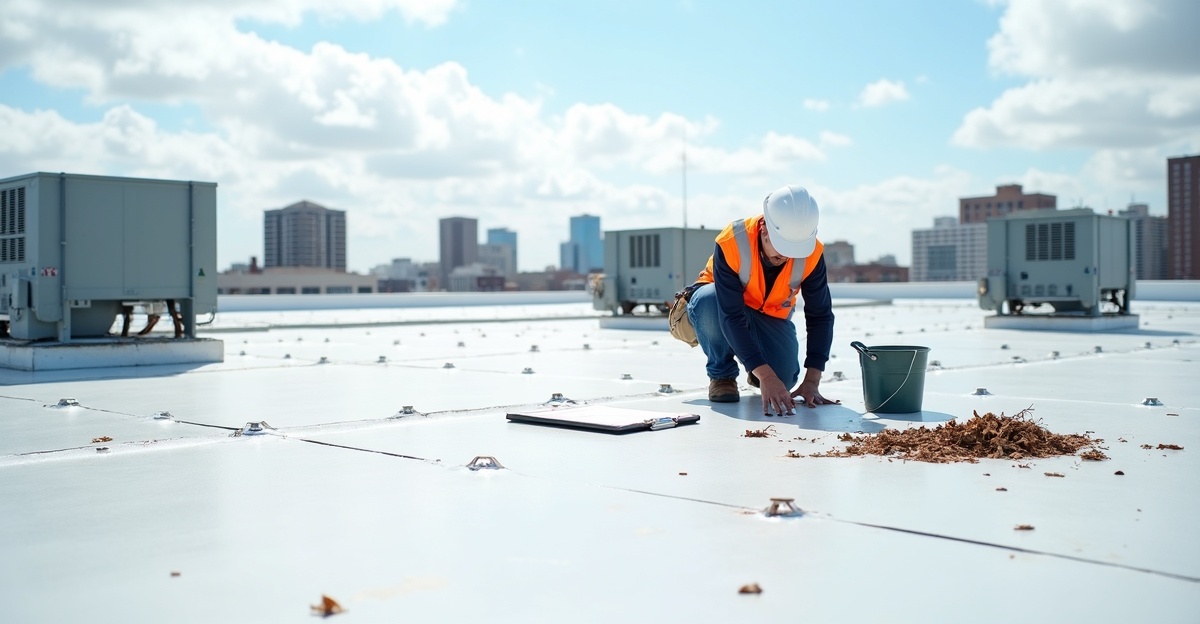
Caring for a commercial flat roof goes far beyond basic upkeep. It strengthens performance, extends service life, and cuts the risk of costly, unexpected repairs. Regular inspections, drainage reviews, and timely repairs help minimize expenses while keeping operations on track and buildings compliant.
Key Takeaways
- A steady commercial flat roof maintenance plan can add up to 30% more life to your roof and improve your return on investment.
- Minor membrane cracks, standing water, and blocked drains can grow into major problems if left untreated.
- An effective maintenance routine should cover monthly walk-throughs, inspections after major storms, and yearly evaluations by licensed professionals.
- Internal staff can manage debris clearing and routine checks, but diagnosing deeper issues demands experienced roofing contractors.
- Keeping clear records and building a long-term relationship with a trusted contractor helps protect warranties, support regulatory compliance, and guide capital planning.
Why Flat Roof Maintenance Pays Off: Cost, Compliance & Longevity
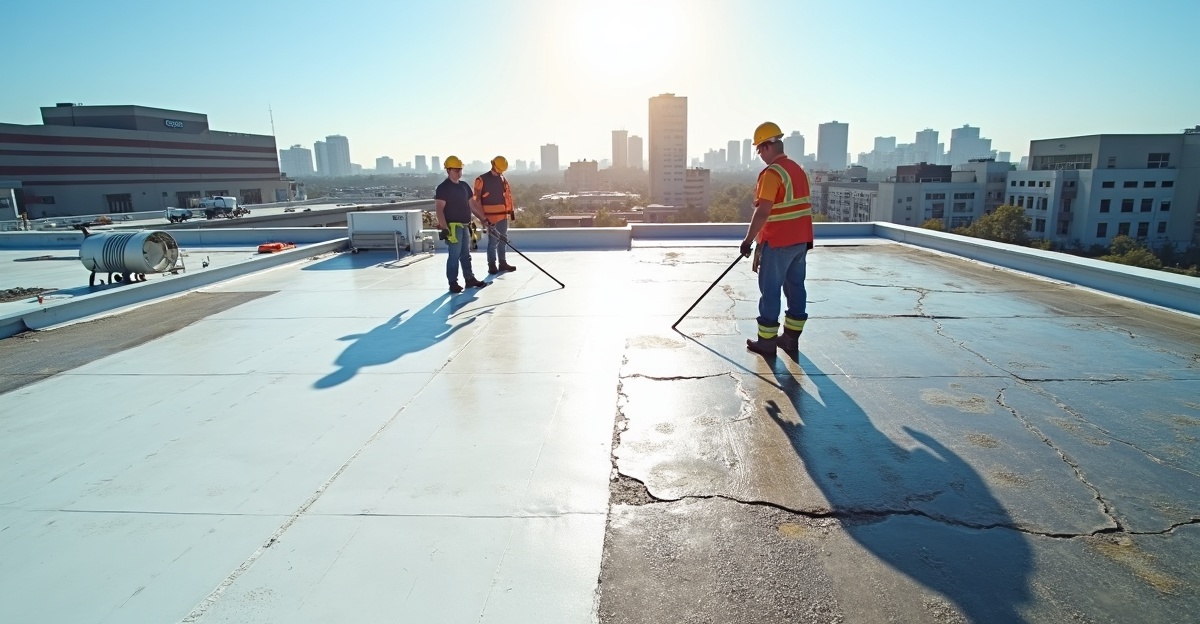
Flat roofs take a beating—sun, wind, standing water—they all push your system harder over time. If you don’t stay ahead of it, you’ll pay for it later. Routine commercial flat roof maintenance can stretch a roof’s life by 30% or more. That’s a big boost to your ROI when you’re protecting a six- or seven-figure asset.
A well-maintained flat roof doesn’t just last longer—it works harder for you every day. You’ll stop problems before they shut you down. Leaks wreck more than ceilings. They drive up insurance claims, damage inventory, and in mission-critical facilities like hospitals or distribution centers, they derail operations fast.
Even small defects—cracks in membranes, blocked drains, loose flashing—build into serious issues if ignored. And it’s not just about function. Keeping up with maintenance protects your legal and financial standing too.
Why Staying Proactive Delivers Better ROI
Here’s what regular inspections and upkeep deliver for your business:
- Longer lifespan – Preventive care keeps the system flexible, sealed, and draining correctly. That means decades—not years—between tear-offs.
- Lower total cost of ownership – Fixing early costs far less than repairing structural rot or replacing a failed deck.
- Fewer disruptions – Scheduled upkeep prevents emergency shutdowns from water intrusion, HVAC issues, or falling debris inside the building.
- Warranty protection – Most manufacturers require documented inspections and maintenance logs. Skipping them could void your coverage.
- Code compliance – Local building authorities and OSHA often hold owners accountable for upkeep, especially in schools, government buildings, and high-traffic locations.
- Energy efficiency – Clean, intact membranes lock in mechanical performance and may support cool roof credits or reflectivity rebates.
Replacement costs for flat systems usually range from $8 to $15 per square foot. That figure adds up fast across hundreds of thousands of square feet. Delaying that hit with smart maintenance makes financial sense.
We recommend using a proven process. Start with a seasonal and annual plan. A detailed commercial roof maintenance checklist helps crews track drainage, seams, fasteners, and more.
If you’re managing built-up systems, we suggest reviewing these built-up roof maintenance tips regularly. For single-ply, this quick guide on single membrane roof repair flags common weak spots.
If your system’s aging or already showing wear, it might be time to prep for a long-term fix. This commercial roof replacement guide walks you through key decisions, costs, and timelines. You can also explore options like roof coating solutions to reinforce and extend coverage.
Need boots on the roof? We handle commercial flat roof maintenance and repair across a wide range of systems. Let’s keep your building protected and your investment working harder, longer.
What to Watch For: Common Flat Roof Issues That Signal Trouble
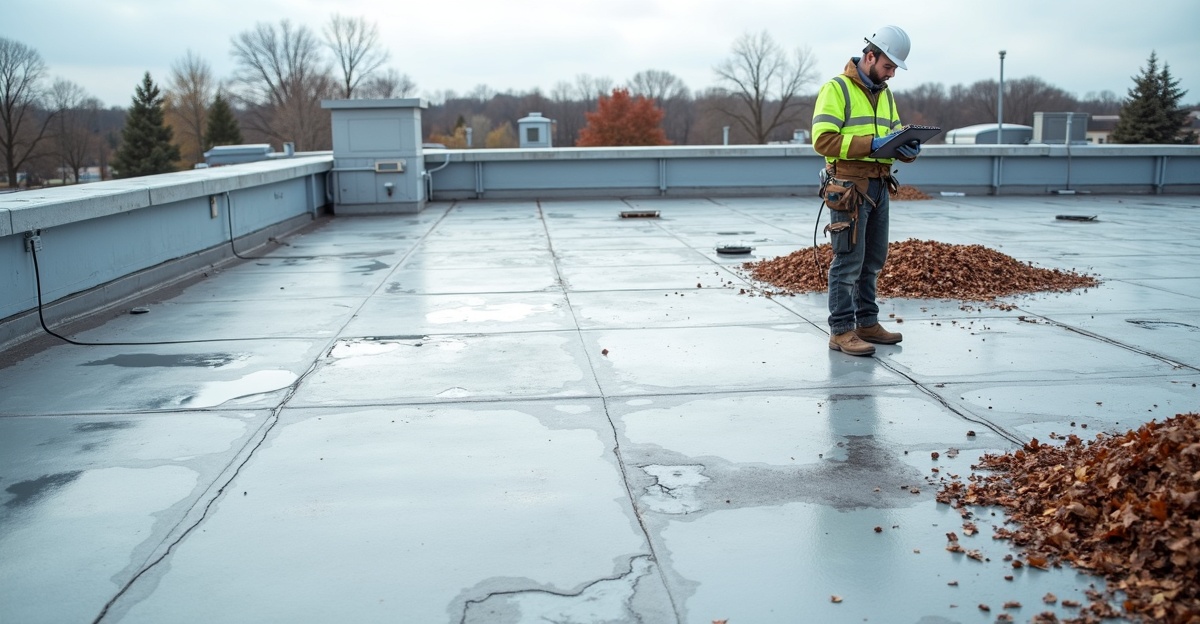
Flat commercial roofs deal with a unique set of challenges. They don’t shed water like pitched roofs, and when problems show up, they tend to spread fast. Catching issues early keeps costs down and extends the life of the roof. Here’s what we look for during inspections—and what you should be watching too.
Signs of Flat Roof Damage We See Most Often
Most problems start at seams, edges, or areas with standing water. These weak points are easy to overlook unless you’re actively checking them.
Some of the most common issues we tackle include:
- Membrane cracks or splits: Caused by age, temperature swings, or foot traffic, and they usually start small. If ignored, they open the door for leaks.
- Ponding water: Standing water that lingers 48+ hours after rain is a major red flag. It stresses the structure and speeds up roof deterioration.
- Blisters and bubbles: Trapped air or moisture can cause sections of the roof to expand, bubble, or delaminate, especially on built-up or modified bitumen roofs.
- Flashing separation: Flashings connect the roof to walls, vents, and skylights. When they pull away, water finds its way into the building.
- Membrane shrinkage: Single-ply roofs can contract over time, creating stress at seams and flashing. This often leads to tearing right at critical points.
- Clogged drains and failing scuppers: Debris buildup around drainage points blocks water flow—this contributes directly to ponding and even interior leaks.
- Accumulated debris: Leaves, branches, and trash trap moisture and clog drains. Plus, they hide other signs of damage like cracks or soft spots.
In areas prone to snow or heavy rainfall, flat roof drainage issues need even closer attention. Snowmelt or frequent downpours overwhelm drains that aren’t clear, leading to pooling and chronic leaks. That’s why clearing scuppers and checking internal drains are part of our routine maintenance calls.
Best Practices for Flat Roof Upkeep
Routine flat roof maintenance inspections keep small signs of damage from becoming major structural headaches. We recommend putting eyes on the roof at least twice a year—typically spring and fall—and after big storms. Some clients also schedule monthly walkthroughs, especially on older roofs.
Here’s a reliable process we follow that works well for building owners and facility teams:
- Walk the entire roof surface, checking for blistering, punctures, or pooled water.
- Pay close attention to flashings and seams; any separation or cracking here must be fixed right away.
- Clear drain covers and remove any debris, leaves, or organic matter around scuppers and gutters.
- Check all penetrations, such as HVAC units, pipes, and skylights. Look for sealant wear, brackets pulling away, or pooling around bases.
- Document any changes using photos and logs. Compare against past inspections to spot patterns or repeat trouble spots.
For those managing built-up systems, you’ll get more specific advice by reading through our built-up roof maintenance tips. Single-ply or TPO systems have different concerns—particularly membrane shrinkage. You can learn more in this guide on single membrane roof repair.
Over time, repeated drainage failures or widespread cracking may signal a bigger issue. To learn how to repair a commercial flat roof before full replacement becomes necessary, follow our outlined inspection and repair steps
If you’re overseeing facility care, we strongly advise reviewing this monthly commercial roof maintenance checklist. It gives you a step-by-step plan for catching damage early so you’re not facing emergency calls after the next storm.
We handle a wide range of roofing issues, whether that’s loose flashing or full replacements. If you’re concerned about any of the warning signs we mentioned, our commercial roofing services are built around long-lasting solutions—not temporary patch jobs.
Staying ahead of damage starts with knowing what to look for and putting a solid maintenance plan in place. We’re here to help if you ever need an expert opinion or hands-on repair.
Your Flat Roof Maintenance Schedule: Routine Tasks That Make a Difference
Managing a flat roof starts with a smart, consistent plan. Wondering what’s included in a commercial roof maintenance plan? It should reflect your building’s use, roofing material, and the kind of weather your area sees. We build all our schedules around those variables to keep things easy to manage—and far less expensive over time.
With commercial flat roofing, staying ahead of problems beats reacting to them. Preventive roof maintenance on commercial buildings costs less in the long run than emergency fixes. It also improves energy performance and helps you make the most of your investment.
Inspection Frequency That Works
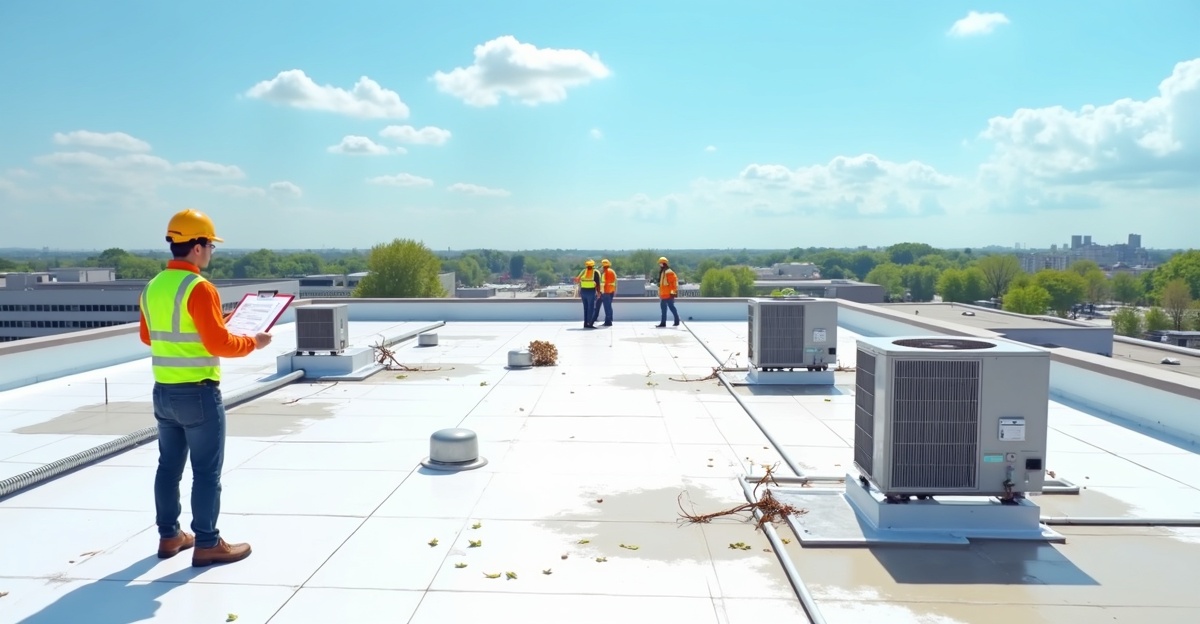
We recommend building your commercial roof maintenance schedule with these key intervals:
- Monthly: Do a quick visual check for ponding water, open seams, or debris. Clear off anything that doesn’t belong.
- After Major Storms: Walk the roof soon after harsh winds, rain, or hail. Check for blown-off parts, scuppers clogged with leaves, or new cracks.
- Quarterly: Inspect drains and downspouts. Test for flow. Look at all edges and penetrations. Replace failing sealant before it becomes a leak.
- Yearly: Bring in professionals to do in-depth diagnostics from edge to field. They’ll make small repairs, document wear patterns, and help map out long-term care.
This kind of schedule helps spot early signs of trouble and keeps minor wear from turning into major damage. If you’re using a built-up membrane, take a look at these built-up roof maintenance tips for material-specific advice.
Sample Commercial Roof Maintenance Schedule
Here’s a simple structure to guide your routine. Adapt it based on what roofing system you have and what your property demands:
- Monthly Tasks
- Remove debris (branches, trash, leaves)
- Check for obvious tears, cracks, or pooled water
- Inspect seals around vents and flashing
- Quarterly Tasks
- Test all drains for clogs
- Check seams, fasteners, and expansion joints
- Reinforce sealants as needed
- After Weather Events
- Inspect roof membrane, drains, and edges
- Document any visible damage
- Schedule repairs if needed
- Annual Professional Inspection
- Full inspection of membrane, flashing, drainage systems
- Moisture testing if needed
- Recommendations for repairs or upgrades
If you spot common problems like splits, blistering, or UV wear showing on your surface, it might be time for a roof coating to preserve the membrane before full replacement is needed.
You can also dive deeper into your flat roof maintenance checklist to make sure nothing slips through the cracks.
Making scheduled upkeep part of your building routine pays off every year. It keeps tenants confident, your insurance company happy, and big-ticket surprises off your plate. When it comes time for expert help or a full inspection, our commercial roofing team knows exactly what to look for—and what to do next.
DIY vs. Pro: Who Should Handle What?
Keeping a commercial flat roof in solid shape takes both awareness on the ground and the right hands on the job. There’s a line between what we can handle ourselves and what calls for bringing in a licensed roofing contractor. Missing that line can mean surprise leaks, hidden water damage, or ballooning repair costs.
What In-House Teams Can Handle
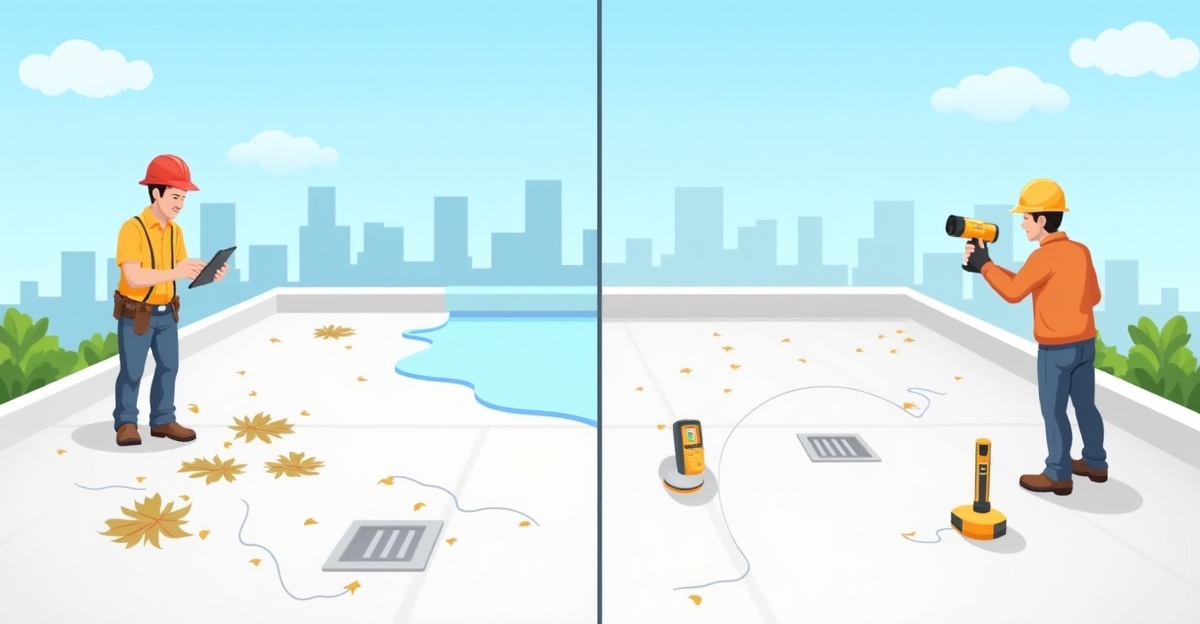
Light, ongoing roof care can often be done in-house by your trained maintenance staff. It doesn’t take a roofing license to keep an eye out and catch issues early. Here’s what we recommend adding to your regular checklist:
- Remove debris like branches, trash, or leaves—anything that blocks drains or causes pooling.
- Check for standing water after storms or snowmelt. Take note of any spots that stay wet longer than others.
- Look for membrane shifting, surface punctures, cracks, exposed seams, or bubbling in the coating.
- Take dated photos of problem areas. These help track changes and provide documentation if you need warranty or insurance support.
Staying consistent with these steps builds a stronger understanding of your roof’s normal condition. That gives you an edge when subtle problems start to show.
We’ve put together a full commercial roof maintenance checklist if you need help building a routine system.
Where Professionals Make the Difference
Some issues aren’t visible from a quick walkthrough. That’s where professional vs. in-house inspections start to show real separation. Licensed commercial roofing contractors have tools, training, and diagnostic equipment that go beyond what most building teams can access.
A good roofing professional will use:
- Infrared scanning to map temperature differences caused by hidden moisture
- Core sampling to test insulation condition and verify build-up layers
- Membrane testing to spot slow leaks and compromised adhesion
- Drainage analysis to check internal drain lines and downspouts
- Moisture meters to locate early water intrusion
These inspections should happen at least once a year. If your building is aging, exposed to frequent storms, or houses sensitive equipment, it’s smart to schedule more frequent checkups. Many property managers schedule spring and fall reviews to catch seasonal risks ahead of time.
You can dig deeper into what goes into professional roof assessments—and when replacement might be necessary—by checking out our guide.
The Hybrid Approach That Works
Nearly every site manager we work with uses a mix of in-house routine checks and scheduled professional services. That’s the smartest play. Staying involved daily keeps surprises low, while periodic outside inspections protect you from long-term liability or warranty issues.
Here’s how we structure it with most clients:
- Daily or weekly visual checks handled by internal maintenance teams
- Monthly or quarterly photo logs of priority areas
- Annual full inspection by a licensed contractor
- Proactive repairs handled by a qualified roofing crew
If your roof uses a more sensitive system like a built-up membrane or single-ply surface, pay close attention to manufacturer care guidelines. We’ve covered how to maintain a BUR membrane and spot signs before they become major failures. Likewise, understanding common issues with low-slope surfaces like ponding and shrinkage is key, as explained in our post on flat roof problems every owner should know.
Not all maintenance tasks carry equal risk or complication. When damage moves past the surface—or starts to affect insulation or structure—it’s time to bring in pros. Our roof repair team has deep experience with commercial systems and can respond quickly before small issues turn major.
When weighing professional vs. in-house inspections, err on the side of getting a second opinion. A minor repair today might save the cost of structural work or interior water damage tomorrow. And if it turns out your roof system’s hitting the end of its lifespan, we’re ready with full commercial roofing replacement options designed to fit your building and budget.
We’ll always help you figure out what belongs on your plate and what should come to ours. That split—right people in the right roles—makes all the difference in keeping your flat roof sound and your tenants happy.
Know When It’s Time: Warning Signs Your Flat Roof May Need Replacement
Flat roofs work hard. But like any system, they don’t last forever. Recognizing the signs early can save money and protect the entire building. So how do we know when it’s time to stop patching and start planning a full replacement?
The Clear Signs It’s Time for a Change
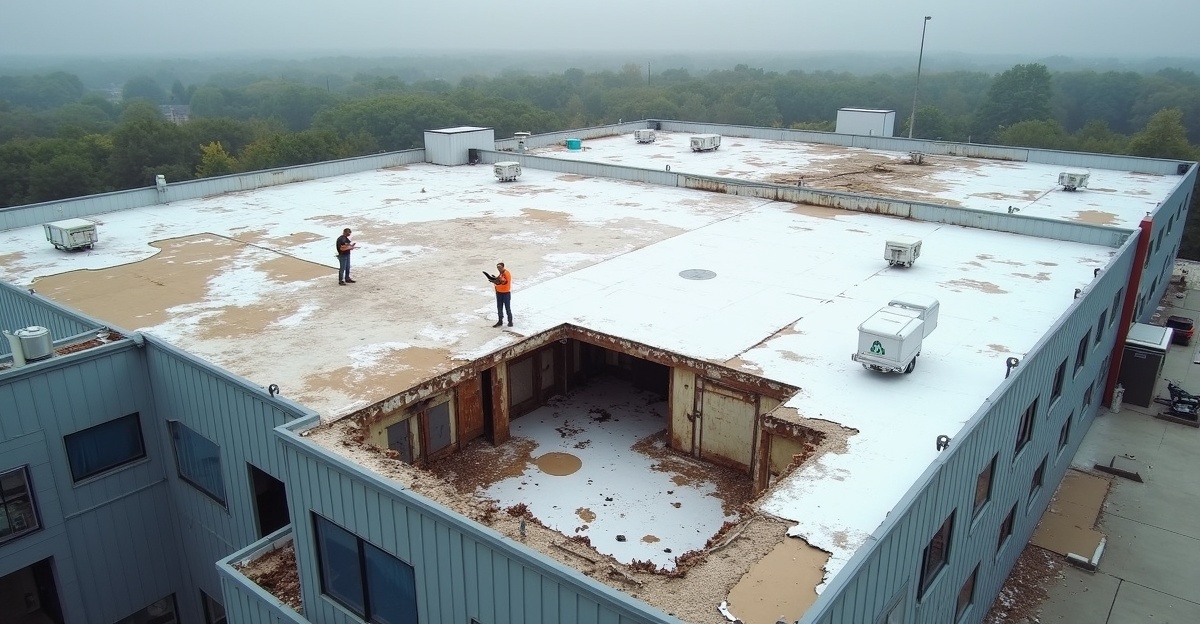
We look for patterns and severity, not just isolated issues. A good maintenance plan can extend a roof’s lifespan, but certain conditions mean it’s smarter to consider replacement. Watch for these clear warning signs:
- Persistent or widespread leaks, especially after repairs
- Cracks or blisters across large surface areas
- Rotted or soft decking under the membrane
- Saturated insulation or frequent water ponding
- Interior mold or water stains that keep coming back
- Failing or peeling flashing at edges and penetrations
- Repeated work in the same area, month after month
If we’re seeing these consistently, the cost of ongoing fixes can outpace the value. Patchwork won’t cut it long-term.
Consider the Roof’s Age and Structure
Most commercial flat roofs last 20–25 years depending on materials, use, and local weather. If your system is getting up there in age, it’s smart to schedule a commercial roofing assessment. Even if there aren’t major leaks yet, underlying issues can start to build that quietly weaken the structure.
For example, built-up roofs—while tough—can hide damage beneath the surface. We recommend reading our tips on built-up roof maintenance to better understand what to look for.
When Repair Costs Start Adding Up
There’s a tipping point where replacement is simply more cost-effective. If the same spot gets patched more than twice in a season, or repairs start approaching 20–30% of the full replacement cost, we need to talk about long-term ROI.
It’s especially true if repairs involve multiple trades—roof membranes, flashing, decking, and interior damage. Frequent service calls drive costs up fast. In these cases, budgeting for a new system isn’t just the better investment—it’s the smarter decision.
Preventive Insight and Inspections
We’ve helped enough building owners to say this with confidence: don’t wait for emergencies. Staying ahead with regular evaluations helps avoid sudden system failures. Use this commercial roof maintenance checklist as a guide throughout the year to document what’s changing—and catch trouble spots before they escalate.
Even better, a proactive inspection every year or two from a roofing pro extends lifespan and keeps warranties valid. And if we uncover signs that point toward failure, we’ll help create a realistic plan with budgeting and scheduling options.
Pairing Maintenance with Better Materials
If it looks like replacement is the right move, the good news is modern flat roofing materials offer better performance, energy savings, and lower upkeep. From new TPO systems to fully adhered EPDM, smarter designs can help stretch value. Learn more about how to replace a commercial flat roof with minimal disruption and long-term payoff.
We often pair roof replacement with added protection like roof coatings to extend life even further. These options are especially effective in climates that take a toll on seams and surface temperatures.
Final Thought
Knowing when to replace a commercial roof starts with awareness and ends with choosing stability over short-term fixes. There are ways to extend flat roof lifespan, no doubt—but that only works if the core structure supports it.
If you’re facing recurring issues or simply unsure, let’s take a look. We’ve helped countless property managers and owners reduce risk by spotting the signs early. Replace the unknown with clarity—and act before it costs more than it should.
Choosing the Right Roofing Partner: What to Look For in Long-Term Maintenance Support
What Multi-Site Businesses Should Prioritize
Managing one building is tough. Managing multiple properties? That takes a dependable plan and a partner who understands more than just roof patches. If you’re overseeing several locations, consistency matters. Each site may have its own roofing system and exposure to weather, but the maintenance strategy shouldn’t be guesswork.
That’s why a proper commercial roofing maintenance plan isn’t just a document—it’s a framework for preventing problems before they start. It helps track work across buildings, keeps service timelines aligned, and clarifies accountability.
Here’s what to look for in a roofing contractor that supports long-term consistency:
- Proven experience with commercial roofing systems—EPDM, TPO, built-up, and modified bitumen
- Familiarity with your local climate and how it affects different roof types
- Clear documentation processes and access to service reports
- Scalable support for portfolios of properties
- Ability to develop proactive strategies, not just reactive repairs
If you need tips on managing built-up systems specifically, don’t miss our post on how to maintain a built-up roof membrane.
Evaluating Contractors for Long-Term Reliability
Not all vendors are built for long-term support. A reliable commercial partner doesn’t just show up after a leak—they help you avoid it in the first place. We recommend using these checkpoints when hiring commercial roofing contractors:
- Experience with compliance requirements: From OSHA rules to local codes, your roofing partner should know the landscape and keep you on the right side of inspections.
- Solid record-keeping: Ask how they log service visits, inspections, and repairs. Digital records help you budget better and protect warranties.
- Response-ready team: Find out how fast they respond to emergencies and what their availability is during peak weather seasons.
- Service warranties and guarantees: The best pros stand by their work. Look for clear terms on workmanship and materials.
- Material-specific knowledge: A good team tailors maintenance to the material. Whether you’re dealing with a TPO sheet or built-up gravel system, generic advice won’t cut it.
You’ll also want transparency. A partner willing to walk your roof, explain what’s wrong (and what isn’t), and offer options without upselling earns trust over time. That’s how we approach every maintenance assessment.
Having a trusted partner allows you to plan ahead instead of making rushed decisions under pressure. You’ll avoid last-minute expenses, reduce risks tied to liability claims, and stretch the life of every roof in your portfolio. A reliable partner also helps with phased replacement planning or coatings that extend roof service when full replacement isn’t ready yet.
To learn more about this kind of preventive approach, check out our commercial roof maintenance checklist.
If you’re navigating vendor evaluation and need support deciding whether you’re due for repair or full system replacement, our crew can handle both. Head over to our commercial roofing services page to see how we approach maintenance, repairs, coatings, and capital planning as a single strategy.
If you’re managing one property—or 50—RayPro’s team is here to help you stay ahead of costly problems. Get in touch today to schedule a maintenance assessment or just ask a question.
Frequently Asked Questions
Commercial flat roof maintenance includes routine inspections, debris removal, drain cleaning, seam and flashing checks, and minor repairs. The goal is to catch small issues like membrane cracks, ponding water, or sealant failure before they lead to leaks or structural damage. Most plans also include documentation to protect warranties and support long-term budgeting.
A commercial flat roof should be inspected at least twice a year—typically in spring and fall—and after major storms. Many facilities also perform monthly visual checks to monitor drainage and surface conditions. Annual inspections by licensed professionals are recommended to identify hidden moisture, insulation issues, or membrane deterioration.
Yes, standing water can significantly damage a commercial flat roof if it remains for more than 48 hours. Prolonged ponding increases stress on the membrane, accelerates material breakdown, and raises the risk of leaks and structural issues. Regular maintenance ensures drains and scuppers stay clear to prevent water buildup.
Common mistakes include ignoring small cracks, failing to clear drains, skipping post-storm inspections, and relying only on reactive repairs. Another major error is neglecting documentation, which can void manufacturer warranties. Consistent preventive maintenance costs far less than emergency repairs or premature roof replacement.
Yes, commercial flat roof maintenance is far more cost-effective than repeated repairs or full replacement. Preventive care can extend a roof’s lifespan by up to 30%, delaying replacement costs that often range from $8 to $15 per square foot. Maintenance reduces emergency calls, interior damage, and long-term capital expenses.