Understanding Roof Pitch and Its Impact
Understanding roof pitch goes beyond simple angles—it directly impacts how the roof sheds water, handles snow loads, and holds up over time. Whether we’re designing a steep slope or opting for a low-slope commercial system, pitch affects which materials we can use, how much we’ll spend on installation, and what kind of upkeep we’ll need over the years.
Key Takeaways
- Roof pitch appears as a ratio (like 4:12) and shows how steep the roof is.
- Steeper pitches move water and snow more easily, often last longer, and usually carry higher labor and material costs.
- Flat or low-slope roofs require specific materials and more regular checks because drainage runs slower.
- Only certain materials meet code for particular pitch ranges—installing the wrong one can cancel warranties.
- Pitch affects energy use, airflow, attic capacity, and appearance—especially important in residential design.
What Roof Pitch Means—and Why It’s a Big Deal for Your Property
Roof pitch is simply the steepness of your roof. It’s measured as a ratio like 4:12—meaning the roof rises 4 inches for every 12 inches of horizontal span. The higher the first number, the steeper the roof.
People often mix up “roof pitch” and “roof slope.” While they’re closely related, slope is technically a percentage value of the rise divided by the run. Pitch sticks to the ratio, which is the industry standard.
To find your roof pitch, you can use a level and tape measure, or an online roof pitch calculator. Place the level horizontally under a rafter, measure 12 inches along it, and then measure how far up the rafter goes at that point—there’s your rise.
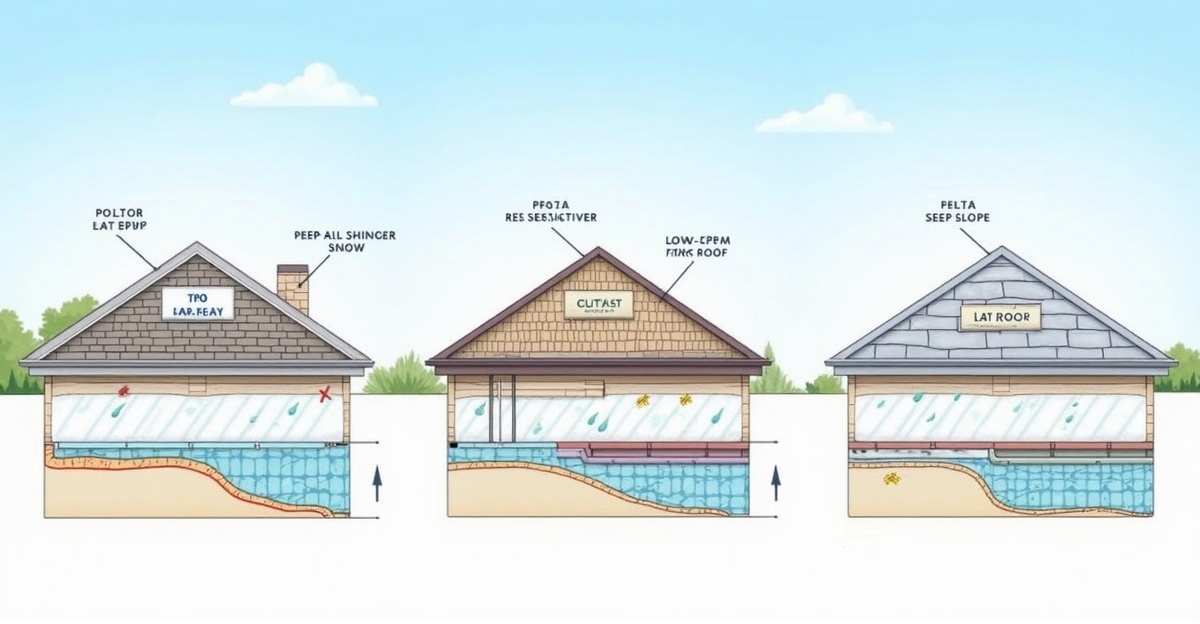
Most homes have pitches between 4:12 and 9:12. Commercial buildings usually have flatter roofs, ranging from ¼”:12 to 2:12. Here’s a visual tip: Use a roof pitch chart to see the difference between low-slope, medium-pitch, and steep-pitch roofs based on common ratios and degree angles.
Knowing your pitch isn’t just trivia. It helps you pick the right materials, understand installation costs, and meet local code requirements.
How Roof Pitch Impacts Cost, Performance, and Maintenance
A steeper roof might cost more to install, but the tradeoff is often worth it. It drains water better, sheds snow faster, and usually lasts longer. Steep roofs mean less standing water and lower risk of long-term damage.
Low or flat roofs need extra attention. They require specialty materials like TPO, EPDM, or modified bitumen. These surfaces need more frequent inspections to catch pooling or slow-draining areas. We often recommend reviewing our guide on roof drainage system types for a closer look.
Pitch also affects energy use. Roofs optimized for ventilation or solar panels often use specific slopes for airflow and sunlight angles. Read more about roof ventilation to see how pitch plays a part.
Here’s a real-world difference: An asphalt shingle roof with a steep pitch might last 30 years, while a flat membrane roof could need replacement by year 20. Consider that when budgeting—not just the install price, but long-term care costs too.
Residential Roofing: How Pitch Shapes Style, Comfort, and Options
Your roof pitch shapes how your home looks and feels. Steep roofs often show off a classic, traditional profile and make room for attic storage or higher ceilings. Lower pitches lend themselves to modern, clean-line designs.
Standard residential pitches fall between 4:12 and 9:12. Roofs flatter than 3:12 should switch to different materials, like torch-down or rubber sheeting, because shingles won’t last on such shallow angles.
In colder regions, steep roofs are better at handling snow. They ventilate well, reduce ice dams, and help keep moisture out. In hotter, drier states, you’ll often see flatter roofs since snow isn’t a concern and modern aesthetics rule. If you’re deciding between roofs, take a look at flat roof vs. shingle roof options to compare.
Pitch also plays into your home’s comfort. It affects how air moves through the attic, whether solar panels catch the right light, and how quickly your roof dries after a storm.
Commercial Properties: Why Low-Slope Roofs Need High Attention
Most commercial buildings use flat or low-pitch systems under 2:12. The reason? They’re perfect for HVAC installations, large footprint designs, and cost-effective builds. But flat roofs aren’t set-and-forget.
Poor drainage on flat systems increases the risk of ponding water, added roof load, and faster material breakdown. Especially in wet climates, this can lead to early failure. Regular maintenance is critical—and so is understanding your structure’s load capacity before adding new loads or equipment.
Still, low-slope designs have perks. They’re easier—and safer—to walk for crews maintaining rooftop units. Installation costs scale well across large buildings. Plus, flat roofs offer great surfaces for solar and rooftop systems.
Keep in mind that weather affects your roof’s lifespan, and code may require a specific slope to ensure proper rainwater removal or fire resistance.
Large commercial roofs do best with consistent evaluations. We often advise proactive drainage planning and routine inspections after major weather events.
Roof Pitch and Roofing Materials: What Works Where
Different roof pitches call for different materials. Using the wrong type can shorten your roof’s life or void the warranty.
Here’s how pitch connects to materials:
- 0:12 to 2:12 (flat/low-slope): TPO, EPDM, modified bitumen
- 3:12 to 6:12 (moderate): asphalt shingles, metal roofing panels
- 7:12 and higher (steep): wood shakes, slate, tile roofing, high-profile metal roofing
Before picking anything, make sure the material is rated for your pitch. For example, asphalt shingles aren’t approved below a 2:12 pitch. Doing so could cost you out-of-pocket repairs if issues come up.
We always recommend meeting with a contractor familiar with local climate needs and code rules. Having a pro evaluate your options with a roof pitch chart ensures solid performance and approval from inspectors.
Making Smarter Roofing Decisions with RayPro
Whether you’re replacing a roof or planning new construction, start by asking the right pitch-related questions:
- What roofing materials are compatible with my roof’s pitch?
- Are there local codes I need to consider?
- How will this pitch affect future maintenance, lifespan, or energy costs?
Check out our residential roofing services or review options in flat roofing and shingle roofing.
Want expert advice on your roof pitch or next project? Schedule a consultation with our team. We’ll walk the roof with you, explain your pitch, and help you weigh materials that match both code and your long-term goals.