

How to Fix Cracks in Concrete Foundations
Cracks in a foundation can signal normal concrete shrinkage or serious structural movement. We start fixing concrete foundation cracks by identifying the crack type, width, and root cause. In this guide on how to fix cracks in concrete foundations, we explain how to separate cosmetic flaws from structural warning signs, which repair methods deliver results, and when a professional evaluation protects a property for the long term.
Key Takeaways
- Vertical hairline cracks often remain non-structural, while horizontal, widening, or stair-step cracks usually point to settlement or hydrostatic pressure.
- Crack width carries more weight than length; cracks wider than 1/8 inch or those that grow over time demand prompt evaluation.
- DIY repairs such as epoxy or polyurethane injection help stabilize non-structural cracks, but they won’t correct underlying soil movement or drainage issues.
- Structural repairs like carbon fiber reinforcement, wall anchors, underpinning, or drainage correction address root causes and deliver lasting stability.
- Early inspection with documented repairs protects property value, limits structural deterioration, and controls long-term costs.
Are Foundation Cracks Serious? How to Tell in the First 5 Minutes
Are foundation cracks serious? Sometimes. Many are minor. Some are structural red flags that demand fast action.
The key is understanding the types of foundation cracks and what they’re telling us.
Vertical foundation cracks usually run straight up and down. In poured concrete foundations, these often result from normal shrinkage as the concrete cures or from minor settlement. In our experience, most vertical hairline cracks in poured walls are non-structural. Still, they should be inspected to confirm there’s no movement.
Horizontal foundation cracks are different. These often signal hydrostatic pressure from saturated soil pressing against basement walls. They can also indicate early wall failure. Horizontal cracks carry a higher level of risk because they suggest lateral pressure, not simple shrinkage.
Diagonal and stair-step cracks frequently point to foundation settlement cracks or shifting soil. We see these in both poured walls and block foundations. If the crack follows mortar joints in a stair-step pattern, settlement or uneven support is usually involved.
Width matters more than length. Hairline cracks that stay narrow and stable are often cosmetic. Cracks that widen over time or exceed 1/8 inch deserve immediate evaluation.
Cosmetic vs. Structural Cracks
Cosmetic cracks:
- Hairline width
- Stable over time
- No wall displacement
- No bowing
- No sticking doors or uneven floors
Structural cracks:
- Wider than 1/8 inch or expanding
- Horizontal pattern
- Walls bowing inward
- Uneven floors
- Doors or windows sticking
- Water leaking through the crack
Warning signs that structural foundation repair may be needed include bowing basement walls, repeated cracking after patching, expanding cracks larger than 1/8 inch, and water coming through the wall.
Not every crack is an emergency. But ignoring horizontal foundation cracks or widening settlement cracks can lead to serious structural foundation repair later. Acting early protects your home, your building, and your budget.
What Causes Concrete Foundations to Crack in the First Place?
Concrete always cracks. The real issue is why and how much.
Settlement and soil movement are leading causes. When soil compacts unevenly or shifts under the footing, the foundation follows. That movement creates diagonal or stair-step cracks.
Concrete shrinkage happens during curing. As moisture leaves the mix, the slab or wall contracts. This often results in vertical foundation cracks that are thin and fairly straight.
Hydrostatic pressure creates horizontal foundation cracks. When soil becomes saturated, water pushes against basement walls. Over time, that force can cause cracking and inward bowing.
Temperature changes also play a role. Freeze-thaw cycles expand and contract moisture in the soil. In colder climates, this repeated movement stresses foundation walls.
Poor grading or improper compaction during construction adds risk. If soil wasn’t compacted correctly or slopes toward the structure, pressure builds where it shouldn’t.
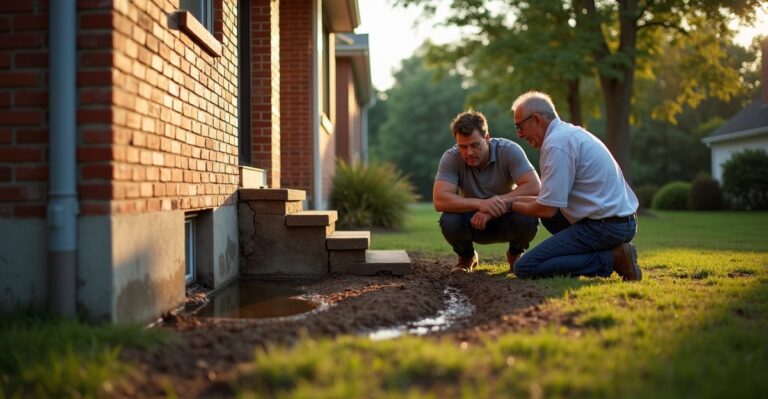
On the residential side, clogged gutters, short downspouts, or lawn grading that pitches toward the house can increase water around the foundation. That affects family safety and home value. We regularly find that a simple drainage fix prevents long-term concrete foundation crack repair.
On commercial properties, site preparation and water management are even more critical. Expansive soils, poorly designed drainage systems, or neglected maintenance can impact multiple units or buildings at once. Over time, that compromises asset protection and compliance.
Every crack has a cause. Identifying it correctly makes all the difference in choosing the right repair.
DIY Foundation Crack Repair: When It’s Safe — And When It’s Not
DIY foundation crack repair has its place. It just has clear limits.
It’s generally appropriate for non-structural, hairline cracks that show no movement and no water intrusion. If the crack is thin, vertical, and stable, a basic repair may be reasonable.
It’s not appropriate for horizontal foundation cracks, widening cracks, or any crack tied to structural movement. Those require professional evaluation and often structural foundation repair.
Common repair methods include epoxy injection foundation repair. Epoxy bonds the concrete back together and can restore structural integrity for certain vertical or diagonal cracks. When applied correctly, it forms a strong internal seal.
Polyurethane foam foundation repair works differently. It expands inside the crack and creates a flexible waterproof barrier. This solution is often used to control water intrusion rather than restore structural strength.
Surface sealants and masonry patch compounds are usually cosmetic. They fill the visible gap but don’t address internal movement or soil pressure.
Here’s the hard truth. DIY sealing does not correct settlement, drainage problems, or hydrostatic pressure. If those underlying issues remain, the crack often returns.
Improper repair can also mask structural problems. It may complicate future inspections and increase long-term foundation crack repair cost. Some warranties or insurance claims may also be affected if repairs weren’t handled correctly.
For minor cracks, a careful DIY repair might be fine. For anything that moves, leaks, or widens, professional guidance protects us from much bigger damage.
Professional Concrete Foundation Crack Repair Options Explained
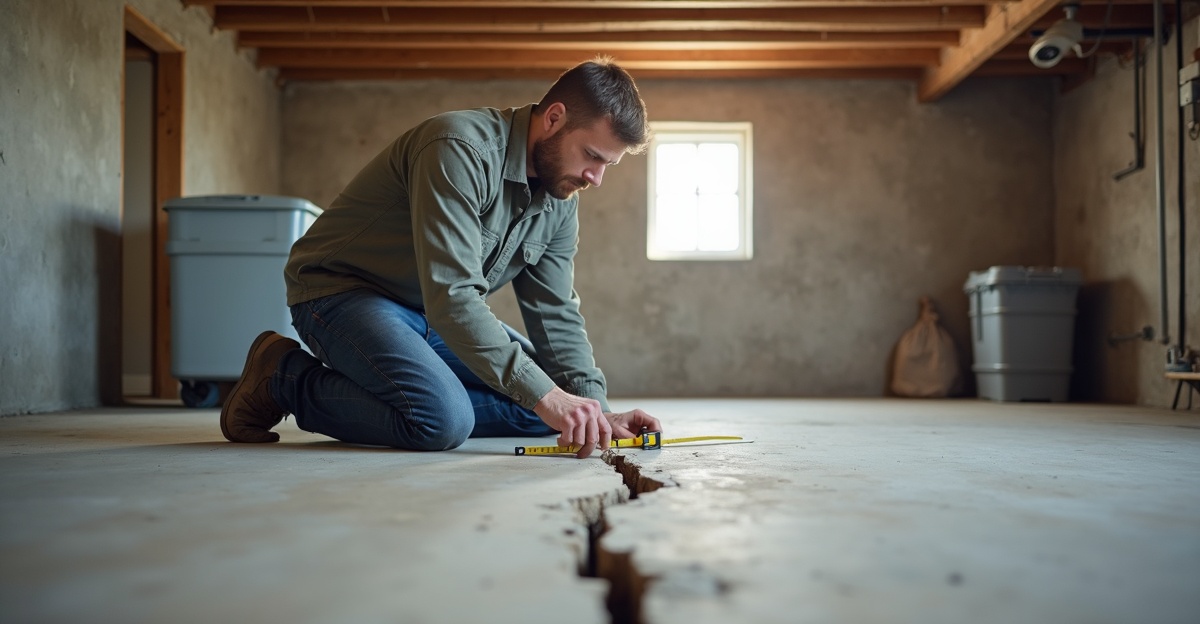
A professional inspection starts with measurement and documentation. We check crack width, length, and pattern. We look for wall bowing, shifting, or slab displacement. We evaluate moisture conditions and review drainage around the structure.
For commercial foundation repair services, we also provide written documentation for insurance, compliance, and asset records.
Common structural foundation repair solutions include:
- Epoxy injection for structural bonding.
- Polyurethane injection for water control.
- Carbon fiber reinforcement to stabilize bowing walls.
- Wall anchors to counter horizontal pressure.
- Underpinning systems to correct settlement.
- Drainage corrections to redirect water away from the foundation.
Each solution targets a specific cause. Epoxy handles certain cracks. Carbon fiber handles lateral pressure. Underpinning addresses soil failure beneath footings.
The process typically begins with inspection and a clear scope of work. Minor crack injection can often be completed in a few hours. Structural stabilization, like wall anchors or underpinning, may take several days depending on scope and access.
For commercial properties, we focus on maintaining operations. We plan work phases carefully to minimize tenant disruption and protect business continuity. In complex builds, coordination often aligns with broader structural strategies outlined in commercial construction planning best practices.
Knowing when to call a foundation contractor comes down to risk. If cracks are active, structural, or tied to water intrusion, professional repair provides long-term reliability instead of short-term patchwork.
Foundation Crack Repair Cost, Timelines, and What Impacts Pricing
Foundation crack repair cost varies by region, severity, and accessibility. These are typical ranges:
- Minor epoxy or polyurethane injection: approximately $300–$800 per crack.
- Carbon fiber reinforcement: $600–$1,500 per strap.
- Wall anchors or structural stabilization systems: $3,000–$10,000+.
- Underpinning or major settlement correction: $5,000–$25,000+.
Several factors influence final pricing. Crack size and depth matter. Structural involvement increases complexity. Limited access can raise labor time. Drainage corrections add scope. Soil conditions also affect system design.
For homeowners, foundation issues can impact resale value and inspection reports. Buyers notice cracks. Lenders notice structural notes. Insurance coverage varies. Sudden damage is more likely covered than gradual settlement.
For commercial property owners, the focus shifts to ROI and long-term reliability. Engineering reports, documentation, and multi-site coordination often factor into budgeting. Addressing problems early usually costs less than waiting for structural disruption or tenant complaints.
Investing in timely structural repair protects property value and limits long-term liability.
When to Call a Foundation Contractor — And What Happens Next
Clear triggers for professional evaluation include:
- Horizontal foundation cracks.
- Cracks wider than 1/8 inch or growing.
- Water leaking through foundation walls.
- Repeated repairs that fail.
- Uneven floors or sticking doors and windows.
If any of these are present, it’s time for an expert assessment.
When we’re contacted for an inspection through our foundation consultation team, we schedule a site visit. We perform a thorough evaluation and explain what we see in plain language. If the crack is cosmetic, we say so. If structural foundation repair is needed, we outline clear options.
We provide a detailed scope of work with practical solutions. Commercial clients receive structured documentation suitable for stakeholders and compliance requirements. Pricing and timelines are transparent.
As an experienced general contracting team, we approach foundation repair with one goal: long-term stability. That means addressing root causes, protecting structural integrity, and giving families peace of mind. For commercial properties, it means compliance, safety, and asset protection.
If there’s uncertainty about whether concrete foundation cracks are cosmetic or structural, a professional inspection provides clarity. It protects the investment and prevents small issues from turning into major repairs.
Frequently Asked Questions
The best way to fix concrete foundation cracks depends on the crack type and cause. Hairline or non-structural cracks are often repaired using epoxy or polyurethane injection, which seals the crack and prevents water intrusion. Structural cracks may require reinforcement methods such as carbon fiber straps, wall anchors, or underpinning. A proper inspection helps determine the correct repair method and prevents the crack from returning.
You can fix small, stable concrete foundation cracks yourself if they are thin, vertical, and not growing. DIY repairs usually involve epoxy or polyurethane injection kits that seal the crack and prevent moisture penetration. However, DIY repairs cannot solve soil movement, hydrostatic pressure, or structural damage. If the crack is wider than 1/8 inch, horizontal, or expanding, a professional evaluation is recommended.
Foundation cracks should be repaired as soon as they show signs of growth, water intrusion, or structural movement. Cracks wider than 1/8 inch, horizontal cracks, or stair-step cracks in masonry often indicate underlying foundation problems. Early repair helps prevent water damage, wall bowing, and costly structural repairs later. Monitoring cracks and documenting changes can help determine the right time for professional repair.
The cost to fix concrete foundation cracks varies based on the severity of the damage and the repair method used. Minor crack injection with epoxy or polyurethane typically costs a few hundred dollars per crack. Structural repairs such as carbon fiber reinforcement, wall anchors, or underpinning systems can cost several thousand dollars. Pricing also depends on crack size, accessibility, soil conditions, and drainage issues.
Foundation cracks do not always mean structural damage. Many cracks form from normal concrete shrinkage during curing and remain cosmetic. Vertical hairline cracks that stay narrow and stable usually fall into this category. Structural concerns arise when cracks are horizontal, wider than 1/8 inch, or continue to expand. Signs like wall bowing, sticking doors, or uneven floors may indicate a structural foundation issue.