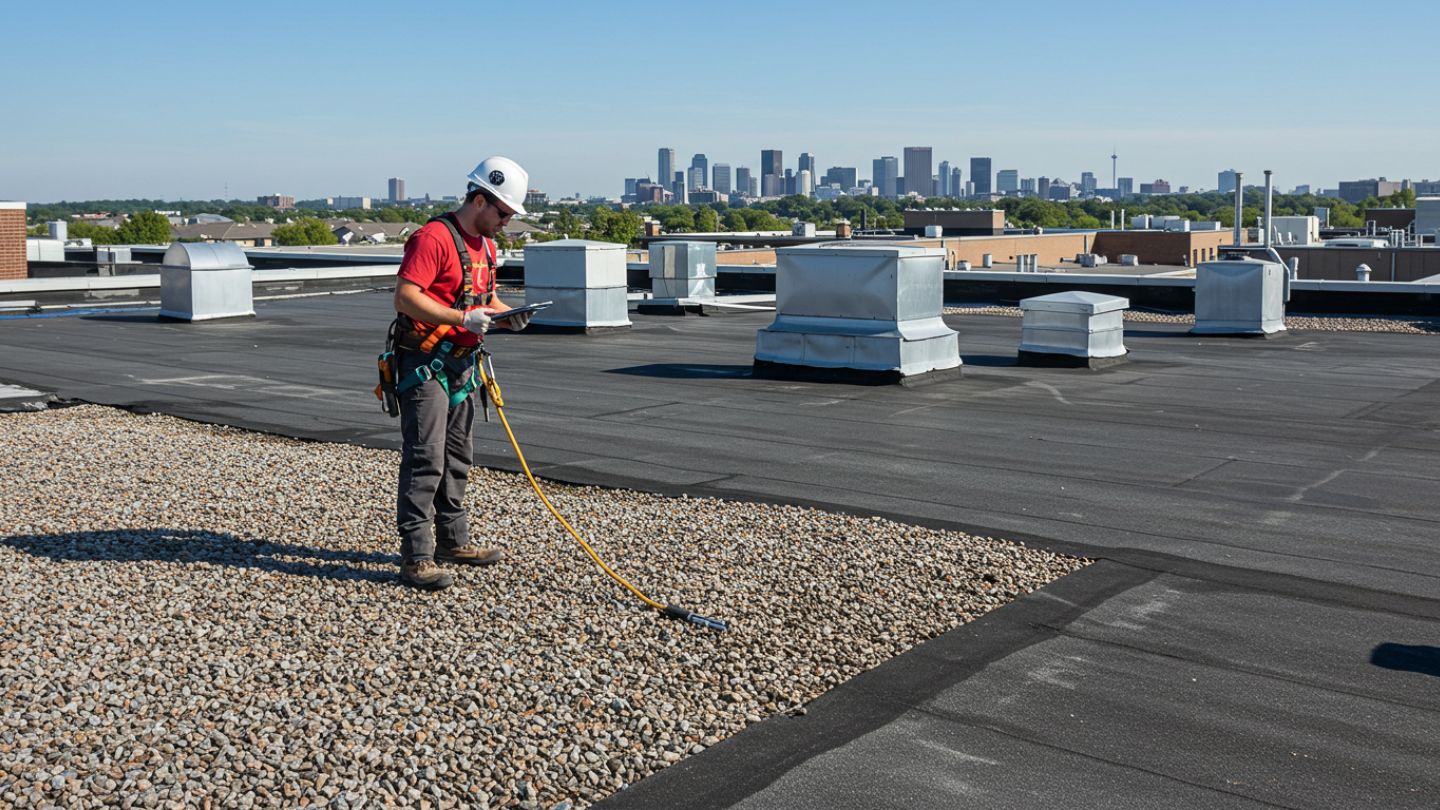
Flat Roof Drainage Problems and Fixes
Flat roof drainage plays a vital role in protecting properties from water intrusion, excess structural load, and expensive long-term damage. In regions with heavy rain, snow, or freeze-thaw cycles, a dependable system isn’t optional—it’s essential. We’ll walk through the most common red flags, explore why drainage may fall short, and show practical solutions we’ve used across both residential and commercial settings.
Key Takeaways
- Watch out for visible red flags like standing water, low spots, or water stains inside. These often signal a drainage system that needs prompt attention.
- Improper slopes, blocked outlets, and systems that can’t handle local weather remain the top reasons drainage systems struggle.
- Unchecked drainage issues can affect warranty coverage and lead to long-term structural or moisture problems.
- For homes, fixes might include correcting the pitch, cleaning buildup, or installing extra drains. For commercial properties, a new layout may be required.
- Staying ahead with regular inspections and cleaning will keep systems working and help avoid costly surprises later.
Signs Your Flat Roof Has a Drainage Problem
Think your flat roof not draining properly? Here’s what to look for.
Weather plays a big role here. In areas like ours, harsh winters, heavy rains, and those freeze-thaw cycles can push any flat roof drainage system to its limit. Knowing the early warning signs can save you a lot of stress, money, and structural damage down the road.
- Ponding water that remains 48+ hours after rainfall
- Visible sagging or roof deformation
- Water stains on ceilings or interior walls
- Overflowing or visibly clogged drains/gutters
- Ice dams forming in colder climates
If you’re seeing any of these, especially persistent flat roof water pooling, it’s time to take a closer look. A clogged drain or wrong slope might seem minor, but they can lead to bigger troubles fast.
Why Flat Roofs Commonly Drain Poorly
Flat roofs aren’t perfectly flat. They need a slight pitch to move water to the drains. When the slope is wrong—or missing altogether—water sits and causes problems.
Top Causes of Poor Drainage
- Flat roof slope problems: Over time, structures can settle or new layers may get added unevenly, disrupting that all-important pitch.
- Clogged roof drains and scuppers: Leaves, pollen, ice, dirt—anything that blocks the path can hold water up.
- Undersized or worn drainage systems: Old roofs weren’t built for today’s intense storms, especially as U.S. Environmental Protection Agency data on increasing heavy rainfall events shows more frequent extreme precipitation. They often don’t meet modern roof drainage standards.
- Local climate: In areas with snow and freeze-thaw weather, standing water freezes, expands, and makes small issues worse fast.
Some drainage issues are just annoying. Others can cut your roof’s life short by years. Smart fixes now can protect your structure and save big later.
What Can Go Wrong: Damage from Bad Drainage
If water has nowhere to go, it starts going where it shouldn’t—into your building.
The Damage Adds Up
Bad drainage doesn’t just sit on the roof. It spreads down into your structure. Here’s how it shows up:
For residential roofs:
- Ceiling leaks in living areas
- Mold, mildew, and rot in attics or walls
- Ice expanding into seams and cracking materials
For commercial roofs:
- Damage to insulation layers or TPO membranes
- Water weight stressing rafters and steel supports
- Liability risks when tenants report leaks or ceiling issues
One important fact: ponding water that remains more than 48 hours may affect warranty coverage, as defined by the National Roofing Contractors Association’s guidance on ponding water. That’s not just bad news—it’s expensive news.
Recurring roof leaks often trace back to a flat roof not draining as it should.
Fixes That Work: Real Solutions for Residential & Commercial Roofs
Not all roofs need the same fix. It depends on your building, the system you have, and how the drainage is set up today. Here’s a quick breakdown.
Fixes for Residential Buildings
For homeowners, it’s about correcting the basics:
- Clean out gutters and downspouts regularly
- Install new drainage outlets if needed
- Add tapered insulation to reshape troubled slope areas
- Patch roof membranes that crack or degrade
- Schedule seasonal inspections to catch issues early
Need help getting these done? Check out our roof repair services for smart, cost-effective fixes.
Fixes for Commercial Facilities
Larger buildings or flat commercial roofs require more advanced work:
- Recalculate and resize scuppers and drainage outlets
- Reshape the slope with insulated taper panels
- Add interior drains for better flow
- Fully upgrade outdated commercial roof drainage systems
- Consider eco-friendly drainage like green roofing or rainwater management
Every change we recommend aligns with the International Building Code (IBC) roof drainage and slope requirements. That’s critical for inspections, insurance, and long-term value.
Need flat roof drainage that holds up long term? Our commercial roofing team handles system redesigns that meet your building’s flow and load demands.
Prevent Future Problems With Proactive Maintenance
Good drainage doesn’t just happen. It takes planning, maintenance, and upgrades over time. That’s where we come in.
Smart Strategies for Long-Term Performance
For commercial site managers:
- Schedule roof and drain inspections twice a year
- Build drainage upgrades into capital expense forecasts
- Keep accurate condition reports to support warranty claims
For homeowners:
- Clean and check all drains and downspouts every spring and fall
- Watch for any signs of flat roof maintenance red flags like sagging or small leaks
- Partner with a team you can trust before things escalate
These flat roof maintenance tips protect more than your roofing—they protect your peace of mind.
Let’s Take a Look Together: When to Call a Pro
You don’t have to figure this out alone—we’ll inspect, explain what’s happening, and give you options that make sense.
We’ve worked across 17 unique climates and know how to fix drainage problems that others overlook. Our team understands how freezing temps, tropical storms, and massive spring downpours all affect flat roofing performance.
Schedule a no-obligation inspection if:
- You’ve seen standing water days after it rains
- Drains clog up even with regular cleaning
- You’re planning a roof replacement or upgrades
We’ll walk the roof with you and keep our recommendations straight to the point. Honest, clear, and helpful—it’s how we’ve earned the trust of property owners across the region.
Let’s get your flat roof drainage issue sorted before it becomes a bigger problem.
Frequently Asked Questions
What are the best flat roof drainage solutions for ponding water?
The best flat roof drainage solutions for ponding water include correcting the roof slope, adding tapered insulation, and installing additional drains or scuppers. These methods help direct water toward drainage points instead of allowing it to collect. The right solution depends on roof size, structure, and local weather conditions.
How do you fix poor drainage on an existing flat roof?
Poor drainage on an existing flat roof is usually fixed by cleaning clogged drains, correcting low spots, or upgrading the drainage layout. Contractors may add tapered insulation or new outlets to improve water flow. Addressing drainage early helps prevent leaks, structural stress, and warranty issues.
Can clogged drains cause flat roof leaks?
Yes, clogged drains are a common cause of flat roof leaks. When debris blocks water flow, standing water builds up and can seep into seams, membranes, or flashing. Over time, this moisture weakens roofing materials and increases the risk of interior water damage.
How often should flat roof drainage systems be inspected?
Flat roof drainage systems should be inspected at least twice a year, typically in spring and fall. Inspections are also recommended after major storms or heavy snowfall. Regular checks help identify blockages, slope issues, or damage before they lead to costly repairs.
Are flat roof drainage solutions different for commercial buildings?
Flat roof drainage solutions often differ for commercial buildings due to size, load, and code requirements. Commercial systems may require larger drains, interior drainage, or redesigned layouts to handle higher water volumes. Proper design ensures compliance, protects warranties, and reduces long-term maintenance costs.