Roof Safety Tips for Maintenance Crews
Working at height demands clear procedures and proper equipment. Roof maintenance crews face risks that can quickly turn serious without strong safety measures in place. Even small mistakes—like an unsecured ladder or missing fall gear—can lead to injuries, downtime, or OSHA penalties. Let’s break down key steps that help crews and property managers reduce those risks before anyone climbs up.
Key Takeaways
- Crews need fall protection when working more than 6 feet high on residential roofs or 15 feet on commercial projects, as required by OSHA.
- Watch for red flags such as workers close to edges without harnesses, unanchored ladders, loose tools, or a lack of warning signs or safety barriers.
- Property managers should request written safety plans. These must include equipment checks, emergency response steps, and required personal safety gear.
- Critical equipment includes full-body harnesses, anchored lifelines, slip-resistant footwear, helmets, and gloves that guard against cuts.
- Strong coordination improves both safety and workflow. That means setting up daily cleanups, limiting loud work during peak hours, and using clear on-site communication tools.
We’ve seen that consistent planning pays off—whether you manage buildings or handle rooftop maintenance. With the right tools and teamwork in place, crews stay protected and projects stay on schedule.
Spot the Red Flags: How to Identify an Unsafe Roof Worksite
Every safe roof job starts with a trained eye. Homeowners and property managers don’t need to be roofers to spot hazards. There are early warning signs that should never be ignored. Too often, we see issues that could have been prevented with simple precautions.
Here are a few clear red flags:
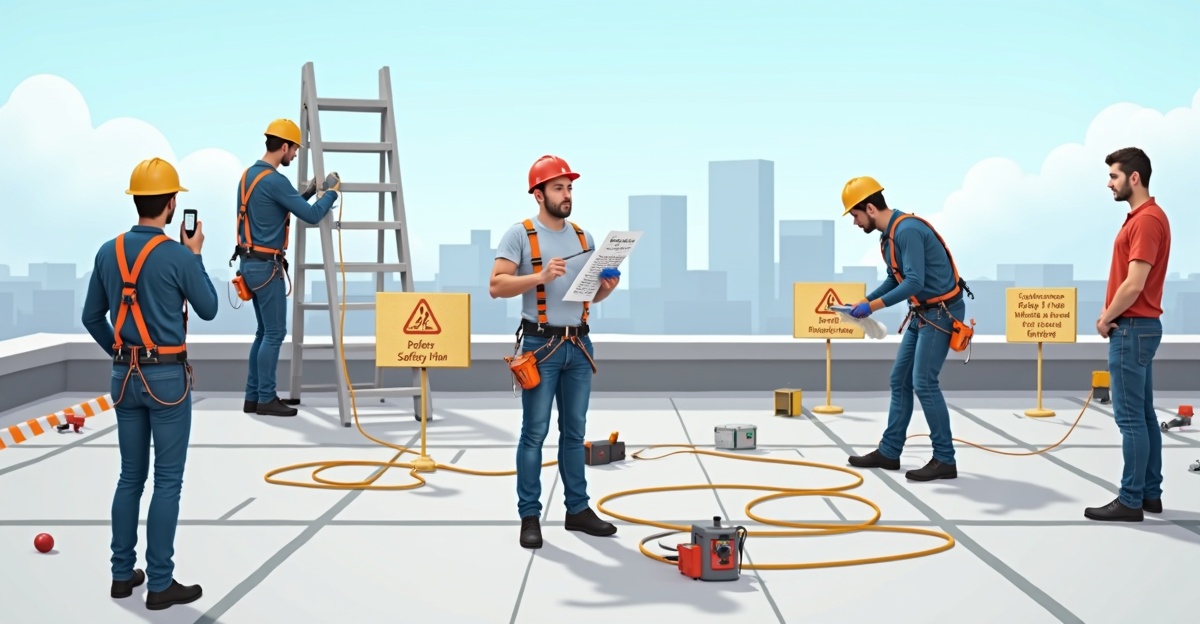
- Crews working close to roof edges without tie-offs or harnesses
- Ladders that aren’t secured or don’t extend three feet above the roof’s surface
- Loose tools or shingles lying around on the roof or scattered on the ground
- A lack of cones, warning signs, or clearly marked work zones
According to OSHA, fall protection is required for residential work at just six feet off the ground. For commercial jobs, it’s legally required at 15 feet under general construction standards—though certain exceptions may apply. These aren’t just suggestions—they’re laws aimed at protecting lives.
Falls from roofs account for nearly one-third of all construction fatalities in the U.S., per OSHA. That’s not a stat we take lightly. We perform strict site inspections to catch these issues before they become incidents. When you know what to look for, you can avoid being part of that tragic statistic.
Roof Safety Tips Every Property Manager Should Know
If you’re responsible for a commercial building or multiple properties, keeping crews safe doesn’t just protect lives—it protects your bottom line too. Unsafe practices can lead to compliance issues, lawsuits, and costly downtime. So here’s what we recommend for better commercial roof maintenance safety.
Key policies every commercial property should enforce:
- Confirm that all contractors follow OSHA roofing safety standards without exception
- For heights above 15 feet, verify there’s a fall protection system like guardrails, safety nets, or personal fall arrest systems (PFAS) in place
- Demand a written roofing safety plan before work begins—it should specify PPE, emergency steps, and equipment inspection routines
- Ensure ladders are secure, walk paths are clear, and workers conduct daily safety talks
Neglecting these areas can be costly. OSHA violations reached fines up to $16,131 per incident in 2024—not counting potential lawsuits or injury-related shutdowns. To stay on top of contractor site safety, perform routine safety audits, document meetings and protocols, and always walk the site before day one.
For a detailed approach, our commercial roof maintenance checklist can help you stay ahead of potential risks.
What Safe Roof Work Looks Like Around Your Home
For homeowners, roofing might seem like loud noise, ladders, and some shingles. But behind the scenes, safety should be front and center. Crews working on your house affect more than just your roof—they’re steps away from your kids, pets, and property.
You should expect to see the following at minimum:
- Workers wearing harnesses, hard hats, and non-slip boots
- Properly secured extension ladders
- Clearly protected areas with tarps, debris bins, and covered landscaping
- Bright-colored, consistent PPE worn by every crew member
Even if your home looks low to the ground, it still falls under OSHA rules for residential roof safety. At 6 feet, protection is legally required. That covers most single-family homes. Safe roofing practices protect workers—and your household.
Keeping a clean, controlled jobsite also protects walls, lawn furniture, and walkways. And it keeps your family away from dangerous tools or falling debris. Learn additional safety pointers in our roof maintenance tips guide for homeowners.
What PPE and Equipment Should Always Be on the Roof?
There’s no wiggle room on essential gear. Certain PPE for roofers isn’t optional—it’s life-saving. Whether you’re overseeing roof work or just watching your home get a new shingle layer, these are the tools and gear that should always be in plain sight.
Basic roofing safety checklist for PPE and site equipment:
PPE for roofers:
- Full-body harnesses
- Lifelines or lanyards secured to fixed anchors
- Non-slip roofing boots
- Hard hats with chin straps
- Cut-resistant gloves and impact-rated eye protection
Site equipment:
- Anchored fall arrest points
- Steady, secured ladders with stabilizers
- Guardrails along open perimeters (especially on flat or commercial roofs)
- Scaffolding or roof brackets where pitch or height calls for extra support
Missing any of these? That’s a major red flag. Go deeper with our full roof inspection safety checklist guide. It’ll help you spot problems before they cost you or someone else their safety.
Coordinating Safe Roofing Projects Without Disruption
A safe jobsite should also feel somewhat invisible. That means smart planning, steady communication, and steps to avoid interrupting everyday life.
Set expectations early:
- Go over work hours, loud tasks, and any off-limit zones on the property
- Make sure debris stays confined to tarps or dumpsters
- Request end-of-day cleanups and progress updates
For commercial properties, especially ones with multiple tenants:
- Notify everyone in advance—office workers, staff, even visitors
- Time noisy work outside of peak business hours when possible
- Use signage to restrict access to areas near roof entry points
Homeowners should take a few steps too:
- Keep driveways clear for work trucks
- Move patio furniture and grills away from the house
- Keep kids and pets indoors while work is active
Effective coordination adds peace of mind. That’s why every new roof installation or roof repair we do is scheduled with your routine in mind. Safety starts with a plan—before we even climb the ladder.
Real-World Lessons: What We See Go Wrong on Roof Jobs
We’ve been in roofing long enough to know what goes wrong—and how fast. Most issues don’t start with major failures. They begin with overlooked details.
Here are a few examples we’ve seen firsthand:
- Tripping hazards caused by tangled lifelines hanging too low on steep slopes
- Ladders placed on soft dirt or gravel—unsecured and wobbly from the start
- Anchors fastened to sigh-worthy spots like rotted sheathing or vent flashings
These slip-ups shouldn’t happen, and yet they do—too often. We take fall protection guidelines roofing crews are supposed to follow and make them non-negotiable on our jobs. Safety is baked into our inspections, not added later.
Each project has its own risks. But whether we’re handling a flat roof on a warehouse or storm cleanup on a split-level home, we don’t compromise.
For commercial building owners balancing budgets and safety standards, our roof maintenance plan for businesses offers more strategies to keep sites secure without slowing progress.
Whether you’re managing facilities or watching a crew from your kitchen window, those small safety details add up. We don’t guess—we check everything, every time. Want to get your own site checked out? Start with a quick note to our team at RayPro Roofing.