Roof Waterproofing Solutions Explained
Roof waterproofing demands the right match for your roof’s pitch, environment, purpose, and condition. From liquid membranes to sheet options, every system tackles leaks and water damage in its own way. Picking the right one protects your structure and saves money down the line.
Key Takeaways
- Liquid-applied membranes create a smooth, continuous barrier. They’re great for roofs with pipes, vents, or irregular shapes. Preparation is key—poor priming or surface cleaning can lead to peeling or early breakdown.
- Bituminous coatings hold up well on wide, flat commercial roofs. They deliver strong resistance but take more time and labor to install.
- Sheet membranes such as TPO, EPDM, and PVC last long and handle frequent foot traffic well. Their seams demand detailed attention to ensure full waterproof protection.
- Roofing sealants work well for small-scale residential patches. They’re fast and flexible but don’t strengthen the roof’s structure or offer long-term defense.
- Picking the incorrect system or skipping drainage planning shortens a roof’s lifespan. Expert insight helps avoid early failures and added costs.
Understanding Your Roof’s Waterproofing Needs
Reliable rooftop waterproofing matters more than most people realize. Without proper roof protection methods, water damage can wreck more than just shingles—it leads to mold, weakens your structure, destroys insulation, and can force costly repairs, as explained in the EPA’s guidance on moisture control and mold prevention in buildings. For both commercial properties and residential roof waterproofing projects, keeping water out isn’t optional. It’s protection for the entire property and everything inside it.
If you’ve dealt with persistent leaks, damage after heavy storms, or signs of aging roofing materials, your system may be compromised. These issues are common in older roofs, buildings exposed to extreme weather, or homes where seasonal maintenance has been skipped.
Selecting the right waterproofing option depends on several key factors:
- Roof Type: Flat roofs require very different solutions than pitched ones. Slope affects drainage and pooling risks.
- Climate Conditions: High rainfall zones need flexible, watertight barriers. Cold climates need materials that hold up during freeze-thaw cycles, which can cause expansion damage in roofing systems according to the National Institute of Standards and Technology’s research on freeze-thaw durability.
- Building Use: Commercial roofs often support foot traffic from maintenance teams and HVAC units. Homes need insulation-friendly layers that both protect and breathe.
- Local Codes and Energy Goals: Efficiency standards, storm resilience rules, and even HOA guidelines can factor into your waterproofing approach.
There’s no all-purpose answer. The age, shape, and material of your roof all shape the right waterproofing strategy. That’s why we assess every roof individually—no guesses, no shortcuts.
Comparing Top Roof Waterproofing Solutions
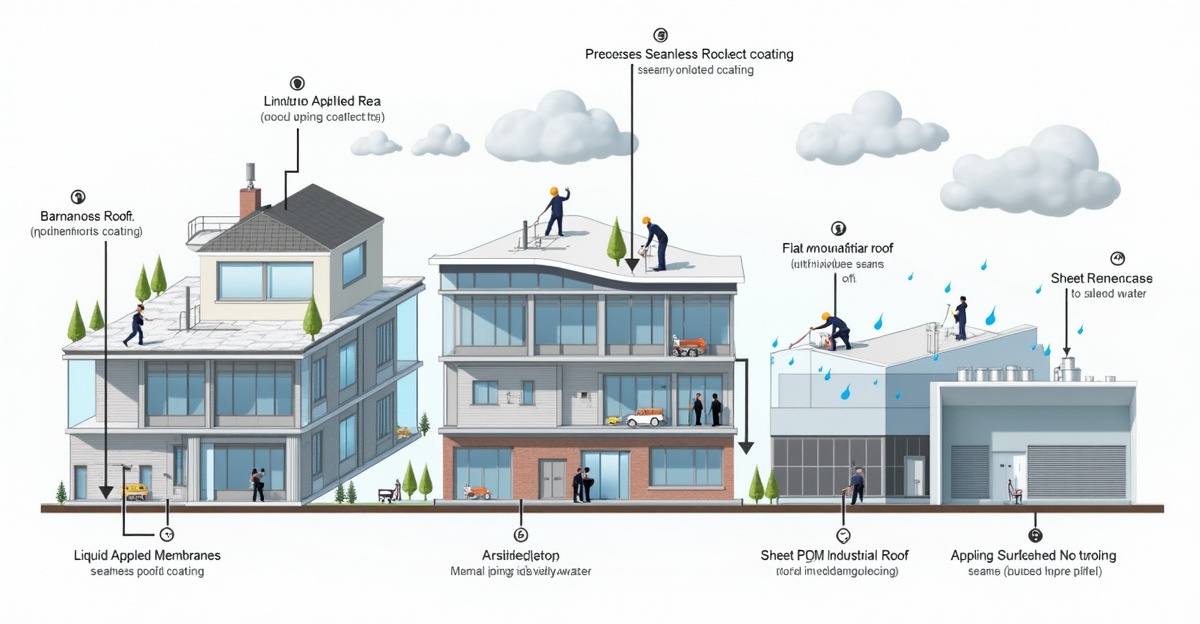
Several types of roof waterproofing are available, each with their strengths depending on the job’s requirements. Here’s how the most common systems work:
Liquid-Applied Membranes
These coatings—usually polyurethane or acrylic—are sprayed or rolled directly onto the roof’s surface. They form a seamless, flexible barrier, ideal for roofs with pipes, ventilation, or irregular shapes. They bond tightly, some with UV resistance and reflective properties to cut heat absorption, aligning with the U.S. Department of Energy’s guidance on cool roof performance and energy savings. These can last 10–20 years with regular touch-ups.
Bituminous Coatings
These are popular in commercial settings, using materials like torch-on felt or modified bitumen. They’re applied in layers, often with heat or adhesives, forming a strong, weatherproof seal. A top pick for large surfaces, especially flat rooftops, bitumen roof waterproofing provides toughness and reliability, often lasting 15–25 years.
Sheet Membranes
This group includes EPDM, TPO, and PVC sheet systems. They’re rolled out like giant tarps, secured mechanically or with adhesives. Sheet membrane vs liquid membrane debates often come down to layout. Sheets excel on large, open flat roofs due to their consistent thickness and high durability. Many last over 20 years and resist foot traffic and weather shifts.
Roofing Sealants
Silicone and elastomeric sealants are applied to patch problem areas or coat full surfaces. These are fast, flexible, and reflective—great for upkeep or small residential flat sections. Some elastomeric systems last up to 10 years and can stretch and compress without cracking.
Cementitious Waterproofing
Mostly used in utility areas or under tiled surfaces, this method mixes polymer additives into cement, then brushes on in thick layers. It bonds well to concrete but has lower flexibility, so it’s better indoors or in areas with minimal movement.
Pros, Cons & Ideal Applications of Each Method
Choosing the right roof waterproofing methods means weighing durability, compatibility, and cost. Here’s how they stack up:
- Liquid Membranes:
- Pros: Seamless, flexible, great for complicated details.
- Cons: Needs proper surface prep, can peel without it.
- Best for: Sloped residential roofs or commercial roofs with many obstructions.
- Bituminous Coatings:
- Pros: Durable, proven track record, good for layering.
- Cons: Higher labor demands, heat-intensive installs.
- Best for: Large commercial flat roofs or low-slope utility buildings.
- Sheet Membranes:
- Pros: Long-lasting, walkable, UV-resistant.
- Cons: Seams must be sealed properly or leaks can occur at overlap points.
- Best for: Commercial systems or large flat rooftops with foot traffic needs.
- Roofing Sealants:
- Pros: Quick to apply, affordable, flexible.
- Cons: Shorter lifespan, not a structural solution.
- Best for: Residential patches or temporary fixes pending full upgrades.
- Cementitious Systems:
- Pros: Easy to mix, bonds to masonry.
- Cons: Cracks under movement, not ideal for exterior exposure.
- Best for: Bathrooms, under tile, or indoor water tanks.
A few quick guidelines:
- If your commercial roof sees foot traffic, go with sheet membranes or modified bitumen.
- If your flat home roof needs protection, consider a silicone coating—easy to install and budget-friendly.
- If your area has hot summers and cold winters, prioritize flexible systems that won’t crack under temperature change.
- If your roof’s older, waterproofing may not be enough. You might need a full replacement before applying coatings.
For insight into the exact failure points of common flat systems, take a look at the top flat roof problems every owner should know.
Understanding Costs, Project Timelines & Maintenance
Cost Ranges
Residential waterproofing cost per square foot: $3–$7
Commercial waterproofing: $5–$12 per square foot
Factors driving these prices include:
- Material choice (high-end silicone vs. budget acrylics)
- Installation complexity (flat wide spaces are easier)
- Repair needs before the coating starts
- Roof access, slope, and cleaning requirements
Timelines
- Sealant recoating (elastomeric or silicone): Often done in a day
- Sheet membrane installs: 3–10 days, depending on prep, weather, and layout
Maintenance Expectations
Waterproof systems aren’t one-and-done. Inspections after winter or big storms are crucial. Most coatings need reapplying every 5–10 years, especially if exposed to direct sun or pooling water. Drainage plays a huge role—clogged scuppers or standing water can break down even top-tier membranes, a risk frequently noted in the National Roofing Contractors Association’s technical guidance on ponding water.
If you’re noticing recurring leaks or pooling, check this guide on what causes roof leaks and how to fix them before applying another layer.
Avoiding Common Mistakes and Misapplications
We’ve seen plenty of waterproofing jobs fail not because of bad products, but because of bad decisions.
What to avoid:
- Overusing roof sealants: DIY patch kits might stop a leak short term, but over time they layer up and trap moisture.
- Choosing the wrong system for your climate: For example, acrylics don’t hold up in snowy regions if not reinforced.
- Skipping proper drainage planning: Waterproofing a roof without slope checks or outlet upgrades invites failure.
- Mixing incompatible materials: Bitumen doesn’t bond well with certain acrylics or silicones. That leads to peeling or bubbling.
We often see roofs with multiple patch jobs and zero lasting protection—don’t fall into that cycle.
Always work with experienced roofing waterproofing contractors who understand materials and local conditions. Avoid short-term fixes pushed by untrained crews.
What to Look for in a Waterproofing Contractor
The right waterproofing contractor will save you both money and future frustration. Here’s what to search for:
- Proven experience with roofs like yours—flat commercial, pitched residential, metal panels, or low-slope asphalt.
- State licenses, insurance, and manufacturer certification for systems they install.
- Clear communication and constant inspection updates—no black box projects.
- Product training so whoever’s on the roof knows what each layer does and how to apply it.
- Local permitting and building code knowledge, built into the proposal.
For long-term results and warranty-backed work, pick pros who treat waterproofing as a system, not surface paint.
Concerned about a leak? Schedule a free roof inspection and let’s check the source.
Managing a portfolio or aging commercial facility? Work with our commercial roof waterproofing team to plan out scalable solutions over time.
Or just head to RayPro Roofing and see how we help property owners build with peace of mind, not guesswork.
Frequently Asked Questions
The best roof waterproofing options for flat roofs include liquid-applied membranes, sheet membranes like TPO or EPDM, and bituminous coatings. Liquid systems create seamless coverage around drains and penetrations, while sheet membranes offer long-term durability. The right choice depends on drainage design, foot traffic, climate, and the roof’s current condition when selecting the best waterproofing applications on roofs.
Liquid-applied systems form a seamless barrier that adapts well to complex roof shapes, while sheet membranes rely on overlapped seams for protection. Liquids are easier for irregular surfaces, but sheets provide uniform thickness and longer lifespan on large open roofs. Performance depends heavily on installation quality and surface preparation.
Roof waterproofing lifespan varies by material and maintenance. Liquid membranes typically last 10–20 years, bituminous coatings 15–25 years, and sheet membranes over 20 years when installed correctly. Sealants generally last under 10 years. Regular inspections, drainage upkeep, and timely recoating significantly extend system life.
Yes, many roof waterproofing options can be installed over an existing roof if the structure is sound. Surfaces must be cleaned, repaired, and properly primed before application. Waterproofing cannot fix structural damage, saturated insulation, or major slope issues, so inspections are critical before overlaying any system.
Common mistakes include selecting materials unsuitable for the climate, relying on sealants as long-term solutions, ignoring drainage issues, and mixing incompatible products. Poor surface preparation is another major cause of failure. Choosing the right system requires evaluating roof type, weather exposure, movement, and long-term maintenance needs.