What is the best roofing material to use in Florida?
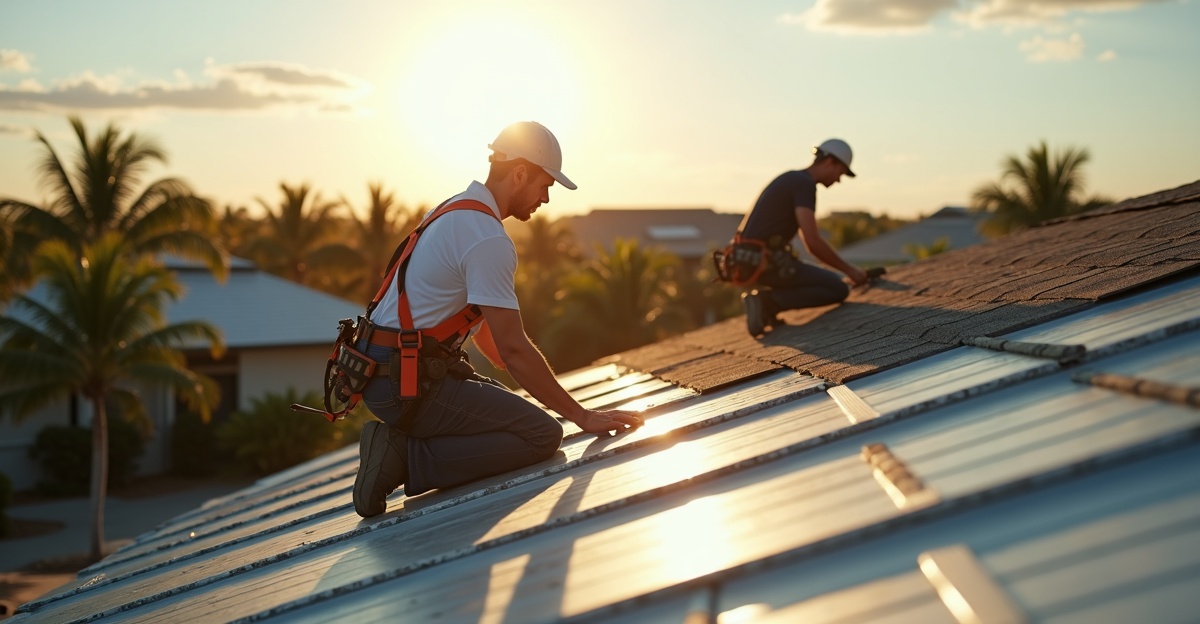
Choosing the best roof material for Florida requires a system that stands up to hurricane winds, intense UV exposure, high humidity, and strict Florida Building Code standards. We help property owners match the right material to their roof type, location, budget, and long-term goals. Some projects call for impact-rated shingles that control upfront cost. Others demand metal or tile for maximum durability. Flat and commercial roofs often perform best with advanced TPO or PVC systems.
Key Takeaways
- Florida roofs must meet high wind uplift ratings, resist UV and heat damage, and comply with strict building codes and insurance requirements. We always verify product approvals and fastening patterns to ensure full compliance and protect long-term coverage.
- For residential homes, asphalt shingles offer a lower upfront investment, while metal and tile deliver longer service life and stronger hurricane resistance. We guide homeowners through the trade-offs between initial cost and decades of performance.
- For flat and commercial roofs, TPO and PVC systems lead in seam strength, reflectivity, and long-term energy performance. We recommend heat-welded membranes that reduce leak risk and lower cooling loads.
- Coastal properties require corrosion-resistant materials and marine-grade fasteners due to salt air and higher wind exposure. We specify aluminum, stainless steel, or coated components that resist salt damage and extend system life.
- The best choice balances upfront cost with lifecycle value, energy savings, insurance impact, and how long we plan to own the property. We evaluate total ownership cost so we can invest wisely and avoid premature replacement.
What Actually Makes a Roof Material “Best” in Florida?
The best roofing material for Florida depends on the structure, location, and long-term goals of the property. “Best” doesn’t mean one universal product. It means the right system for your wind zone, roof type, budget, and ownership timeline.
Florida places extreme demands on roofing systems. We evaluate every roof against these realities:
- Hurricane-force winds, often 110–180+ mph design requirements depending on zone
- Wind uplift ratings and Miami-Dade approvals in stricter jurisdictions
- Year-round UV exposure
- High heat and humidity that accelerate aging
- Salt air corrosion in coastal areas
- Florida Building Code requirements
- Insurance eligibility and wind mitigation considerations
A roof that performs well in another state may fail faster here. Heat dries out materials. UV breaks down surfaces. Heavy rain tests every seam. Strong winds expose weak fastening patterns and shortcuts.
When we assess roofing options, we focus on:
- Wind resistance and uplift performance
- Realistic lifespan in Florida’s climate
- Energy efficiency and cool roof performance
- Maintenance demand over time
- Installed cost versus lifecycle return
- Operational continuity for commercial properties
There’s also a clear division between sloped residential roofs and flat or low-slope commercial systems. What works on a home with a steep pitch won’t always translate to a warehouse or retail plaza.
Overgeneralizing leads to expensive mistakes. Suitability comes down to structure, exposure, compliance needs, and long-term reliability.
Best Roof Materials for Sloped Residential Homes in Florida
For most Florida homes, the primary options are asphalt shingles, metal roofing, and concrete or clay tile. Each performs differently under wind, heat, and humidity.
Here’s a practical comparison for Florida conditions:
Asphalt Shingles
- 15–25 years in Florida climate
- Lower upfront cost
- Moderate wind ratings (architectural versions higher)
- Moderate maintenance
- Ideal for budget-conscious homes
Metal Roofing
- 40–70 years
- Higher upfront cost
- High wind resistance (can exceed 140–180 mph with proper system)
- Low maintenance
- Strong fit for coastal and high-wind zones
Concrete or Clay Tile
- 40–50+ years
- High upfront cost
- Excellent wind performance when properly installed
- Low surface maintenance, but underlayment is critical
- Common in luxury and long-term ownership homes
Comparing Residential Options in Real-World Florida Conditions
Asphalt shingles remain the most common choice. A properly installed shingle roofing system offers affordability and broad insurance acceptance. Architectural shingles provide improved wind ratings and better durability than traditional 3-tab shingles.
Pros:
- Lower upfront investment
- Familiar to inspectors and insurers
- Available in impact-rated and high-wind configurations
Cons:
- Shorter lifespan in Florida heat and humidity
- Vulnerable to wind damage if not properly rated and installed
- Granule loss under heavy UV exposure
Shingles work best for homeowners balancing cost with a 15–20 year ownership plan. For a deeper look, review our breakdown of asphalt shingles in Florida climate.
Metal roofing is one of the strongest hurricane-resistant options available. Standing seam systems, in particular, offer excellent uplift performance when engineered properly. Our metal roofing services are popular in both inland and coastal communities.
Pros:
- Long lifespan, often 40–70 years
- High wind performance when correctly fastened
- Reflective coatings reduce attic heat and cooling costs
- Resistant to rot and insects
Cons:
- Higher upfront cost
- Requires experienced installers to prevent fastener or panel failures
In coastal zones, corrosion-resistant coatings and marine-grade fasteners are essential. Many homeowners comparing systems start with metal roof vs asphalt shingles to understand performance differences.
Clay and concrete tile roofs offer durability and high-end curb appeal. A quality tile roofing system can withstand extreme heat and deliver decades of service life.
Pros:
- Durable in intense sun
- Strong wind performance when properly installed
- Long service life
Cons:
- Heavy system that requires adequate structural support
- Underlayment typically requires replacement before tiles
- Higher repair and replacement costs
Tile systems must comply with Florida Building Code uplift ratings. For homeowners weighing longevity and aesthetics, comparing metal roof vs tile roof often clarifies the decision.
Best Roofing Materials for Flat and Commercial Roofs in Florida
Flat and low-slope systems demand different materials. Drainage, seam integrity, and heat reflectivity carry more importance than aesthetics.
TPO Roofing
- 20–30 years
- Moderate cost
- High reflectivity (cool roof performance)
- Heat-welded seams
- Ideal for large commercial roofs
PVC Roofing
- 20–30+ years
- Moderate to high cost
- Strong chemical resistance
- Durable welded seams
- Common on restaurants and industrial buildings
Modified Bitumen
- 15–20+ years
- Lower to moderate cost
- Multi-ply assembly
- More maintenance over time
- Fits smaller commercial properties
Metal Roofing (Low-Slope Adaptations)
- 40+ years
- Higher upfront
- Strong wind performance
- Long-term value
- Often used in industrial and institutional projects
TPO is one of the most widely selected options for flat commercial buildings in Florida. It reflects solar heat and uses heat-welded seams to reduce leak risk. Our flat roofing services frequently include TPO installations for warehouses, offices, and retail centers.
PVC performs similarly but adds chemical resistance. That makes it ideal for restaurants with grease exhaust or facilities that emit chemicals. Seam strength under wind uplift testing is a major advantage.
Modified bitumen is a multi-layer system with solid puncture resistance and lower initial cost. However, severe UV exposure in Florida can shorten its lifespan compared to thermoplastic options.
Commercial priorities go beyond material type. We look closely at:
- Wind uplift testing and compliance
- Miami-Dade approvals where required
- Lifecycle cost versus upfront price
- Minimizing disruption to tenants and operations
Choosing the right system protects operations, revenue, and compliance.
Cost, Lifespan, and ROI: Upfront Price vs Long-Term Value
A lower-cost roof can cost more over 30 years if it needs early replacement. Florida’s heat, UV exposure, and storm cycles can reduce manufacturer-stated lifespans.
General installed cost tiers in Florida look like this:
- $ = asphalt shingles, modified bitumen
- $$ = TPO, architectural shingles
- $$$ = metal, tile, PVC
Residential homeowners should weigh:
- Insurance savings from wind-resistant systems
- Energy savings from reflective metal panels or cool roof options
- Long-term resale value
For example, reflective shingles can reduce heat gain. You can explore options like cool roof asphalt shingles if energy efficiency is a priority.
Commercial property owners should evaluate warranty length, maintenance agreements, and long-term operational savings. A 20-year roof that fails at year 15 disrupts business and adds unexpected costs.
If there’s uncertainty about which system fits a property, a professional inspection clarifies options. We assess wind rating, structure, drainage, and code compliance before making recommendations.
Coastal vs Inland Florida: Why Location Changes the Answer
Coastal properties face additional stress. Salt air accelerates corrosion. Wind zones are often higher. Code enforcement can be stricter.
Fasteners, panels, and even underlayment selection must account for salt exposure. Protective coatings and marine-rated components matter more.
Inland properties still deal with extreme heat and UV. Storm exposure varies by county, but building code requirements remain strict statewide.
Insurance carriers may offer wind mitigation credits for properly rated systems. Documentation of approvals and fastening patterns can influence premiums.
There is no one-size-fits-all choice. The best roof material for Florida depends on your specific county, building type, and exposure level. Homeowners near the coast often review best roof options for coastal homes to narrow decisions.
Florida Roofing FAQs Property Owners Ask Before Deciding
Is metal roofing worth it in Florida?
In many cases, yes. Metal offers high wind resistance, long lifespan, and energy efficiency. It’s especially attractive in hurricane-prone or coastal areas, provided it’s installed correctly.
What roof lasts longest in Florida heat?
Metal and tile systems typically outlast shingles in Florida’s climate. However, installation quality and maintenance matter just as much as material choice.
What is the best flat roof material for Florida commercial buildings?
TPO and PVC lead for larger commercial facilities due to seam strength and reflectivity. Final selection depends on building use, chemical exposure, and budget.
How long does a roof last in Florida compared to other states?
Usually less than national averages due to extreme UV, heat, humidity, and storms. That’s why climate-specific planning matters.
Does insurance cover all roofing materials equally?
No. Insurers evaluate wind ratings, code compliance, and system approvals. Documentation can impact premiums and eligibility.
What wind rating should a roof have in Florida?
It should meet or exceed your local design wind speed under the Florida Building Code. Coastal zones typically require higher ratings.
The right system starts with a proper evaluation. We recommend a roof review to assess wind ratings, compliance requirements, and long-term value before committing to any material.
To discuss your property, schedule an inspection with our team at RayPro Roofing and General Contracting. We work with both residential and large-scale commercial properties across Florida and focus on durability, code compliance, and long-term performance.