TPO Roof Systems Designed for Flat and Low-Slope Buildings
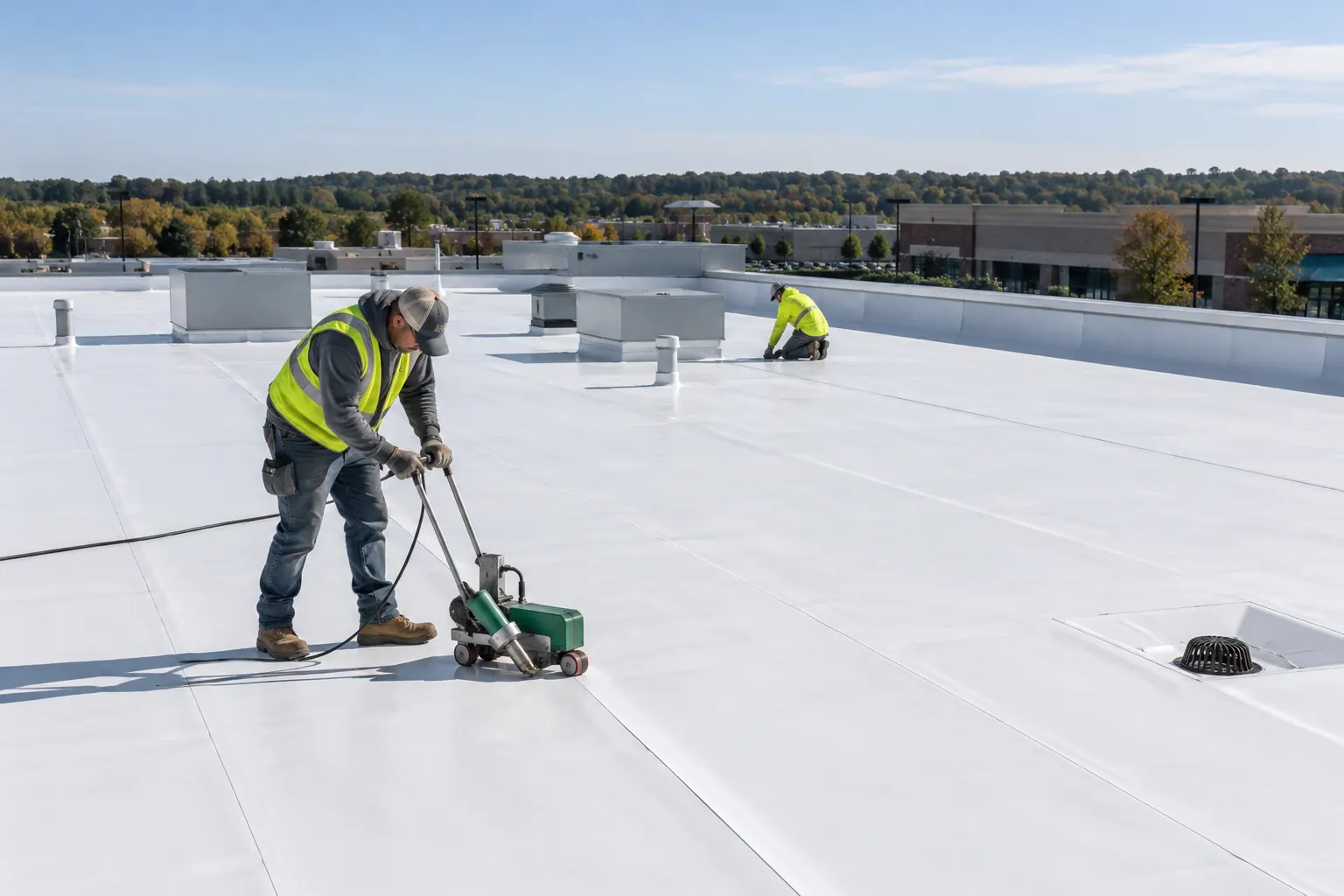
A TPO roof system is a single-ply thermoplastic membrane made for flat and low-slope roofs. The sheets are fastened or fully adhered over insulation, then the seams are heat-welded into one continuous surface. We start by inspecting your deck and drainage so the system fits your building, not a one-size template.
Ideal for:
- Commercial and retail buildings
- Multi-family and condo roofs
- Warehouses and industrial facilities
- Residential flat roofs and additions
- Aging built-up or modified bitumen roofs
What Happens From Your First Call to the Final Walkthrough
Every TPO project follows the same clear steps, so you always know what comes next.
- Free inspection. We check the deck, insulation, drainage, and flashing to see exactly what your roof needs.
- Written estimate. You get a detailed scope and price before any work begins, with financing options discussed if needed.
- Scheduled start. You know your start date, your timeline, and who will be on site.
- Tear-off and prep. We remove failed roofing where required and address any deck damage noted in your estimate.
- Membrane installation. Crews set the insulation and TPO sheets, then heat-weld every seam and detail each flashing.
- Final walkthrough. We review the finished roof with you and answer your questions before closing out the project.
How a TPO Roof May Help Your Building
A well-installed TPO roof does more than stop leaks. Its reflective surface and welded seams may help your building handle intense heat and heavy rain with less strain.
- Cooler rooftop temperatures. White TPO reflects much of the sun’s heat, which may help reduce cooling loads inside.
- Stronger seams. Heat-welded seams fuse the membrane together and commonly hold up better than taped or glued joints.
- Lighter load. The single-ply membrane adds little weight to your structure compared with multi-layer roofing systems.
- Easier maintenance. The smooth surface is simple to inspect, clean, and repair when small issues appear.
- Cost-effective coverage. TPO is commonly chosen for large flat roofs because it balances performance with a competitive installed price.
Wondering if your flat roof is a good fit for TPO? Get a clear answer and a written price after a free on-site inspection.
Why Property Owners in 17 States Trust RayPro With TPO Roofing
You need a contractor who treats a flat roof as a complete system, not just a membrane. Our licensed and insured team brings more than 17 years of roofing experience on residential, commercial, and military projects across 17 states. You receive a detailed written estimate before any work begins.
A dedicated permit and compliance manager keeps your project aligned with applicable building codes. For larger roofs, financing up to $250,000 is available for qualifying projects.
17+ years of roofing experience · Serving 17 states · Financing up to $250,000 for qualifying projects
Common Questions About TPO Roof Systems
How much does a TPO roof cost?
TPO roofing cost depends on roof size, membrane thickness, insulation needs, and the condition of the existing deck. Removing an old roof and repairing damaged decking also affect the final price. You receive a written estimate after a free inspection, before any work begins.
How long does a TPO roof last?
A properly installed TPO roof commonly lasts 20 to 30 years with routine maintenance. Membrane thickness, installation quality, and how well water drains off the roof all affect its lifespan. Regular inspections, especially after major storms, may help catch small issues before they spread.
Is TPO a good choice for hot climates and high winds?
TPO is widely used in hot climates because its white surface reflects much of the sun’s heat. For wind resistance, the attachment method and fastening pattern matter as much as the membrane itself. Each system we install is built to meet the building code requirements that apply where your property is located.
Can TPO be installed over my existing flat roof?
In some cases, TPO can go over one existing roof layer if the deck and insulation are dry and sound. Building codes limit how many layers a roof can carry, and trapped moisture below can shorten the new roof’s life. Your inspection will show whether a recover or a full tear-off makes more sense.
How should I prepare for a TPO roof installation?
Clear parking areas and access points near the building so crews can stage materials safely. Let tenants or occupants know the schedule, since tear-off and installation can create noise during work hours. We confirm access needs and your start date with you before work begins.
Get a TPO Roof Built to Stand Up to the Weather
Book a free inspection and see exactly what your flat roof needs before you commit. You get an honest assessment and a written price, with no pressure to proceed.