Metal Roof Maintenance: Essential Tips to Extend Your Roof’s Lifespan
Metal roof maintenance helps us spot drainage issues, loose fasteners, corrosion, damaged coatings, and moisture intrusion before they lead to major repairs. A schedule based on the roof system, local weather, tree cover, rooftop traffic, and manufacturer requirements helps extend service life and supports clear warranty decisions.
Key Takeaways
- We should inspect the roof each season and after major storms. Check for debris, dents, loose panels, staining, rust, and indoor signs of water intrusion.
- We should keep gutters, drains, valleys, downspouts, and scuppers clear. Clear drainage prevents standing water and related damage.
- We should use manufacturer-approved, non-abrasive cleaning methods. Harsh chemicals, wire brushes, and improper pressure washing can damage coatings and seams.
- Standing seam and exposed-fastener roofs require different maintenance. We should pay close attention to seams, flashings, fasteners, washers, and penetrations.
- We should contact a qualified roofing professional for leaks, coating damage, backed-out fasteners, failed sealant, ponding water, storm damage, or issues near rooftop equipment.
A Metal Roof Still Needs Regular Care
Metal roofing is durable, but every system needs regular attention to perform as intended. Consistent metal roof maintenance helps us catch leaks, corrosion, loose components, and drainage trouble before they lead to interior damage, operational interruptions, or premature replacement.
No two roofs face the same conditions. Material, panel design, finish, roof coating, installation quality, climate, roof slope, drainage, nearby trees, foot traffic, and storm exposure all affect maintenance needs. Salt air and industrial pollutants can create added corrosion concerns. Heavy shade, leaf buildup, and poor drainage can create problems on otherwise sound roofing.
A roof’s expected service life also depends on these conditions. Our guide to metal roof lifespan by material explains why steel, aluminum, copper, and other systems require different expectations and care.
We recommend reviewing the manufacturer’s installation and maintenance instructions along with warranty documents. Requirements can vary by manufacturer, coating system, installer, and warranty type. A maintenance schedule should fit the actual roof system and building exposure, not a generic calendar.
Metal Roof Maintenance Checklist: What We Can Safely Monitor
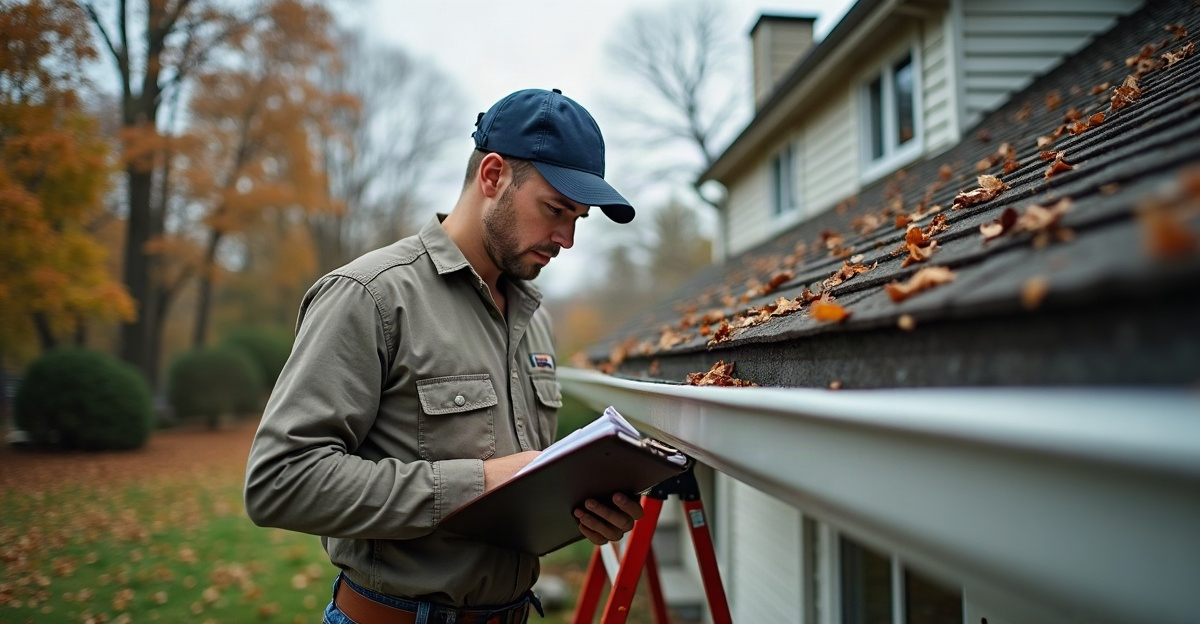
A practical metal roof maintenance checklist starts with regular visual checks. Property owners should inspect from the ground, from safely accessible locations, and from inside the building seasonally and after major wind, hail, snow, or falling-branch events.
During an exterior review, watch for loose panels, displaced trim, dents, scratches, staining, rust, fallen branches, storm debris, and trees rubbing against the roof. These signs do not always mean the system has failed, but they deserve documentation and, in many cases, a professional metal roof inspection.
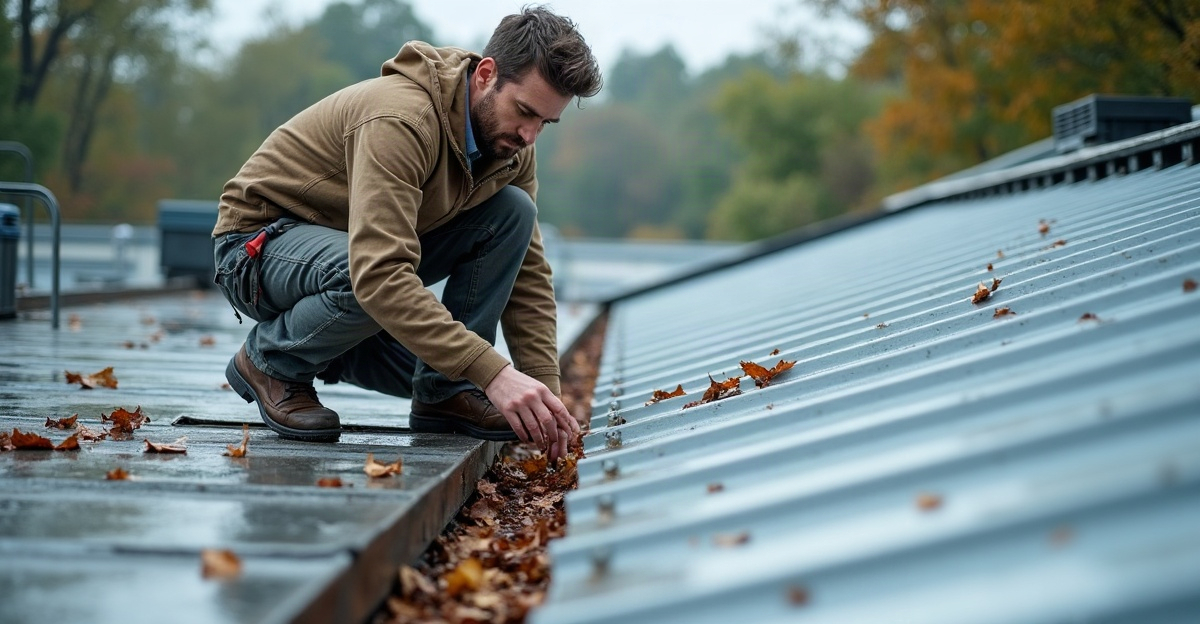
Roof drainage needs equal attention. Gutters, downspouts, scuppers, drains, and valleys should stay clear of leaves, branches, and sediment. Overflowing gutters, standing water, ponding water, and discharge near the foundation can point to drainage trouble that needs correction. Proper gutter installation supports the roof system by moving water away from vulnerable areas and the building perimeter.
Indoor checks matter just as much. Water stains, damp insulation, mold or mildew odors, peeling paint, and unexplained ceiling discoloration can signal moisture intrusion before an active drip appears.
Keep photos and dated records of inspections, weather events, repairs, and warranty paperwork. Good records help us track recurring concerns and support insurance or warranty discussions if a claim becomes necessary. For a broader process, review our roof inspection checklist.
Property-level maintenance should stay within safe limits. Ground-level observation, safe gutter checks, photographing concerns, and clearing debris around the property are appropriate tasks. Walking on a metal roof without proper training, fall protection, and system-specific knowledge can cause injury, dent panels, damage coatings, affect seams, or create leaks. We also recommend leaving repairs, penetration resealing, fastener tightening, and ladder-dependent work to qualified professionals.
Where Metal Roofs Need Different Maintenance
Standing seam and exposed-fastener metal roof systems require different maintenance approaches. Standing seam panels have fewer exposed fasteners, but seams, clips, flashings, penetrations, and thermal panel movement still need evaluation. A seam that looks fine from the ground may need closer professional review around transitions and roof flashing details.
An exposed-fastener metal roof needs frequent attention at the fasteners and washers. Over time, fasteners can loosen, back out, or lose their seal. Temperature swings, vibration, wind, and panel movement can all affect these connection points. Early correction helps prevent small openings from becoming leaks.
Material also matters. Steel, aluminum, copper, and coated metal systems react differently to moisture, salt exposure, pollutants, and contact with incompatible materials. Cleaning and repair methods must match the specific panel material and roof coating. Using the wrong product or allowing dissimilar metals to touch can accelerate corrosion.
Commercial low-slope metal roofs often need added attention around drains, curbs, skylights, HVAC equipment, rooftop traffic paths, and transitions where different roofing materials meet. Maintenance of metal roof systems includes far more than the panels. It includes sealant, fasteners, flashings, vents, drains, gutters, snow-retention components, and every roof penetration.
Minor dirt or superficial marks may have no effect on performance. Scratches that expose metal, coating loss, visible rust, failed sealant, loose fasteners, recurring leaks, and ponding water deserve prompt evaluation. Our metal roofing services address the full system rather than treating panels as isolated components.
Cleaning and Inspection Timing Without Damaging the Roof
Cleaning is part of preventive roof maintenance, but the wrong method can do more harm than good. Manufacturer instructions should guide every cleaning decision, especially for painted panels and specialty roof coating systems.
Use approved, non-abrasive methods only. Wire brushes, abrasive pads, harsh chemicals, incompatible cleaners, and improper pressure washing can damage protective finishes or contribute to corrosion. Pressure washing is not automatically safe for every metal roofing system. Incorrect pressure, spray direction, or technique can force water into seams and penetrations or damage sealants and coatings.
Maintenance on a metal roof should also avoid contact between dissimilar metals. Even a small incompatible component can create corrosion risk when moisture is present. For roofs with fading, coating wear, or surface concerns, our information on metal roof coating options can help clarify when a coating assessment makes sense.
Professional inspection timing should reflect the roof system, site conditions, manufacturer instructions, and warranty requirements. Many commercial properties benefit from planned inspections coordinated around seasonal weather patterns and budget cycles. Buildings with heavy tree cover, frequent storms, rooftop equipment, or high foot traffic may need closer monitoring than low-exposure properties.
Any repair should follow approved requirements for the roof system. Maintenance and documentation can support warranty compliance, but no single task automatically preserves coverage. Warranty terms must be reviewed for the specific manufacturer, installer, coating, and agreement.
When to Call a Metal Roofing Professional
A qualified contractor should assess active leaks, interior stains, loose or missing panels, displaced trim, failed seams, deteriorated sealant, backed-out fasteners, visible corrosion, coating damage, storm impact, drainage problems, and ponding water. These conditions can worsen quickly if water reaches underlayment, insulation, decking, or interior finishes.
We also recommend professional evaluation for concerns around skylights, vents, curbs, HVAC penetrations, snow-retention systems, and material transitions. These areas concentrate roof flashing and sealant details, which makes them common locations for moisture entry.
Early assessment does not mean replacement is necessary. A focused metal roof repair can often correct a localized issue before it spreads. Severe weather deserves particular attention. Our storm damage repair team can assess impact damage, debris strikes, and leak risks after major events.
Weather can affect seams, fasteners, coatings, and drainage in ways that are not always obvious from the ground. Our guide on weather and roof lifespan outlines the conditions that can speed up wear and why post-storm documentation matters.
RayPro can provide a metal roof inspection, repair assessment, or preventive maintenance plan based on the roof system and site conditions. Prompt action protects the building and gives decision-makers clearer repair options.
Maintenance Planning for Homes and Commercial Properties
Homeowners should focus on seasonal monitoring and checks after wind, hail, snow, or falling-branch events. Keeping debris away from the roofline, watching for staining or corrosion, and noticing indoor warning signs early can protect curb appeal and family comfort. A well-maintained roof also helps avoid the stress of discovering a leak after damage has reached the living space.
Commercial maintenance requires stronger documentation and coordination. Inspection logs, photos, repair history, warranty records, roof-access procedures, and fall-protection planning should all be part of the maintenance file. Property managers can find useful planning guidance in our roof maintenance tips.
A planned maintenance program should account for drainage capacity, debris removal, rooftop traffic, tenant needs, and operational continuity. Schools, healthcare facilities, offices, retail buildings, and industrial sites may need work scheduled around patients, students, employees, customers, or production activity.
For multi-site maintenance, consistent records make it easier to prioritize work based on leak risk, drainage performance, warranty requirements, operational impact, and available budget. Planned maintenance gives owners more control than emergency response and supports informed decisions about repairs, coatings, and future replacement.
We help residential and commercial owners build practical maintenance plans that support long-term reliability, warranty compliance, and clear repair decisions. For a site-specific assessment or maintenance plan, contact RayPro to schedule a review.