Oil Canning Metal Roof: Causes, Prevention, and Solutions
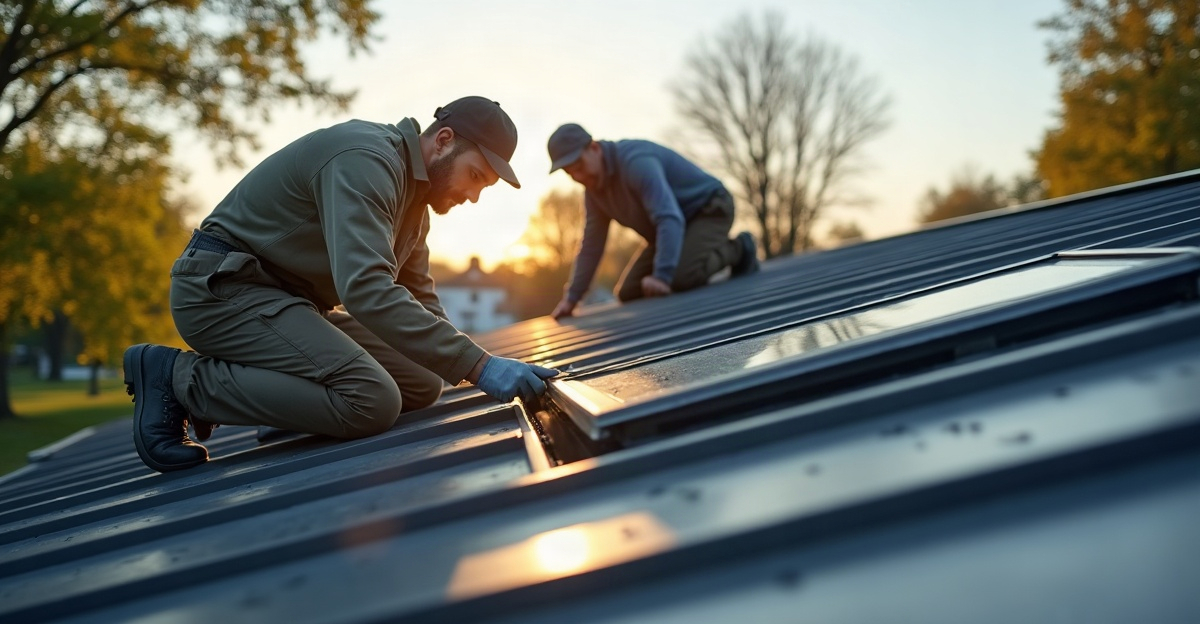
We use the term oil canning to describe visible waviness in metal roof panels. It commonly appears in wide, flat standing-seam systems. The issue usually affects appearance rather than roof performance. Panel design, thermal movement, deck conditions, underlayment, and installation details influence its visibility. These factors also guide our decision to monitor, repair, or inspect the roof further.
Key Takeaways
- Minor, consistent waviness without leaks, damaged seams, or loose panels usually remains cosmetic. We recommend routine observation.
- Low-angle sunlight, dark or glossy finishes, wide panels, and low roof slopes can highlight oil canning.
- Restricted thermal movement, uneven decking, irregular underlayment, incorrect clips or fasteners, and handling damage can distort panels.
- A roofing professional should inspect new, severe, localized, or worsening waviness. We place extra focus on areas near seams, penetrations, and roof edges.
- Prevention starts with suitable panel selection, a smooth substrate, flat underlayment, compatible components, and installation methods that let panels expand and contract.
What Oil Canning Means—and When We Should Be Concerned
Metal roof oil canning is visible waviness, rippling, or distortion in panels that should appear flat. It occurs most often on standing-seam roofs, where raised vertical seams frame broad, flat panel areas.
Oil canning on a metal roof is often cosmetic. It does not automatically mean the roof leaks, has failed, is structurally unsound, or needs replacement. Searches for “oil canning metal roo” commonly reflect understandable concern, but the visible effect alone does not tell the full story.
Minor, consistent waviness with no leaks, loose panels, damaged seams, or performance concerns is usually cosmetic oil canning. However, severe, localized, newly appearing, or quickly worsening distortion deserves closer attention, particularly when other damage is present.
For homes, the primary concerns are peace of mind, curb appeal, and protecting property value without paying for unnecessary work. For commercial properties, appearance can affect tenant perception, customer confidence, project acceptance, and maintenance planning. A qualified evaluation helps protect long-term lifecycle value while avoiding unnecessary disruption.
Our metal roofing services include system-level evaluations for residential and commercial properties. We also provide dependable residential roofing and commercial roofing support when appearance or performance concerns need a clear answer.
Why Metal Panels Look Wavy in Certain Light
Oil canning may be much more visible in low-angle sunlight. A roof can appear smooth at midday and then show ripples during the early morning or late afternoon. That shift in appearance does not necessarily mean the condition is getting worse.
Several factors affect how noticeable oil canning on a metal roof appears, including:
- Darker colors and glossier finishes
- Wider metal panels
- Low roof slopes
- Close viewing distances
- Flat-profile or standing-seam panel designs
Standing seam refers to panels that connect along raised vertical seams. The wide, flat areas between those seams can reflect light unevenly, drawing attention to small variations in the metal.
Manufacturers and industry standards generally recognize that some degree of oil canning may occur in metal panel systems. No responsible contractor should promise a completely oil-canning-free roof, particularly when using wide, flat standing-seam panels.
What Causes Oil Canning on a Metal Roof?
Oil canning typically results from a combination of panel design, roof conditions, and installation details. It does not automatically prove that a panel is defective or that the installer performed poor work.
Wide, flat panels and lighter-gauge metal can show distortion more readily. Reviewing metal roofing gauge options before a project helps establish realistic appearance and durability expectations.
Metal expands in heat and contracts in cooler temperatures. A properly designed roofing system gives panels room to move. Clips and fasteners secure the panels to the roof while allowing for thermal movement when installed correctly. If panel movement is restricted, stress can build and create visible waviness.
The substrate is the surface beneath the metal panels. An uneven deck, framing variation, insulation irregularity, or substrate movement can telegraph through the panels. Underlayment may also contribute when it has wrinkles, overlaps, debris, or uneven areas. Our guide to metal roof underlayment explains why this layer matters.
Other contributors can include:
- Installation stress
- Improper clip placement
- Overdriven fasteners
- Handling damage
- Panel profile selection
- Finish selection
- Existing deck movement
The complete roofing system matters. Deck flatness, underlayment, clips, fasteners, seams, flashings, transitions, and penetrations all work together to support proper panel performance.
Signs Oil Canning May Be More Than Cosmetic
Minor visual waviness may need nothing beyond routine observation. Still, severe or changing distortion can point to a condition worth investigating. A professional should inspect the full system, including panel movement, deck conditions, seams, flashings, penetrations, coatings, and signs of moisture intrusion.
When to Schedule a Roof Inspection
Schedule an inspection if the waviness is new, suddenly more visible, or getting worse. An evaluation is also appropriate when:
- Distortion is isolated near a seam, penetration, transition, or roof edge.
- Panels appear loose, buckled, damaged, or improperly seated.
- Leaks, interior staining, wet insulation, or trapped moisture are present.
- Seams, clips, fasteners, flashings, or coatings show visible damage.
- Corrosion, storm damage, or impact damage is visible.
- Appearance affects resale value, tenant perception, customer-facing areas, or project acceptance.
Warranty and code implications depend on manufacturer documentation, installation requirements, local regulations, and project-specific findings. If waviness is severe, new, worsening, associated with leaks or damaged seams, or raising installation-quality concerns, we recommend a professional inspection. Our roof repair team can determine whether a localized correction is appropriate.
How to Prevent Oil Canning Before Metal Roof Installation
Prevention works best before installation. Panel selection and roof preparation provide the greatest control over the finished appearance.
Narrower panels can reduce visible waviness. Heavier-gauge metal may also help, depending on the panel system and building design. Striated or ribbed profiles break up broad, flat surfaces and can reduce the visibility of distortion. Lower-gloss finishes may be a smart choice where appearance expectations are especially high.
A smooth, properly supported deck is essential. The underlayment must lie flat and remain free of irregularities that can show through the panels. Compatible clips and fasteners, proper seam details, correctly built flashings, and planned transitions around penetrations all help panels perform as intended.
Installation methods must allow for thermal movement. Restricting movement can create stress that appears later as oil canning on a metal roof. Careful planning also begins with accurate dimensions; our guide on measuring a metal roof explains the importance of proper measurements.
There is no one-size-fits-all approach. Panel type, roof shape, climate, building use, and appearance expectations should guide the decision. For commercial projects, document appearance expectations and manufacturer installation guidance before work begins. For aging systems, a planned roof replacement may create an opportunity to correct deck and panel-selection issues at the same time.
Post-Installation Options, Contractor Questions, and FAQs
Post-installation correction depends on the confirmed cause. Minor cosmetic waviness may only need monitoring when panels, seams, and flashings function properly. An inspection may reveal a correctable deck issue, fastening problem, clip concern, or restricted thermal movement.
Localized handling, storm, or impact damage may support repair of a specific area. Panel replacement makes sense only when damage, installation conditions, performance concerns, or appearance requirements justify it.
Do not tighten, add, relocate, or overdrive fasteners without a diagnosis. Do not attempt to force panels flat. Restricting movement can worsen distortion and create additional roofing problems.
Questions to Ask a Metal Roofing Contractor
- Is the oil canning cosmetic, or does evidence point to restricted panel movement or installation stress?
- Is the deck or substrate flat and properly supported?
- Are clips, fasteners, seams, and flashings performing as intended?
- What are the manufacturer’s appearance expectations for this specific panel system?
- What repair options are appropriate, and what risks could corrective work create?
Can Oil Canning Cause Leaks?
Oil canning does not cause leaks by itself. However, leaks, damaged seams, improperly seated panels, or compromised flashings require inspection because they may point to a broader roofing-system issue.
Can a Contractor Correct Oil Canning Without Replacing the Roof?
Sometimes. The answer depends on the cause. Cosmetic waviness may not need correction at all, while restricted thermal movement, a deck irregularity, or localized damage may be repairable. A professional inspection is the best way to determine whether targeted repairs are appropriate.
Does Oil Canning Affect a Metal Roof Warranty?
Warranty effects depend on manufacturer documentation, installation requirements, and inspection findings. Some visible waviness can be inherent to certain metal panel systems, especially wide, flat, standing-seam panels. Always review the manufacturer’s requirements for the specific roofing system.
Ongoing care also helps identify changing conditions early. Review our metal roof maintenance tips for practical ways to protect panel performance. We can inspect your metal roof and explain whether the condition is cosmetic or whether repairs, maintenance, or targeted panel replacement should be considered.