What gauge is metal roofing?
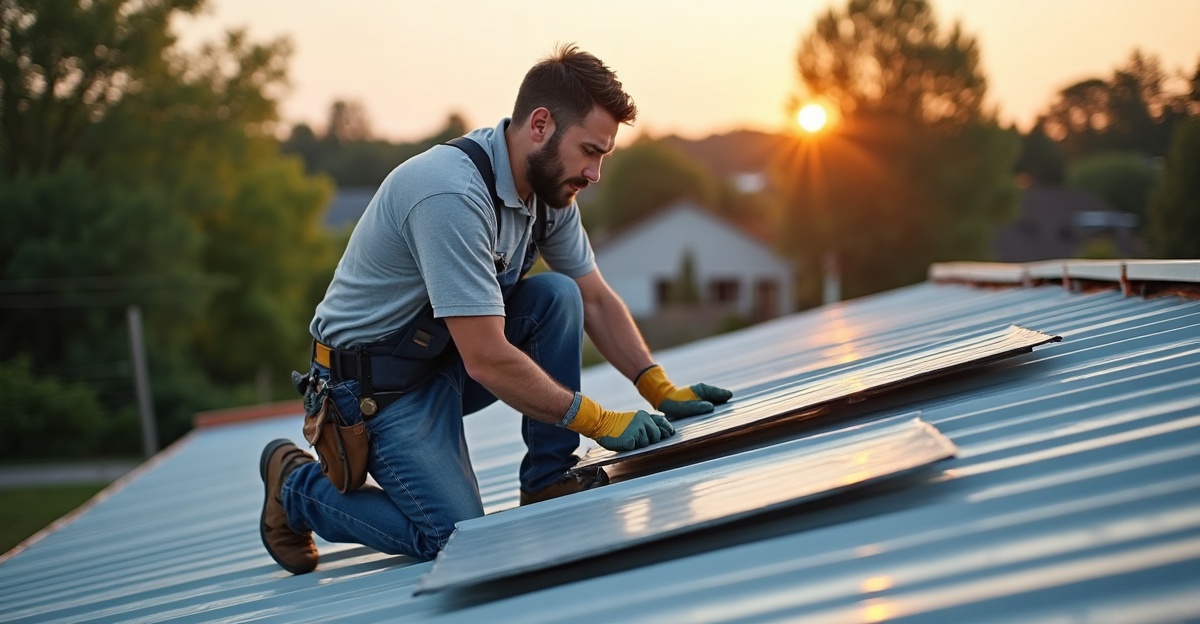
When we ask what gauge is metal roofing, we’re really referring to panel thickness and how that thickness affects strength, lifespan, and overall performance. We use an inverse scale for metal roofing gauge. Lower numbers mean thicker steel. Even small jumps—such as 29 vs 26 vs 24 gauge—can greatly affect wind resistance, hail durability, cost, and long-term return on investment.
Key Takeaways
- Gauge measures the metal roof gauge thickness of metal roofing panels, and lower gauge numbers mean thicker, stronger steel.
- Common residential gauges are 29 and 26, while 24 (and sometimes 22) gauge is often used for commercial or high-wind applications.
- Thicker panels improve wind uplift resistance, hail impact durability, and long-term fastener holding strength.
- 26 gauge offers a strong balance for residential projects, giving us solid durability without pushing costs too high.
- The right gauge depends on property type, climate conditions, local building codes, insurance requirements, and long-term ownership plans.
What Metal Roofing Gauge Really Means (And Why Lower Numbers Are Thicker)
Gauge refers to the thickness of the metal panel as defined by standard steel sheet gauge measurements.
Here’s the part that confuses many property owners researching how thick is metal roofing and what gauge is metal roofing: the scale is inverse. A lower gauge number means thicker metal. A higher gauge number means thinner metal.
For example:
- 29 gauge ≈ 0.0142 inches thick
- 26 gauge ≈ 0.0179 inches thick
- 24 gauge ≈ 0.0239 inches thick
That may look like a small difference on paper. In real-world performance, it’s significant.
Thickness directly affects durability. Wind uplift testing and metal roof performance standards show that thicker panels generally provide greater resistance to hail impacts and extreme wind loads. They tend to oil-can less. They also hold fasteners more securely over time.
When homeowners ask us what gauge is roofing metal, they’re usually trying to compare strength, lifespan, and cost. Understanding the inverse scale clears up most of the confusion right away.
If we’re investing in a metal roof, panel thickness plays a major role in how it holds up over decades.
Standard Gauges for Residential and Commercial Metal Roofing
If we’re asking what is standard gauge for metal roofing, the answer depends on the type of property.
In residential construction, 29 and 26 gauge are most common, while industry guidance for commercial metal roofing systems often recommends heavier gauges for larger structural applications.
Here’s how 29, 26, and 24 gauge compare in practical terms:
29 vs 26 vs 24 Gauge Comparison
Before choosing, it helps to understand the trade-offs.
- 29 gauge
- Most economical option
- Common in residential projects
- Suitable for mild climates
- Lighter-duty performance
- 26 gauge
- Most common residential choice
- Stronger wind and impact resistance
- Solid balance between durability and cost
- 24 gauge
- Heavy-duty option
- Often used on commercial properties
- Superior structural strength
- Frequently selected in high-wind zones
Thicker panels typically cost more upfront. That’s expected. They use more steel and often meet higher performance ratings.
Commercial projects often prioritize 24 gauge because of wind uplift requirements, compliance standards, and long lifecycle expectations. Owners and facility managers look at risk reduction and asset protection over decades, not just initial installation cost.
For homeowners comparing options like metal roof vs asphalt shingles, gauge becomes part of the bigger durability conversation. The thicker the panel, the more abuse it can handle before showing wear.
If we’re exploring full system options, our metal roofing services break down panel types, profiles, and performance ratings in more detail.
What Gauge Metal Roof Is Best? It Depends on Your Property
There is no universal answer to what is the best gauge for metal roofing, because metal roof gauge recommendations depend on the specific building and environment. The right choice depends on the specific building and environment.
We always evaluate:
- Residential versus commercial structure
- Local climate and wind exposure
- Hail frequency
- Snow load demands
- Decking and framing strength
- Insurance requirements
- Long-term ownership plans
For homeowners, 26 gauge often hits the sweet spot. It adds meaningful strength over 29 gauge without jumping all the way to heavy commercial-grade thickness. Many families choose 26 gauge for peace of mind, especially in storm-prone areas.
For detached garages, sheds, or budget-focused projects in mild climates, 29 gauge may perform perfectly well.
Commercial properties are different. Larger roof spans, open terrain, and code requirements tend to push specs toward 24 gauge. Thicker metal may help support stronger wind uplift ratings. It can also reduce long-term maintenance risk, which protects operating budgets.
Longevity goals matter too. If the goal is maximizing resale value or holding the property for decades, stepping up in thickness often makes sense.
Before selecting panels, we also confirm accurate measurements. Our guide on how to measure a roof for metal roofing explains how surface area and layout affect material planning, which ties into gauge decisions and total cost.
How Gauge Impacts Wind, Hail, Insurance, and Long-Term ROI
Metal thickness directly impacts real-world performance.
Wind uplift resistance increases with thicker panels and properly engineered fastening systems. In coastal or hurricane-prone areas, this becomes critical. A 24 gauge panel will typically perform better under extreme wind loads than a 29 gauge panel within the same profile and system design.
Hail resistance also improves as thickness increases. Thicker steel absorbs impact with less visible denting. That matters for appearance and for preserving protective coatings.
In northern climates, snow load durability plays a role. Thicker panels resist deformation when snow accumulates or slides.
Insurance considerations come into play as well. Some insurers look more favorably on thicker panels in hail-prone or high-wind regions. Commercial policies may require documented wind uplift ratings, and panel gauge can influence those ratings.
From a financial standpoint, we always look at lifecycle cost:
- Thicker gauge = higher upfront investment
- Thinner gauge = lower initial price
- Thicker gauge = less risk of denting, deformation, and premature repairs
For commercial owners, compliance and risk management drive decisions. A thicker roof may protect against costly disruptions.
For homeowners, the focus is safety and long-term value. Choosing the right gauge helps protect the family, the structure, and future resale potential.
Gauge is one layer of the system. Underlayment, fasteners, and panel width also matter. Our article on underlayment for metal roofs explains how the full assembly works together to deliver performance.
If cost is part of the evaluation, both our metal roof cost guide and breakdown of how much metal roofing costs show how thickness influences total project investment.
Common Mistakes When Choosing Roofing Metal Gauge
We’ve seen good projects weakened by simple misunderstanding.
One common mistake is declaring one gauge as universally “best.” There isn’t a single answer that fits every structure.
Another mistake is ignoring local building codes. Wind uplift requirements, especially in high-wind zones, can dictate minimum thickness and fastening standards.
Choosing the lowest bid without looking at durability also creates problems. Thinner panels can perform well in the right setting, but they may not be appropriate everywhere.
Some property owners misunderstand the inverse scale and assume higher numbers mean thicker metal. That confusion alone can lead to the wrong specification.
Others upgrade to thicker panels without confirming the structural decking can support the change. Framing strength still matters.
Price assumptions cause trouble too. Gauge affects cost, but so do panel profile, coating systems, manufacturer quality, and regional material pricing.
A clear, property-specific evaluation prevents these missteps.
Quick Answers to Common Metal Roofing Gauge Questions
What gauge is metal roofing typically?
Most residential roofs use 29 or 26 gauge. Commercial roofs often use 24 or even 22 gauge depending on structural needs.
What gauge metal is used for roofing in high-wind areas?
Many high-wind installations use 24 gauge for improved wind uplift performance, depending on the full system design and engineering.
Is 29 gauge metal roofing strong enough?
Yes, in many residential applications in mild climates. It offers less dent resistance than 26 or 24 gauge but can still provide dependable performance when properly installed.
Does thicker metal last longer?
In general, yes. Thicker panels resist impact and deformation better over time. Coating quality and installation accuracy also play major roles.
Every property is different. The most reliable way to decide is through a professional evaluation that accounts for climate, structure, code requirements, and long-term goals. If we want a clear recommendation built around your specific building, we can schedule a consultation and review the options in detail at our contact page.