What is the difference between commercial and residential construction?
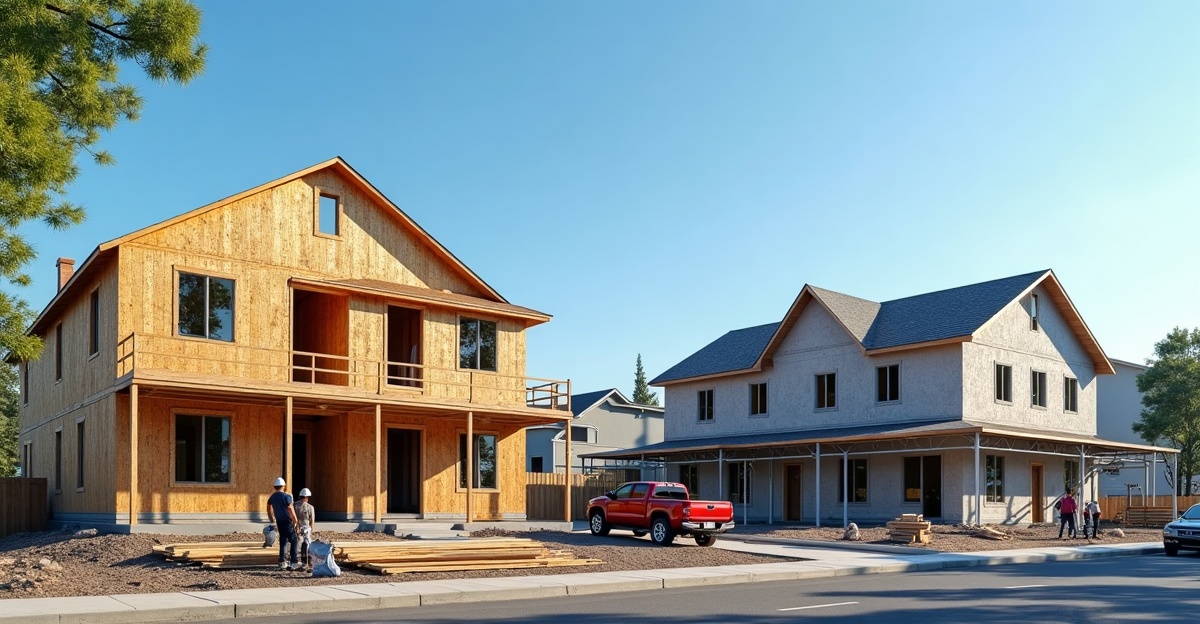
Understanding what is the difference between commercial and residential construction starts with occupancy, governing codes, and risk exposure—not just building size. We approach residential projects under the IRC with a focus on family comfort, safety, and energy performance. We execute commercial builds under the IBC, which demands stricter compliance, advanced life-safety systems, ADA access, and performance standards tied to public use and long-term return on investment.
Key Takeaways
- Residential construction serves private living spaces and follows the International Residential Code (IRC), prioritizing safety, comfort, and energy efficiency, prioritizing safety, comfort, and energy efficiency. We center our work on durability, code compliance, and livability for families.
- Commercial construction supports business or public use and follows the IBC, with stricter rules for ADA accessibility requirements, fire protection, occupancy loads, and liability and follows the International Building Code (IBC), with stricter rules for ADA access, fire protection, occupancy loads, and liability. We coordinate closely with inspectors, architects, and engineers to meet those higher standards.
- Roofing systems differ significantly: residential projects use steep-slope systems like shingles, while commercial buildings rely on flat or low-slope membrane systems such as TPO, PVC, or EPDM. We select materials based on slope, traffic, maintenance demands, and lifecycle cost.
- Commercial projects require layered project management, formal bidding, higher insurance limits, and detailed compliance documentation compared to streamlined residential builds. We implement structured oversight, documented safety plans, and phased approvals to keep commercial jobs on track.
- Hiring a contractor who specializes in the correct sector reduces the risk of failed inspections, delays, redesign costs, and compliance issues. We match project scope with sector-specific expertise to protect budgets and timelines.
The Core Difference: Scope, Use, and Risk at a Glance
Residential construction focuses on homes and living spaces built under the International Residential Code (IRC), prioritizing comfort and safety for families. Commercial construction covers buildings used for business or public access, typically governed by the International Building Code (IBC), with stricter compliance, safety, and structural requirements.
That’s the short answer to what is the difference between commercial and residential construction. The deeper answer comes down to occupancy, risk, and regulation.
Square footage alone doesn’t define the project type. A large custom home can exceed the size of a small office building. The real dividing line is occupancy. A single-family home falls under residential. An office, warehouse, retail store, medical facility, school, or large multi-family complex often falls under commercial classification, depending on height and local code adoption.
Risk also plays a major role. Commercial properties involve public access, higher liability exposure, ADA accessibility rules, life-safety systems, and stricter compliance standards. Residential builds prioritize family safety and comfort but don’t carry the same level of public risk.
Choosing the wrong type of contractor increases the chance of missed code requirements, failed inspections, delays, and cost overruns. Each sector requires its own expertise, project management structure, and compliance knowledge.
Residential Construction: Built for Families, Comfort, and Long-Term Protection
Residential construction includes single-family homes, townhomes, duplexes, and small multi-family properties, depending on local classification. These projects are primarily governed by the IRC, though municipalities adopt and modify codes differently. Requirements vary by state and city, so local compliance always matters.
The focus is clear: safety, livability, energy efficiency, and comfort.
Most residential structures rely on wood framing and pitched roofing systems. Common roof materials include asphalt shingles, tile, and standing seam metal. If homeowners are comparing options, we often point them to resources like best residential roofing material to understand durability and cost.
Roofing itself is typically steep-slope. Drainage is managed through roof pitch and gutter systems. Attic ventilation plays a major role in moisture control, energy performance, and long-term roof life.
Permitting and inspections usually run through the local building department. There are fewer layers of review compared to commercial projects. A residential reroof can take days. A full custom home build can take months, but the crew structure stays relatively streamlined.
Budgeting is often straightforward. Homeowners receive fixed estimates. Financing may come through a lender or an insurance claim after storm damage. Decision-making is personal. Communication needs to be clear. Families want peace of mind that their home is protected.
For roofing projects, our residential roofing services focus on long-term protection, clean job sites, and clear timelines. When construction expands beyond the roof, our residential construction team manages structural, exterior, and interior improvements with the same straightforward approach.
Commercial Construction: Performance, Compliance, and ROI
Commercial construction includes office buildings, warehouses, retail centers, medical facilities, schools, industrial properties, and many large multi-family complexes. If the building involves employees, customers, tenants at scale, or public access, it likely falls under commercial code.
When clients ask what is the difference between a commercial and residential building or what is the difference between commercial and residential building classifications, we explain that the International Building Code (IBC) typically governs commercial properties rather than the IRC.
IBC projects face additional regulatory layers:
- ADA accessibility requirements
- Fire-rated assemblies and life-safety systems
- Formal occupancy classifications
- Zoning approvals
- Environmental and stormwater compliance
- OSHA-regulated job site safety
Structural systems also change. Steel, concrete, and masonry are common. Engineering accounts for higher occupancy loads and equipment demands.
Commercial roofing looks very different from residential systems. Most structures use flat or low-slope assemblies such as TPO, PVC, or EPDM membranes. Roof systems must support HVAC units, exhaust systems, and other mechanical equipment. Drainage is engineered internally with scuppers, drains, and tapered insulation systems.
Reroofing a 50,000-square-foot warehouse is a different operation than replacing shingles on a home. Crew size increases. Project management layers expand. Safety oversight intensifies.
Budgeting also becomes more structured. Many commercial jobs require formal bidding, detailed scopes of work, bid leveling, contract negotiations, and change order tracking. Owners evaluate lifecycle cost and return on investment. Long-term asset protection matters more than the lowest upfront number.
For property owners comparing systems, our article on best shingles for commercial roofs clarifies material differences, though most large facilities rely on membrane systems.
Our commercial roofing services and commercial construction team focus heavily on compliance, documentation, and long-term performance. Reliability and vendor stability are critical in this sector.
Side-by-Side Comparison: Residential vs. Commercial Construction
If we’re answering what is the difference between commercial construction and residential construction, the comparison goes far beyond building size.
Here’s a clear breakdown:
- Governing Code: IRC (Residential) | IBC (Commercial)
- Occupancy: Private dwelling | Business or public use
- Typical Materials: Wood framing & shingles | Steel/concrete & membrane systems
- Roofing Style: Pitched | Flat or low-slope
- Compliance Requirements: Basic safety & zoning | ADA, fire-rated systems, occupancy classifications
- Safety Standards: Local inspections | Extensive OSHA and structured safety programs
- Project Size: Small-scale | Large-scale facilities
- Timeline: Weeks to months | Months to over a year
- Budgeting Process: Estimate-based | Bid-based with formal contracts
- Crew Size & Management: Small team | Layered project management structure
- Inspections: Local department review | Multi-stage, multi-agency review
- Warranties: Manufacturer and workmanship | Complex warranties tied to integrated systems
These differences impact design decisions, documentation, scheduling, and risk management. Misclassification creates real exposure for owners.
Codes, Permits, and Contractor Qualifications: Why Specialization Matters
IRC and IBC frameworks differ in structure and depth. Commercial codes require detailed egress plans, occupancy load calculations, fire suppression systems, and accessibility design. ADA standards apply in most commercial settings and affect entrances, restrooms, paths of travel, and parking layouts.
Local governments modify both IRC and IBC guidelines. Requirements vary by municipality, so local experience is critical.
Commercial contractors often carry higher insurance limits and bonding capacity. Large contracts may require performance bonds. Subcontractor coordination becomes more complex, with mechanical, electrical, plumbing, and fire protection teams working simultaneously.
Public access increases liability exposure. OSHA oversight is stricter on commercial sites, and documentation requirements are heavier.
One common misconception is that experience in one sector automatically translates to the other. It doesn’t. A residential contractor may not be prepared for commercial compliance demands. A commercial contractor may not provide the personal communication homeowners expect.
Working with the right specialist reduces the risk of failed inspections, redesign costs, and schedule setbacks.
How to Choose the Right Contractor for Your Project
Start with a simple framework:
- Who will occupy the building?
- Which code applies: IRC or IBC?
- Will the public access the space?
- Does ADA compliance apply?
Replacing a home roof calls for a residential roofing contractor. Managing a retail center reroof requires a commercial roofing specialist. Reviewing guides like how to choose a residential roofing contractor or how to choose a commercial roofing contractor helps clarify expectations for each sector.
Multi-property owners and facility managers also face ongoing maintenance decisions. Resources such as roof maintenance for multi-property owners and roof maintenance tips for property managers explain how upkeep strategies differ across building types.
If the classification still feels unclear, we recommend getting a professional review. Through our general contracting services, we evaluate occupancy, code requirements, and scope before work begins.
When uncertainty remains, connect with us directly at our team. We’ll walk the site, review the applicable code framework, and provide clear next steps so the project moves forward with confidence.
Frequently Asked Questions
What makes commercial construction more complex than residential construction?
Commercial construction is generally more complex because it involves larger structures, stricter regulations, multiple stakeholders, and specialized building systems. Projects often require coordination between architects, engineers, inspectors, property managers, and contractors. Commercial buildings must also meet occupancy, accessibility, and safety standards that are typically more demanding than residential requirements.
Is commercial construction more expensive than residential construction?
Yes, commercial construction usually costs more due to larger project sizes, specialized materials, advanced mechanical systems, and stricter compliance requirements. Costs can also increase because of engineering, permitting, inspections, and project management needs. Property owners should evaluate total lifecycle costs rather than focusing solely on initial construction expenses.
Why do commercial construction projects take longer to complete?
Commercial projects often require more planning, permitting, inspections, and coordination than residential projects. Multiple contractors, regulatory approvals, and complex building systems can extend timelines. Large-scale facilities may also need phased construction schedules to minimize disruptions to tenants, employees, or customers.
Can a residential contractor handle commercial construction projects?
Not always. While some contractors work in both sectors, commercial construction typically requires specialized experience, licensing, project management capabilities, and knowledge of commercial building codes. Property owners should verify that a contractor has successfully completed projects similar in size and scope before hiring them.
How do building codes differ between commercial and residential construction?
Commercial construction must comply with stricter building codes related to fire protection, accessibility, occupancy limits, structural loads, and public safety. Residential codes focus primarily on homeowner safety and habitability. The complexity of commercial regulations often requires additional inspections and professional oversight throughout the project.
What is the role of a general contractor in commercial and residential construction?
A general contractor coordinates the entire construction process, including scheduling, subcontractor management, permits, inspections, and quality control. In commercial projects, contractors often oversee larger teams and more complex logistics. In residential construction, they typically manage homebuilding, remodeling, or renovation activities from start to finish.
How does financing differ between commercial and residential construction?
Commercial construction financing is often based on projected business income, property value, or investment returns. Residential financing usually relies on personal mortgages, home equity loans, or construction loans. Commercial funding often involves more documentation, underwriting requirements, and financial analysis.
What is mixed-use construction?
Mixed-use construction combines residential and commercial spaces within the same development. Examples include apartment buildings with retail stores on the ground floor or office spaces integrated into residential communities. These projects require careful planning because they must satisfy multiple occupancy classifications and regulatory requirements.
Which type of construction has higher maintenance costs?
Commercial buildings generally have higher maintenance costs because they contain larger roofing systems, HVAC equipment, elevators, fire protection systems, and other complex infrastructure. Residential properties typically have lower ongoing maintenance requirements, although costs vary depending on building size, age, and materials.
Is design-build construction suitable for both commercial and residential projects?
Yes, design-build construction can be used for both project types. This approach combines design and construction services under one contract, improving communication and accountability. Many owners choose design-build because it can simplify project management, reduce delays, and help control costs throughout the construction process.