What Is the Difference Between TPO and PVC Roofing?
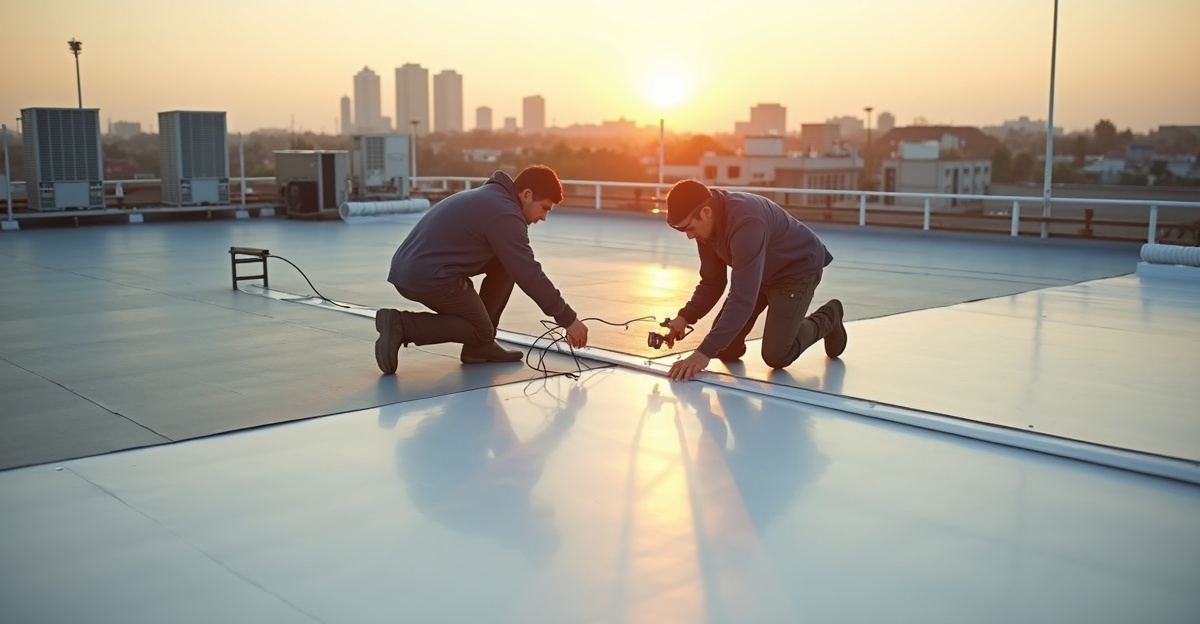
If we’re asking what is the difference between TPO and PVC roofing, the answer comes down to material composition, chemical resistance, flexibility in cold weather, and overall cost. Both systems use heat-welded single-ply membranes for flat and low-slope roofs, but we often see TPO offer lower upfront pricing while PVC delivers stronger protection in grease-heavy or chemically exposed environments.
Key Takeaways
- TPO uses polypropylene and rubber blends, while PVC relies on vinyl compounds with added plasticizers for flexibility.
- PVC resists grease, fats, and harsh chemicals more effectively, which makes it a strong choice for restaurants and specialized facilities.
- Both systems come in 45, 60, and 80 mil thicknesses, and we recommend thicker membranes for better durability in high-traffic areas.
- TPO usually costs less upfront, while PVC can deliver stronger long-term value in demanding environments.
- Proper installation, precise seam welding, and secure flashing details directly affect lifespan, and we regularly see both systems last 20–30 years with correct installation.
TPO vs. PVC Roofing at a Glance: The Core Differences That Impact Your Decision
TPO and PVC are both single-ply roofing membranes built for flat and low-slope roofs. They look similar from a distance, but they’re made differently and perform differently in key situations.
TPO (Thermoplastic Olefin) is a single-ply membrane made from a blend of polypropylene and ethylene-propylene rubber, while PVC roofing membranes are manufactured primarily from vinyl compounds with plasticizers for flexibility. Both systems are heat-welded at the seams and typically come in reflective white to reduce heat absorption.
When property owners ask what is the difference between TPO and PVC roofing—or what is the difference between PVC and TPO roofing—the answer comes down to material composition, chemical resistance, flexibility, and cost.
Here’s how those differences show up in real life:
- Chemical resistance: PVC roofing membranes’ resistance to grease, fats, and many industrial chemicals generally exceeds that of TPO in demanding commercial environments.
- Cold-weather flexibility: PVC often maintains flexibility better in very low temperatures.
- Puncture resistance and thickness: Both are available in 45, 60, and 80 mil membranes, but thickness selection matters for traffic and durability.
- Installed cost and lifecycle value: TPO usually comes in lower upfront, while PVC may offer better protection in specialized environments.
Neither system is universally better. The right choice depends on your building’s purpose, climate, exposure conditions, rooftop traffic, and budget. Just as important, installation quality has a major impact on long-term performance. A well-installed system will always outperform a poorly installed one, regardless of material. If you want to understand the process behind a proper single membrane roof install, that’s where long-term reliability begins.
Side-by-Side Comparison: Performance, Durability, and Best-Use Applications
Below is a clear comparison of how TPO and PVC stack up across the factors that matter most to building owners.
| Category | TPO | PVC |
|---|---|---|
| Material Composition | Polypropylene + ethylene-propylene rubber blend | Vinyl base with plasticizers for flexibility |
| Seam Strength | Heat-welded; seams can be stronger than the membrane itself when properly installed | Heat-welded; seams can be stronger than the membrane itself when properly installed |
| Chemical Resistance | Good general resistance | Excellent resistance; ideal for grease-heavy environments |
| Puncture Resistance | Available in 45, 60, 80 mil; thicker options improve durability | Available in 45, 60, 80 mil; thicker options improve durability |
| Energy Efficiency | Reflective white options reduce cooling loads | Reflective white options reduce cooling loads |
| Cold-Weather Flexibility | Performs well in most climates | Often maintains flexibility better in extreme cold |
| Lifespan | Typically 20–30 years, depending on thickness and installation | Typically 20–30 years, depending on thickness and installation |
| Maintenance | Routine inspections and seam checks | Routine inspections and seam checks |
| Installed Cost | Lower average cost per square foot | Higher average cost per square foot |
| Ideal Applications | Warehouses, retail, multifamily, residential flat roofs | Restaurants, hospitals, chemical-exposed facilities |
In real-world scenarios, use drives the decision.
Choose PVC for restaurants with grease exhaust systems. Grease can break down other materials over time, and PVC is especially resistant to those conditions. Hospitals and facilities with chemical exposure also benefit from PVC’s durability.
Consider TPO for warehouses, distribution centers, and large retail spaces where affordability and reflectivity are top priorities. It’s widely used in commercial roofing projects because it balances performance and cost.
For residential flat roofs, either system can provide strong leak protection and energy efficiency when installed by experienced crews. If you’re weighing broader system options, our breakdown of flat roof vs shingle roof can help frame the bigger picture.
Across all property types, building code roofing requirements and fire classifications matter just as much as membrane choice, along with proper seam welding. Long-term watertight integrity depends on design, flashing details, and installer discipline.
Upfront Cost vs. Long-Term ROI: What You Actually Pay Over Time
Installed costs vary based on thickness, insulation, and job complexity, but here are realistic ranges:
- TPO: approximately $5 to $9 per square foot installed.
- PVC: approximately $6 to $12 per square foot installed.
Several factors influence where your project lands within those ranges:
- Roof size and layout complexity
- Insulation requirements and R-value upgrades
- Tear-off and disposal vs. overlay installation
- Membrane thickness (45, 60, or 80 mil)
- Local labor rates and regional conditions
For commercial properties, we focus on total cost of ownership over 20–30 years. A reflective membrane can lower cooling demand. In grease-heavy environments, a chemically resistant membrane can reduce the risk of early failure. Fewer disruptions mean fewer interruptions to tenants, staff, or operations.
From a residential perspective, it’s about balancing upfront affordability with dependable leak protection. A quality flat roof adds peace of mind and reduces the chances of repeated repair bills. If you’re evaluating lifespan more closely, review our guide on how long a flat roof lasts for realistic expectations.
We don’t push the idea that “TPO is cheaper and PVC is better.” That oversimplifies the decision. The better question is which system aligns with your building’s exposure, traffic, and long-term plans.
Climate, Foot Traffic, and Building Use: Where Each System Performs Best
Both TPO and PVC are reflective and perform well in hot climates with strong UV exposure. White membranes help reduce heat gain, which is valuable in large commercial buildings and residential flat roofs alike.
In colder regions, PVC often maintains flexibility better during extreme temperature swings. That flexibility can help reduce stress cracking over time.
Foot traffic is another key consideration. Rooftops with frequent maintenance activity—HVAC service, solar panels, or regular inspections—benefit from thicker membranes or designated walkway pads. This applies to both materials. An 80 mil membrane will generally hold up better than a 45 mil membrane in high-traffic areas.
Chemical exposure makes a clear distinction. PVC is typically the stronger choice for restaurants and commercial kitchens because it resists fats, oils, and grease more effectively.
Here’s how we usually guide different property types:
- Restaurants and commercial kitchens: Often PVC.
- Warehouses and distribution centers: Commonly TPO for cost efficiency and reflectivity.
- Hospitals and institutional buildings: Frequently PVC for chemical durability and reliability.
- Multifamily and residential flat roofs: Either system based on budget, traffic, and climate.
No membrane can compensate for poor detailing. Flashing around penetrations, drains, curbs, and seams must be done right. That’s why we approach every flat roofing project with careful layout planning and strict installation standards.
Common Questions Property Owners Ask Before Choosing
Is PVC roofing worth the extra cost?
PVC can justify the added investment in buildings exposed to grease, animal fats, or chemicals. In those scenarios, preventing premature membrane breakdown protects your structure and reduces long-term repair risk. In low-exposure environments, TPO often delivers excellent performance at a lower upfront cost.
Does TPO crack over time?
Modern TPO systems perform well when manufactured properly and installed by trained crews. Premature aging is often tied to poor installation, inadequate thickness, or inconsistent maintenance. With correct seam welding and proper flashing, cracking is far less likely.
Both TPO and PVC typically last 20–30 years with proper installation and care. Thickness selection and installer skill play major roles. Each system supports energy efficiency through highly reflective white membranes. When repairs are needed, both can be patched using heat-welded methods, as explained in our guide to single membrane roof repair.
We encourage property owners to decide based on building use and long-term priorities:
- Choose TPO if cost efficiency and strong everyday performance fit your building.
- Choose PVC if grease exposure, chemical resistance, or extreme cold flexibility is critical.
The smartest move is to evaluate the actual condition of your roof and your operational risks before deciding. We can assess your system, review insulation and drainage, and map out a long-term plan through a professional inspection. Schedule a consultation with our team at RayPro Roofing, and we’ll recommend the system that makes sense for your building and your budget.
Frequently Asked Questions
Is TPO or PVC roofing better for commercial buildings?
Neither is universally better. TPO is often preferred for warehouses, retail buildings, and large commercial properties because it offers strong performance at a lower upfront cost. PVC is usually the better option for restaurants, hospitals, and facilities exposed to grease, oils, or chemicals due to its superior chemical resistance.
How long do TPO and PVC roofs typically last?
Both TPO and PVC roofing systems generally last 20–30 years when installed correctly and maintained with routine inspections. Factors such as membrane thickness, climate, rooftop traffic, and installation quality have a significant impact on overall lifespan and long-term performance.
Can TPO and PVC roofing be repaired if they are damaged?
Yes. Both roofing systems can often be repaired by heat-welding compatible membrane patches over damaged areas. Prompt repairs help prevent leaks and extend the roof’s service life. Regular inspections can identify small issues before they become more costly structural problems.
Does membrane thickness make a difference for TPO and PVC roofing?
Yes. TPO and PVC membranes are commonly available in 45, 60, and 80 mil thicknesses. Thicker membranes generally provide better puncture resistance and durability, making them a smart choice for roofs with frequent foot traffic, rooftop equipment, or demanding environmental conditions.
What factors should you consider when choosing between TPO and PVC roofing?
The best choice depends on your building’s use, climate, exposure to chemicals or grease, expected rooftop traffic, and budget. While TPO often offers a lower installation cost, PVC may provide better long-term value in specialized environments. A professional roof assessment can help determine which system best fits your property’s needs.