What does hail damage look like on a roof?
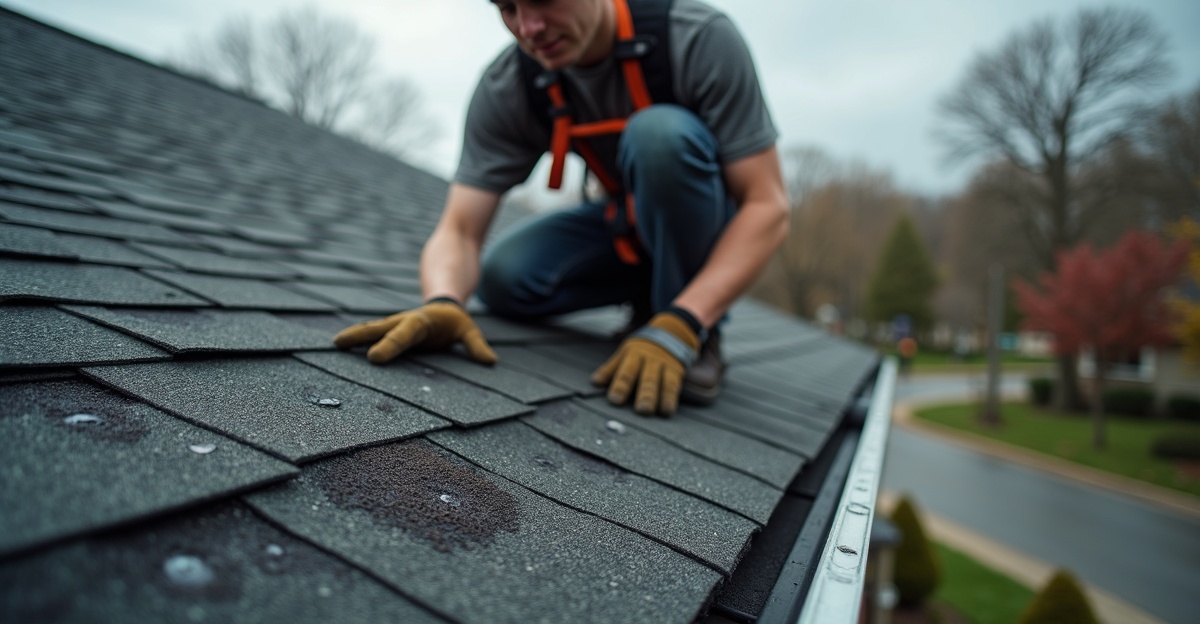
When we’re asked what hail damage looks like on a roof, we look for dark circular bruises on shingles, missing granules that expose black asphalt, and scattered impact marks across multiple slopes. We also check for dents in gutters, vents, and flashing. These details help us confirm storm-related damage and decide whether the issue is cosmetic or affects the roof’s ability to shed water properly.
Key Takeaways
- Hail damage usually shows up as scattered circular bruises, granule loss, and exposed asphalt on three-tab and architectural shingles.
- Dents in gutters, metal vents, flashing, and HVAC units often confirm hail size and impact direction.
- Larger hail can crack shingle mats, split metal seams, puncture membranes, or break tiles, which leads to functional damage.
- Cosmetic damage changes appearance, while functional damage weakens waterproofing and may affect insurance coverage and warranties.
- A professional inspection allows us to confirm damage safely, document clear evidence, and protect long-term property value.
The Most Obvious Signs of Hail Damage You Can Spot From the Ground
Hail damage leaves clear evidence if we know what to look for. Most signs can be spotted safely from the ground without climbing onto the roof.
When homeowners ask us what hail damage looks like on a roof, we start with visible impact marks. On shingle roofs, hail often creates circular dark spots that look like bruises. These marks appear in a random, scattered pattern. That randomness matters. Storm damage does not show up in straight lines or uniform rows like installation defects or normal wear.
Here is what we typically see after a hailstorm:
- Circular impact marks or dark “bruises” on shingles
- Granule loss exposing the black asphalt layer underneath
- Shiny or bald spots where protective granules are missing
- Dents in gutters, downspouts, flashing, and roof vents
- Splatter marks on siding or torn window screens indicating hail direction
Collateral damage often confirms roof impact. Soft metals like aluminum gutters, roof vents, and air conditioning fins dent easily. If those areas show clear impact marks, there is a strong chance the shingles were struck as well.
Hail size makes a significant difference. Pea-sized hail may cause minor granule displacement. Golf ball-sized hail can crack shingles, fracture roofing mats, and create punctures, according to guidance on hail size and property damage. The larger and denser the hail, the higher the likelihood of functional damage.
Some damage cannot be confirmed visually from the ground. Soft spots that feel spongy when pressed may indicate bruised shingles beneath the surface. That hands-on inspection should always be performed by trained professionals. Walking on a damaged roof can create additional problems and puts personal safety at risk.
We always recommend observing safely from the ground first. If you see dents on metal components or dark, scattered spots on shingles, it is time to schedule a professional roof inspection.
What Hail Damage Looks Like on Asphalt and Architectural Shingle Roofs
Asphalt shingles are the most common roofing material we install and repair. They also show hail damage in distinct ways.
When clients ask what does hail damage look like on roof shingles, we explain it in layers. The outer layer is made of protective granules. Beneath that sits the asphalt layer and reinforcing mat.
Hail impact can cause:
- Circular bruising with darker discoloration
- Cracks in the fiberglass mat beneath the surface
- Displaced granules that expose black asphalt
- Fractures radiating outward from the impact point
Granule displacement is often the first visible sign. Those granules protect the asphalt from UV rays. Once they are knocked loose, the exposed asphalt deteriorates faster under sunlight. Even minor granule loss can shorten a roof’s lifespan.
In many cases, the damage goes deeper than what we see on the surface. Hail can bruise the mat beneath the shingle. That bruising may not be visible without closer testing. Over time, a fractured mat can allow moisture intrusion. Leaks may not appear for months after the storm.
This is where we separate cosmetic damage from functional damage.
Cosmetic damage affects appearance while the roof still sheds water as designed. Functional damage means the shingle’s waterproofing ability is compromised. If the mat is cracked or the seal is broken, the roofing system is at risk.
Older shingles add another layer of complexity. Aging roofs naturally lose granules. A hailstorm can remove already-loose granules, making it harder to distinguish storm damage from normal wear. If you are wondering how aging affects durability, we break that down in detail here: how long should a shingle roof last.
When property owners ask what hail damage looks like on a roof, the real answer is this: it often looks minor at first. But even subtle fractures can lead to long-term structural problems if left unaddressed.
How Hail Impacts Metal, Tile, and Flat Commercial Roof Systems
Every roofing system responds differently to hail.
On metal roofing systems, the most obvious sign is denting. Small dimples may appear across panels. In many cases, those dents are cosmetic and do not affect water performance. However, if hail fractures protective coatings or damages seams, the system’s ability to shed water can be compromised.
Seam separation is more serious than surface denting. Standing seam systems rely on tight interlocks. If impact loosens or distorts those seams, water intrusion becomes a real risk.
Tile roofing reacts differently. With tile roofing, hail can crack, chip, or shatter tiles. The most concerning damage is not always visible from the ground. Underlayment beneath broken tiles may also be compromised. Even a single cracked tile can allow water behind the system.
Flat and low-slope commercial roofs require focused evaluation. On membrane systems like TPO, EPDM, or modified bitumen, hail may cause:
- Circular punctures or splits in the membrane
- Cracked or stressed seams
- Granule displacement on modified bitumen
- Compressed insulation beneath the membrane
Seemingly minor punctures can allow water to infiltrate insulation layers, as explained in commercial roofing membrane performance guidance. Wet insulation reduces energy efficiency and accelerates deterioration. For commercial property managers, this is not just a maintenance issue. It can impact warranty compliance, manufacturer coverage, and overall asset value.
We also inspect rooftop equipment. Dented HVAC units, metal vents, and flashing often confirm hail size and direction. That collateral evidence supports proper documentation and claim evaluation.
For businesses, ignoring impact damage creates long-term liability. Proactive inspection safeguards your return on investment and helps avoid operational disruption.
Cosmetic vs. Functional Damage: Why the Difference Matters for Insurance and Warranties
Understanding the distinction between cosmetic and functional damage is critical.
Cosmetic damage alters appearance but does not immediately affect water-shedding performance. Functional damage compromises waterproofing components, such as a cracked shingle mat, split membrane, or separated metal seam.
Insurance adjusters often perform “test squares” to examine specific areas and check for consistent impact patterns. Legitimate storm damage usually appears in a random distribution across multiple slopes. Isolated marks without consistent pattern are often attributed to non-storm causes.
Some commercial metal policies include cosmetic damage exclusions, meaning dents alone may not qualify for coverage. Functional impairment, however, often does.
The distinction also affects warranties. Manufacturers may deny coverage if functional damage is left unaddressed. A fractured mat or punctured membrane weakens the system and can void long-term protection.
Minimizing what appears to be minor impact damage can lead to larger structural and financial consequences. What begins as subtle granule loss may become leaks, insulation damage, and interior repairs. If moisture enters the structure, costs escalate quickly. We outline common cost factors here: cost to repair a roof leak.
A professional evaluation clearly determines whether damage is cosmetic or functional, helping protect both insurance eligibility and manufacturer warranties.
When to Schedule a Professional Roof Inspection
Certain situations justify a closer look.
We recommend scheduling a professional evaluation if:
- hail was approximately 1 inch (quarter-sized) or larger
- You notice interior leaks, ceiling stains, or attic moisture
- Neighbors are filing insurance claims after the same storm
- Your roof is 10–15 years old or older
- You manage a commercial property with warranty compliance requirements
- You see dents in gutters, vents, or metal fixtures
Avoid climbing onto the roof yourself. Steep slopes, weakened shingles, and hidden soft spots present safety hazards. A professional inspection ensures safe access and thorough documentation.
If you want a detailed overview of what a thorough inspection includes, review our roof inspection checklist guide. For property purchases, we also explain why a roof inspection before buying a property can help you avoid hidden storm damage liability.
For active storm recovery, our storm damage repair services focus on rapid documentation and long-term reliability.
Taking prompt action removes uncertainty and gives you a clear path forward.
How to Document Hail Damage for Insurance and Risk Management
Proper documentation strengthens your position during insurance review and protects long-term investment value.
We recommend taking these steps immediately after a storm:
- Capture date-stamped photos of the roof, gutters, siding, and surrounding property
- Record the date and approximate time of the hail event
- Save local weather confirmation reports
- Maintain maintenance logs and past inspection records
- For commercial buildings, preserve equipment inventories and warranty documents
Create a clear paper trail before filing a claim. Organized documentation reduces disputes and streamlines adjuster evaluations. Without records, it becomes more difficult to verify that the damage occurred during a specific storm event.
If you need guidance, follow our step-by-step resource: how to file a roof insurance claim.
What does hail damage look like on a roof when properly documented? It looks like structured evidence. Photographs, inspection notes, and consistent impact patterns tell a clear, defensible story.
If uncertainty remains, involve an experienced roofing contractor for an objective assessment. Clear records and professional insight protect your home, your commercial property, and your bottom line.
Frequently Asked Questions
Can hail damage cause roof leaks right away?
Not always. Some hail damage creates immediate punctures or cracks that allow water to enter, while other impacts weaken shingles or roofing materials without causing an instant leak. Over time, damaged areas can deteriorate, making the roof more vulnerable to moisture intrusion during future rainstorms.
How can I tell the difference between hail damage and normal roof wear?
Hail damage usually appears as random circular impact marks, bruises, or areas where granules have been knocked away. Normal aging tends to cause gradual, even wear across the roof rather than scattered impact points. A professional inspection can determine whether the damage is storm-related or simply the result of age.
Does every hailstorm damage a roof?
No. The likelihood of damage depends on the hail’s size, density, wind speed, and the roof’s age and material. Small hail may only cause minor cosmetic marks, while larger hailstones can crack shingles, dent metal roofing, or break tiles, resulting in functional damage that requires repair.
Should I replace my roof after hail damage or can it be repaired?
It depends on the extent of the damage. Localized cosmetic or minor functional damage can often be repaired, while widespread cracking, punctures, or significant granule loss may make a full roof replacement the better long-term solution. A professional assessment helps determine the most cost-effective approach.
How soon should I have my roof inspected after a hailstorm?
It’s best to schedule an inspection as soon as it’s safe after the storm, especially if hail was about 1 inch in diameter or larger. Early inspections help identify hidden damage, document evidence for insurance claims, and prevent small issues from developing into expensive structural or water damage.